

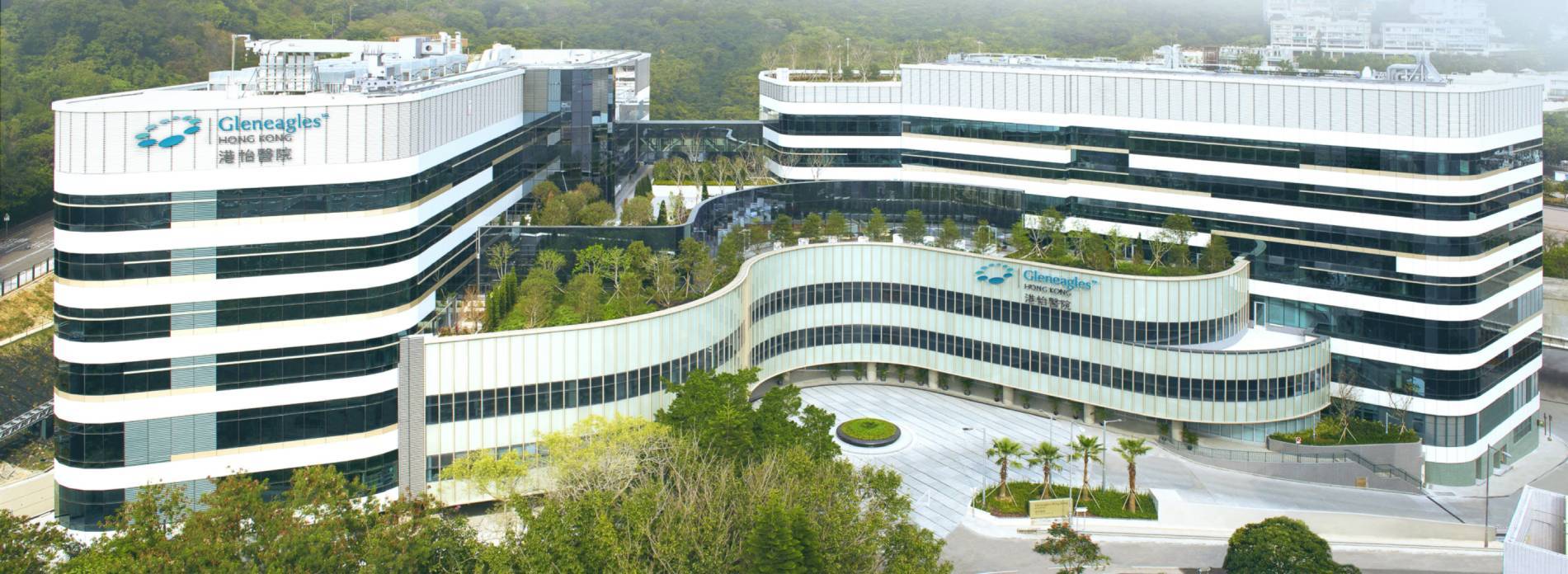
A leading private hospital’s administrator has highlighted Hong Kong’s unique advantage of being closely connected to both the Chinese mainland and the global community, positioning its medical industry to become a dynamic hub for innovation.
As Gleneagles Hospital Hong Kong CEO Kenneth Tsang Hinglim described it, the city can act as a “trusted conduit”, where doctors worldwide share expertise and accelerate the development of new treatments for the public good. He added that this role would enable Hong Kong to curate the world’s finest medical innovations and establish itself as a world-class hub for health innovation and medical tourism.
In an interview with China Daily, Tsang drew a parallel to Hong Kong’s role as a financial hub: “Just as capital flows through Hong Kong to global and national markets, so too can drugs and devices.”
He said that the city could channel overseas drugs into the Chinese mainland, using local clinical trials to generate data for mainland regulatory approval. Conversely, Hong Kong could serve as a launchpad for Chinese therapies seeking approval from international regulators like the United States’ Food and Drug Administration.
ALSO READ: HK a crucial bridge in global biotechnology, investment: science expert
Tsang said this perspective was a core rationale behind IHH Healthcare’s decision to establish Gleneagles Hospital Hong Kong in 2017. This move aligned with the Guangdong-Hong Kong-Macao Greater Bay Area’s ascent to a national strategy that same year, which bolstered Hong Kong’s gateway leverage.
He said that for healthcare commerce, the central government’s push for regional integration is a direct call for leveraging Hong Kong’s trusted, globally connected network of medical professionals.
Meanwhile, Hong Kong is establishing its own internationally recognized regulatory body, the Hong Kong Centre for Medical Products Regulation (CMPR), set to launch by the end of next year.
READ MORE: InvestHK to showcase Hong Kong’s biotech edge in US
Tsang expressed confidence that the CMPR can rival major regulators like China’s National Medical Products Administration and the US’ FDA. He said its top priority is to create globally recognized, efficient standards for regulating medicines and medical devices.
By leveraging these standards, along with Hong Kong’s business agility, academic excellence, and event-hosting clout, the city could become a “global marketplace” for medical innovation. This would involve collaboration between industry and academia to accelerate treatment trials and share breakthroughs at high-profile industry conferences. Measures to speed up local drug registration have already been rolled out, including a phased “primary evaluation” system expected to be fully implemented by 2030.
In a related development, the special administrative region government activated a “1+” mechanism in 2023, allowing new drugs backed by local clinical data and expert approval and approved by one of 36 reference jurisdictions to be registered in Hong Kong.
Continuing the momentum, Hong Kong Chief Executive John Lee Ka-chiu’s latest Policy Address in September pledged to further expedite the “1+” pathway. Director of Health Ronald Lam Man-kin later confirmed plans to reduce drug approval times further.
READ MORE: HK fast-tracking new quality productive forces for tech-hub ambitions
Path to sustainability
Tsang said that Hong Kong’s role as an East-meets-West medical conduit offers local hospitals an opportunity to integrate the best of both worlds. Hospitals must meet the meticulous safety standards of the mainland while maintaining the high patient-care metrics valued by international auditors.
He added that medical tourism is creating a niche for private healthcare to achieve self-reinforcing growth, with profits reinvested into developing complex and high-margin treatments. Over time, these benefits will spill over into the public sector, raising healthcare standards across the city.
In the face of the economic slowdown that is straining public hospitals across Asia, such innovative capacity is vital for sustainable healthcare, Tsang said.
He said that one of the “cleverest” possible moves for long-term sustainability — in both financial and operational terms — is bridging the perceived price gap between the city’s public and private healthcare.
READ MORE: HK ‘perfectly positioned’ to boost global profile of TCM
Private stakeholders must bankroll advanced, profitable treatments, while cutting the costs of established treatments; and public hospitals can ring in a wider-scale copayment model to offer patients more innovative, enhanced, often pricier options, he said.
Tsang supports the upcoming charges reform by the Hospital Authority, slated for next month, which includes raising fees for noncritical accident and emergency attendances from HK$180 ($23) to HK$400, and implementing a copayment mechanism for nonemergency diagnostics.
The reform aims to lower the government subsidy rate from 97.6 percent to 94 percent, with reviews in 2028 and 2030 aimed at reducing it further to 90 percent.
Looking ahead, Tsang said he envisions a future in which healthcare is cost-effective and abundant in options, built on artificial intelligence-driven workflows and telehealth services.
READ MORE: Officials: Life and health technology a strategic industry for HK
This shift is already underway globally. He points to Singapore’s emerging remote care programs and the rise of outpatient joint replacement in the US and Europe, which traditionally required hospital stays. US medical practitioners project that over half of all joint replacements will be outpatient procedures by 2026.
Leading this effort, Gleneagles Hospital Hong Kong is pursuing accreditation under China’s International Hospital Accreditation Standards (CIHA), launched in 2022.
Tsang said that after on-site assessment, Gleneagles is expected to become the first private hospital in Hong Kong to receive CIHA accreditation, joining two local public hospitals already certified.
In a related move, IHH Healthcare’s AI lab in Hong Kong, established in June, has been collaborating with local universities and startups to build a virtual healthcare ecosystem. Key projects include digital triaging, online precheck-in, remote monitoring, and telemedicine solutions.
Contact the writer at wanqing@chinadailyhk.com
