

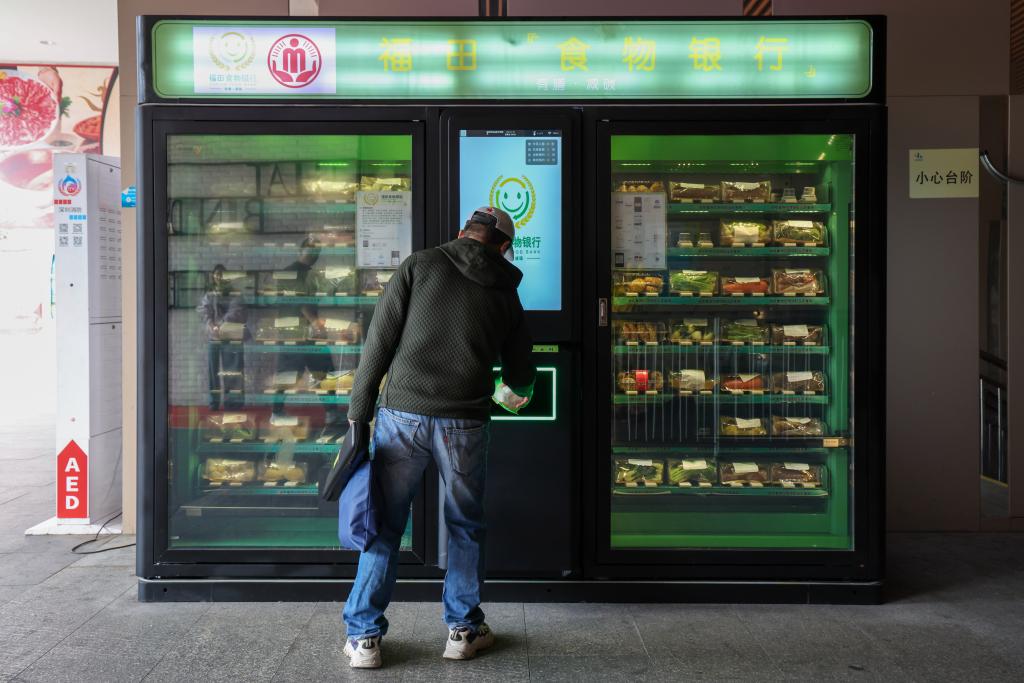
Shenzhen’s 24-hour food banks have captured public attention as a heartwarming initiative that marries human kindness with smart technology.
These community-based refrigerated vending machines store surplus or near-expiry fresh food donated by local businesses like supermarkets and hotels.
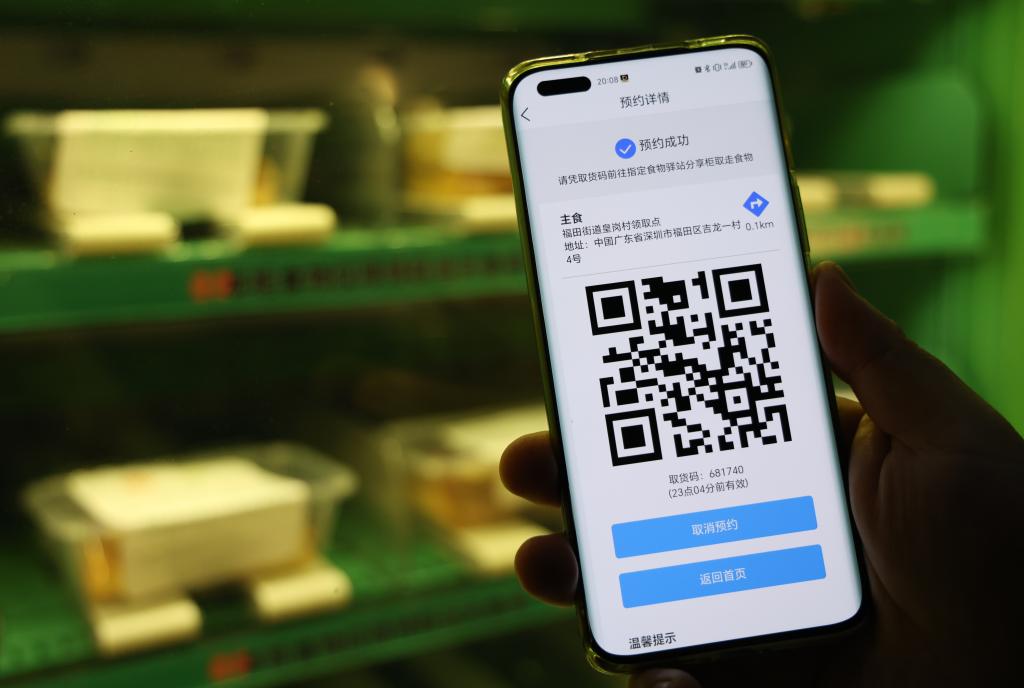
The distribution system is designed to prioritize vulnerable groups, ensuring those most in need receive support first. Registered users, including low-income families, individuals with disabilities, sanitation workers, and elderly individuals living alone, can reserve food daily through the “iShenzhen” app before 8 pm. After 8 pm, any remaining items become available to all citizens, guaranteeing daily clearance and minimizing waste.
Since its launch on May 31, 2022, the program has distributed around 500,000 portions of food. This effort has prevented an estimated 195 tons of food from being wasted and reduced carbon emissions by approximately 390 tons.
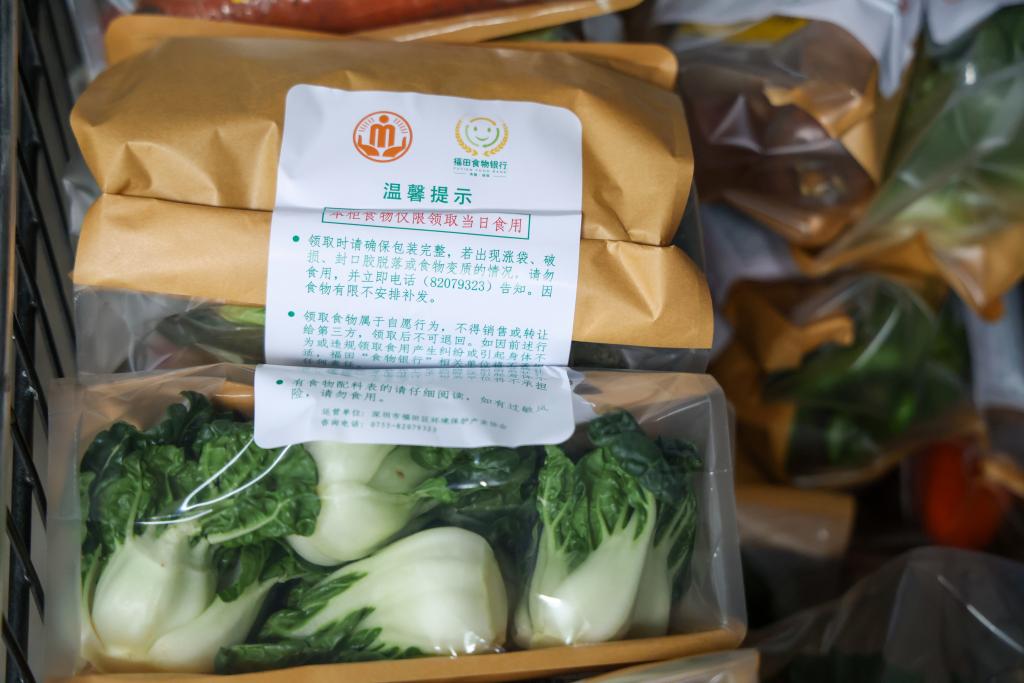
Food safety is a cornerstone of the initiative. Donated items undergo rigorous checks by community workers and volunteers, who inspect, sort, and repackage goods before placing them in smart cabinets maintained at a constant temperature below 10 C. All food sources are traceable, and the project is backed by comprehensive food safety insurance.
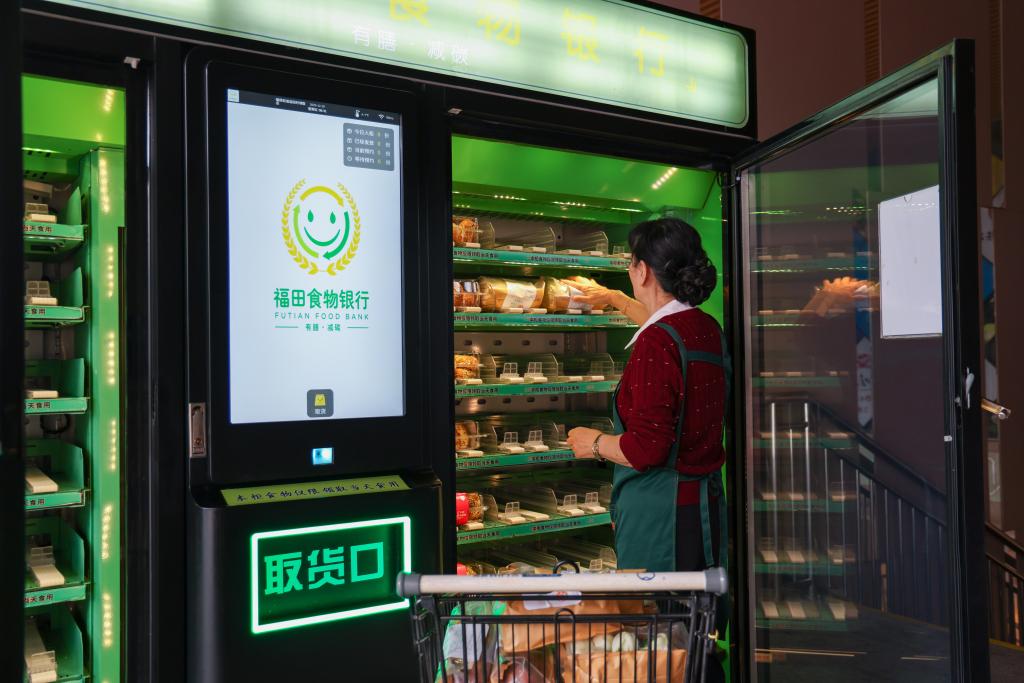
Local businesses actively participate in this endeavor. Wang Weimin, manager of the Yitian outlet of Hema Fresh, reported that the supermarket donates 20-50 portions of food daily. Unsold items are stored overnight, inspected the next morning, and typically placed in the food bank refrigerators by 8:30 am.
A key feature of the program is its emphasis on preserving dignity. The app-based “no-contact” system allows individuals to receive help discreetly, avoiding the potential stigma associated with traditional charity. Sun Yue, the project’s operations manager, explained that “qualification authentication is completely done online,” eliminating face-to-face interactions and protecting the recipients’ privacy.
The initiative provides crucial support to people like a man surnamed Hu, who learned about the food bank through a short video platform. While between jobs, he shared that “a portion of free food would really help during this period.”
ALSO READ: Service robots revitalize GBA’s hotel industry
For others, such as Futian resident Liu Li, the experience serves as a practical lesson in environmental stewardship. While collecting bread with his 11-year-old daughter, he said: “This is a really good practice. Food shouldn’t be wasted. Bringing my daughter here is a way to teach her about cherishing food and low-carbon living through action.”
This article is translated by China Daily from the original report in Chinese as published by Xinhua and on Guangdong Fabu, a WeChat public account of Guangdong provincial government.
