

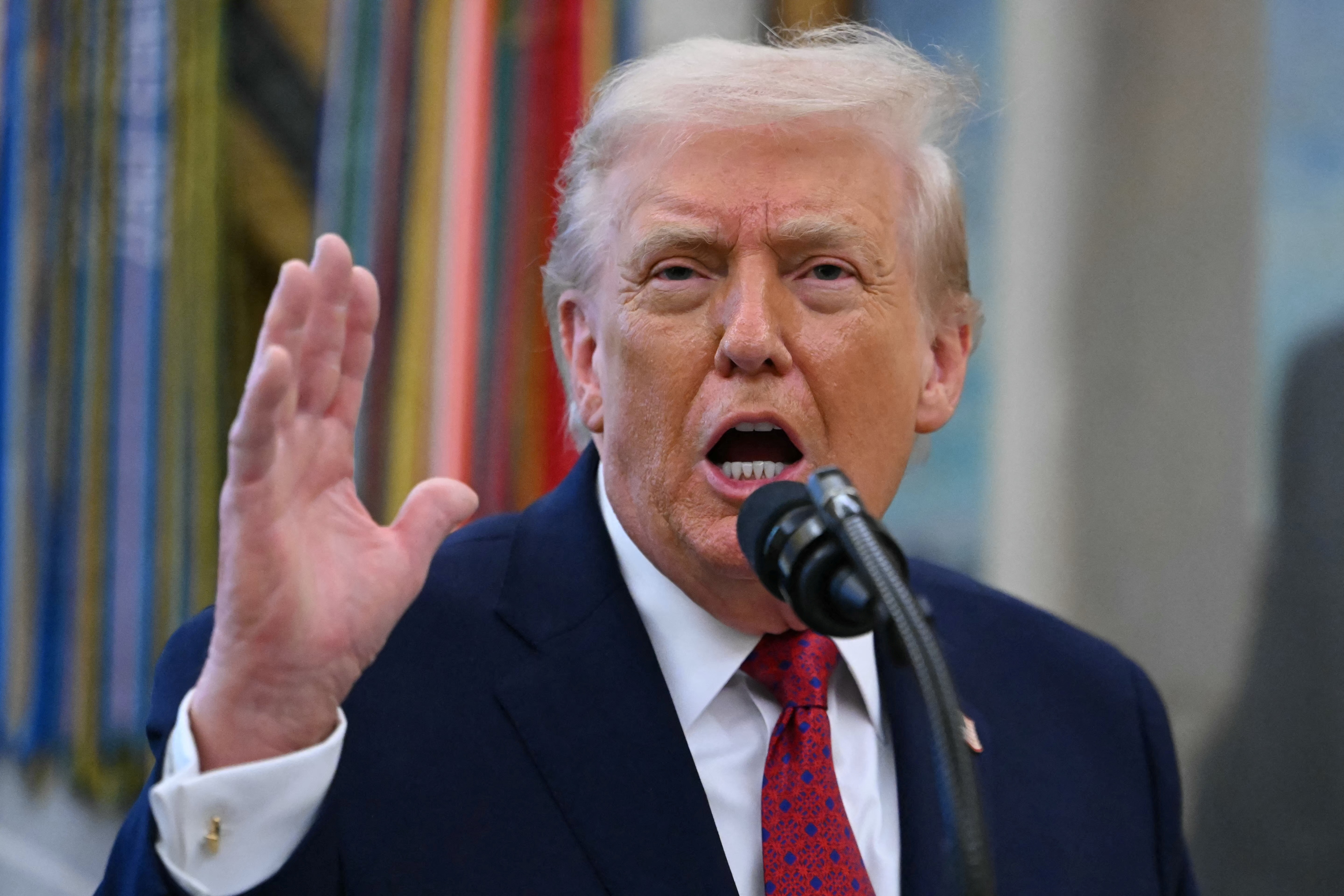
President Donald Trump sued the BBC for at least $10 billion over a misleading edit in a documentary last year that gave the impression he’d made a direct call for violence in a speech leading up to the Jan 6, 2021 attack on the US Capitol by his supporters.
The lawsuit against the British Broadcasting Corp was filed Monday in federal court in Miami. The lawsuit includes one claim of alleged defamation and one accusing the BBC of violating a Florida trade practices law. Trump is seeking at least $5 billion in damages for each count, plus other costs.
Alejandro Brito, Trump’s lawyer, confirmed the total amount of damages sought was $10 billion. Some media outlets, including Bloomberg News, had initially reported that the lawsuit was for $5 billion.
Trump threatened to sue after BBC Chairman Samir Shah acknowledged Nov 10 that the edited footage of Trump’s speech, aired on the Panorama program in 2024, wrongly gave “the impression of a direct call for violent action.” Days later, the broadcaster issued a second apology, but rejected the president’s demand for compensation.
“I’m suing the BBC for putting words in my mouth,” Trump said Monday at the White House. “Literally, they put words in my mouth. They had me saying things that I never said coming out.”
The BBC did not immediately respond to a message seeking comment.
The documentary made it appear that Trump had told his supporters they should “walk down to the Capitol” and “fight like hell” before the riot. In fact, he said they should “cheer on our brave senators and congressmen and women.” The “fight like hell” remark was from a different part of the speech.
The suit alleges the editing was a “brazen attempt to interfere in and influence the election’s outcome to President Trump’s detriment.”
“This instance of doctoring — in the form of distortion of meaning and splicing of entirely unrelated word sequences — is part of the BBC’s longstanding pattern of manipulating President Trump’s speeches and presenting content in a misleading manner in order to defame him, including fabricating calls for violence that he never made,” Trump’s lawyer said in the complaint.
READ MORE: BBC boss and head of news quit after criticism of Trump documentary edit
The BBC met some of Trump’s demands last month when it issued a formal apology and retracted the broadcast, titled Trump: A Second Chance, which aired a week before the 2024 presidential election. That followed the surprise November resignations of BBC Director-General Tim Davie and head of news Deborah Turness days earlier.
The BBC’s response was deemed inadequate by Trump, who last month upped his demand from $1 billion to as much as $5 billion while talking to reporters aboard Air Force One.
Trump has a history of taking legal action against media outlets for reporting the president sees as unfair or biased. By using, or threatening to use, the courts and his administration’s authority, Trump has already forced major concessions from some of the largest outlets in the US.
CBS agreed to pay $16 million to settle a suit by the president accusing the network of election interference over how the network’s news show 60 Minutes edited a quote from an interview with presidential candidate Kamala Harris, which he claimed made her sound more coherent.
ALSO READ: BBC board member Banerji resigns after Trump documentary edit
ABC paid a similar amount to settle a suit over news host George Stephanopoulos’s incorrect reference to Trump being “found liable for rape” in a lawsuit by E. Jean Carroll, while the jury had only found him liable for sexual abuse. The jury didn’t accept Carroll’s rape claim.
The president also has multi-billion lawsuits pending in Florida against The New York Times and The Wall Street Journal over allegations of defamation that both organizations deny. The Times was sued over an alleged pattern of coverage that harmed the president’s brand and reputation, while the Journal was sued over a report that Trump had sent a crude birthday note to disgraced financier Jeffrey Epstein in 2003.
Yet there are significant legal differences between the claims against the BBC and the US media companies that Trump has previously targeted. The Panorama documentary at the center of the dispute was never aired in the US and the program was geo-blocked on the BBC’s streaming service.
The president would also need to prove that the BBC had acted with “actual malice” toward him when it edited the documentary — a high bar required for public figures that was established by the US Supreme Court in 1964 in order to protect free speech.
