

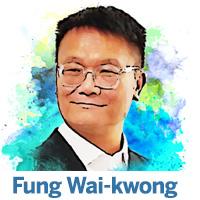
Andrew Fung Wai-Kwong says as long as society works together, the SAR govt will achieve goals that will benefit everyone
Hong Kong society has paid close attention to every public speech made by Xia Baolong, director of the Hong Kong and Macao Work Office of the Communist Party of China Central Committee, so that various sectors of the Hong Kong Special Administrative Region can better grasp the central government’s expectations for the SAR. Xia’s latest meeting with Chief Executive John Lee Ka-chiu on Sept 20 also attracted public attention.
 The nature of Xia’s recent meeting appears to be a mid-term review of the current Hong Kong SAR administration’s policies. Xia expressed full affirmation, which is encouraging for Lee, and instilled confidence and momentum in the SAR government’s future governance, especially in the area of reforms. Xia used “affirmation” as encouragement, “hope” as motivation, and inspirational ways to set expectations.
According to the public statement released afterwards, Xia said: “Vigorous efforts have been taken on attracting enterprises and talent, striving to solve pressing livelihood issues, focusing on enhancing international exchanges and cooperation ... effectively promoting new progress in various aspects of the SAR’s work.” My interpretation is: “Vigorous efforts” suggests results have been seen, “striving” suggests actions have been taken, “focusing” suggests directions are clear, and “effectively” suggests real progress. If we compare this interpretation with the data and measures announced by the HKSAR government, wouldn’t it provide readers with a deeper understanding of Xia’s speech?
READ MORE: CE: Business sector not ‘onlookers’ of HK’s development
Xia added: “The central government will unswervingly implement the ‘one country, two systems’ policy, support Hong Kong in leveraging its unique status and advantages to create new development prospects in the course of contributing to China’s modernization. I believe the SAR government will certainly be able to ride the momentum created by the third plenary session, unite and lead all sectors of society to proactively adapt to changes, respond to changes, and seek changes. The SAR government will actively and steadily advance reforms in various fields, focus on specifics, and emphasize actual effectiveness. It will make greater contributions as the country further deepens reforms comprehensively and expands high-level opening-up.”
My understanding is that Xia’s use of the word “believe” shows respect for and adherence to the “one country, two systems” policy. The chief executive is the first person responsible for the governance of the SAR, and the central government believes the chief executive can lead Hong Kong’s reforms. The word “contributing” suggests that Hong Kong’s reforms are fundamentally part of China’s modernization and are on the national reform agenda; and that participating in reforms is the SAR’s duty. The only way to ensure the success of Hong Kong’s reforms is to contribute to China’s modernization. Chinese-style modernization also provides Hong Kong’s reforms with a broader stage and space, making economic and social reforms more likely to succeed.
Regarding the SAR government’s need to “unite and lead”, it is because Hong Kong’s reforms are top-down. This requires the SAR government to have overall considerations (across various fields), top-level design, systematic deployment, and comprehensive planning. With these four elements, reforms can be “active and steady”. Only by having the SAR government “unite” all parties to “lead” the reforms can the necessary political momentum be achieved to implement comprehensive reforms. This also means that reforms are not minor tweaks or small-scale adjustments but involve systemic, institutional, and structural reforms.
As for “focus on specifics, emphasize actual effectiveness”, this suggests reforms must seek to provide citizens with a sense of gain and see tangible results, and to improve the business environment for small and medium-sized enterprises. The public is looking forward to the SAR government’s Policy Address on Oct 16. It is believed that the chief executive will announce reform measures that resonate with Xia’s remarks.
Xia also mentioned “hope” and “transform”. These words carry profound meaning. Xia said: “I hope all sectors of Hong Kong society, especially the business community and entrepreneurs, firmly support the chief executive and the SAR government in governing according to the law, unite as one to seize opportunities, boost the economy, build infrastructure, and promote development. Transform the patriotism and love for Hong Kong into concrete actions, work together to achieve prosperity, and make new and greater contributions to advancing the cause of national rejuvenation through Chinese-style modernization.”
ALSO READ: Reform and innovation are the paths forward for Hong Kong
This reveals Xia’s expectations for the business community and entrepreneurs. He hopes they can empower Hong Kong’s reforms and inject momentum into them through “concrete actions”, such as increasing investment in Hong Kong. This transformation of “patriotism and love for Hong Kong” into actions is a concrete manifestation of patriotism. It also suggests that the business community and entrepreneurs should have a broader view, and should look at the bigger picture with vision and courage.
Some say that Hong Kong seems to have never had reform momentum. This is not true. Whether last year’s district council reforms or this year’s passing of the Article 23 legislation, they all fall under Hong Kong’s reforms in political systems, laws, and national security. These reforms were highly motivated and have been highly effective. Now, economic and social reforms in Hong Kong are on the agenda. As long as Hong Kong society works together, the SAR’s socioeconomic reforms will be as successful as its reforms in political systems and laws.
The author is a former information coordinator of the HKSAR government and a member of the Chinese Association of Hong Kong and Macao Studies.
The views do not necessarily reflect those of China Daily.
