

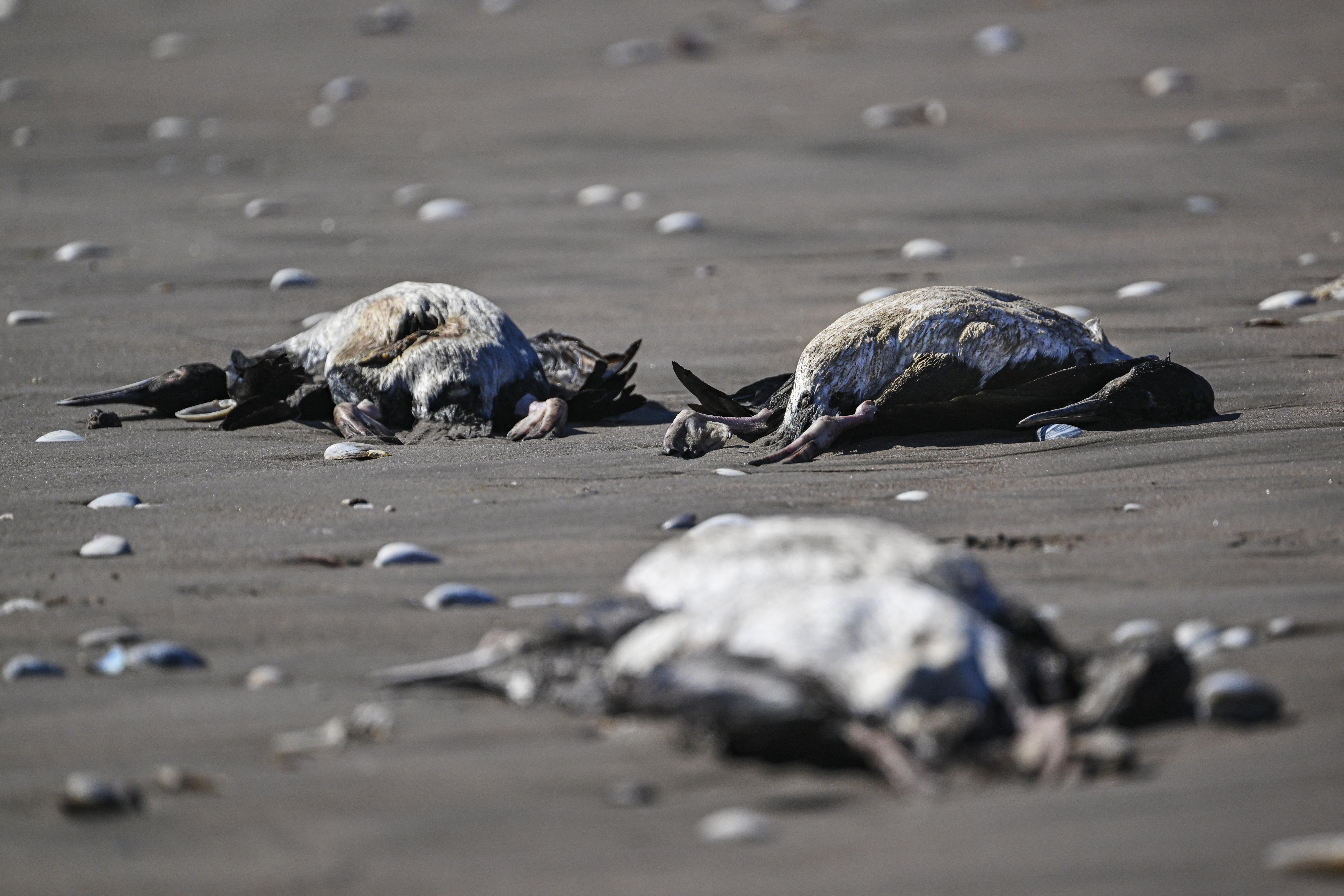
 Dead cormorants (Guanay Cormorant) lie on the sand at Changa Beach in Coquimbo, Chile on May 31, 2023. (PHOTO / AFP)
SANTIAGO - Scientists in Antarctica are warning of the spread of deadly H5N1 avian flu virus after the disease was first confirmed on the frozen continent's mainland last month and has since been detected in local penguin and cormorant populations.
The spread of the virus, which has decimated bird populations worldwide and hit South American wild bird and marine mammal populations hard, has raised alarm about the potential impact on Antarctica's huge penguin colonies.
The Chilean Antarctic Institute announced this week it had detected the new positive bird flu cases in the region, which it said was a "landmark" find because it included cases in penguins
"We are talking about a very worrying risk," said researcher Fabiola Leon from the Pontifical Catholic University of Chile who was part of an expedition in late 2023 and early 2024 to monitor for bird flu in Antarctica.
READ MORE: Bird flu raises alarm as H5N1 kills S. American wildlife
"There are species in danger of extinction, such as emperor penguins and other birds."
The Chilean Antarctic Institute (INACH), which organized the expedition, announced this week it had detected the new positive bird flu cases in the region, which it said was a "landmark" find because it included cases in penguins.
The positive cases included nine Adelie penguins and one Antarctic cormorant, Leon added. The virus was first found in skua seabirds on the Antarctic mainland last month.
ALSO READ: Scientists: Bird flu reaches mainland Antarctica for first time
"This detection of highly pathogenic influenza H5N1 is for the first time reported for Antarctic penguins and cormorants," Leon said, warning that the crowded nature of penguin colonies and migratory movements could exacerbate the virus' spread.
"This may promote, increase the rate of transmission of the disease among various bird colonies."
