

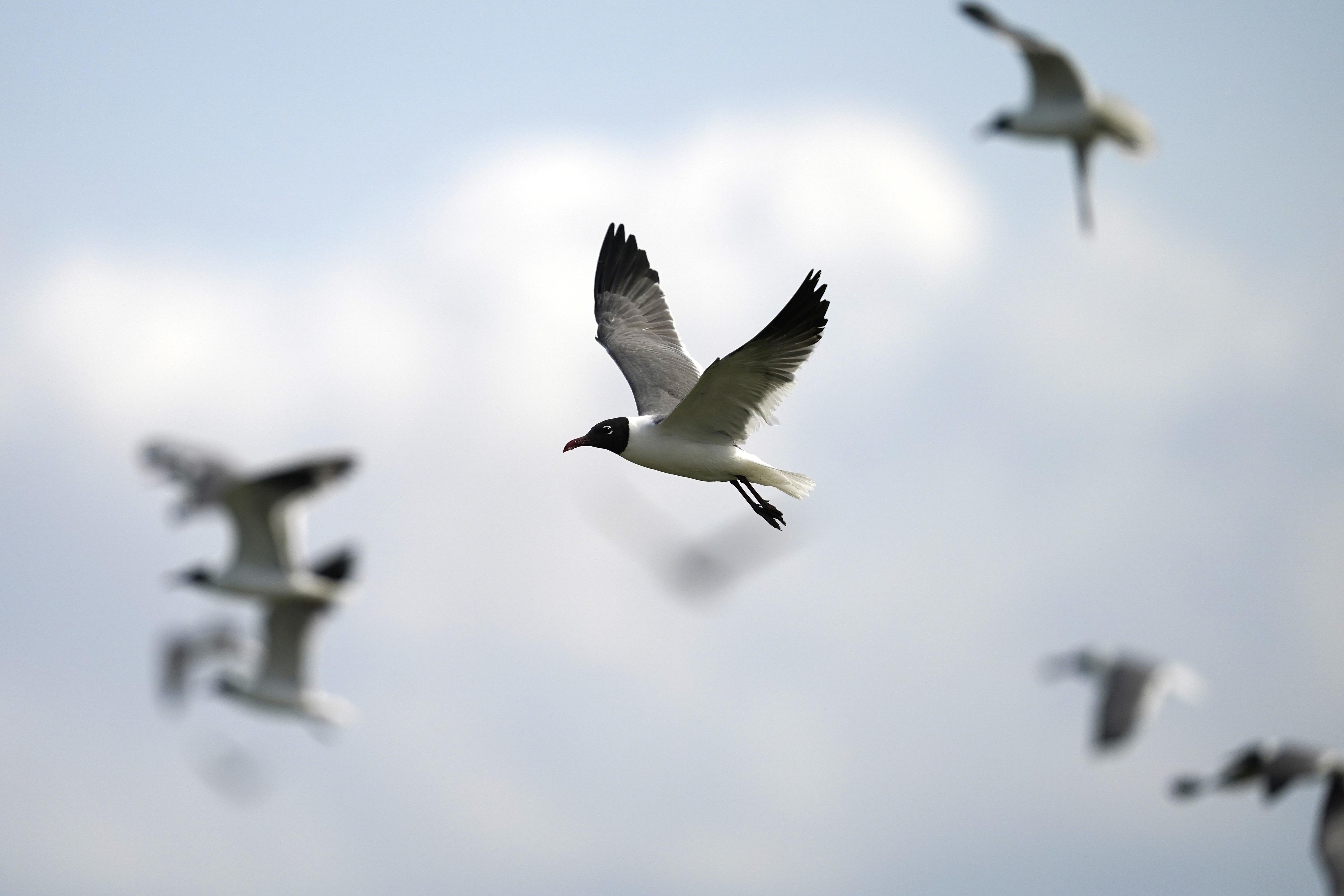
 Terns fly over Raccoon Island, a Gulf of Mexico barrier island that is a nesting ground for brown pelicans, terns, seagulls and other birds, in Chauvin, La, May 17, 2022. (PHOTO / AP)
MEXICO CITY - Mexican animal safety authorities confirmed the first case of H5N1 avian influenza in a wild bird on Wednesday, after declaring the country's poultry farms free of the virus earlier in the day.
A case of H5N1 avian influenza was found in a "clinically healthy" migratory duck in the state of Jalisco, the animal safety agency Senasica, which is part of the agriculture ministry, said in a statement.
ALSO READ: France starts bird flu vaccination despite trade backlash risk
Mexico's animal safety agency Senasica stressed that the confirmed H5N1 case does not signal an outbreak of the disease or contradict the H5N1 free declaration but instead it means that poultry farmers should be on alert to prevent the entry of infected wild birds
Earlier, the government declared in its official gazette that the country was H5N1 free, almost a year after starting a bird vaccination campaign in high-risk areas to prevent its spread.
Senasica stressed that the confirmed H5N1 case does not signal an outbreak of the disease or contradict that declaration but instead it means that poultry farmers should be on alert to prevent the entry of infected wild birds.
The H5N1-free designation facilitates the sale of live poultry, as well as poultry products and by-products originating in Mexico, according to the gazette.
Last October, the agriculture ministry reported it had detected the virus in a 60,000-bird commercial farm in the state of Nuevo Leon a few days after notifying the World Organization for Animal Health of a first case of the serious strain.
To guarantee Mexico remains free of the disease, it will maintain epidemiological surveillance, traceability, control of movement and other strict safety procedures, the government said in the document.
ALSO READ: Finland orders cull of 50,000 mink and foxes due to bird flu
The Highly Pathogenic Avian Influenza, commonly called bird flu, has led to the culling of millions of birds in the United States and Europe.
In May, Brazil decreed a 180-day animal health emergency after detecting several cases, and Ecuador confirmed the presence of the virus in some birds in the Galapagos Islands in September.
