

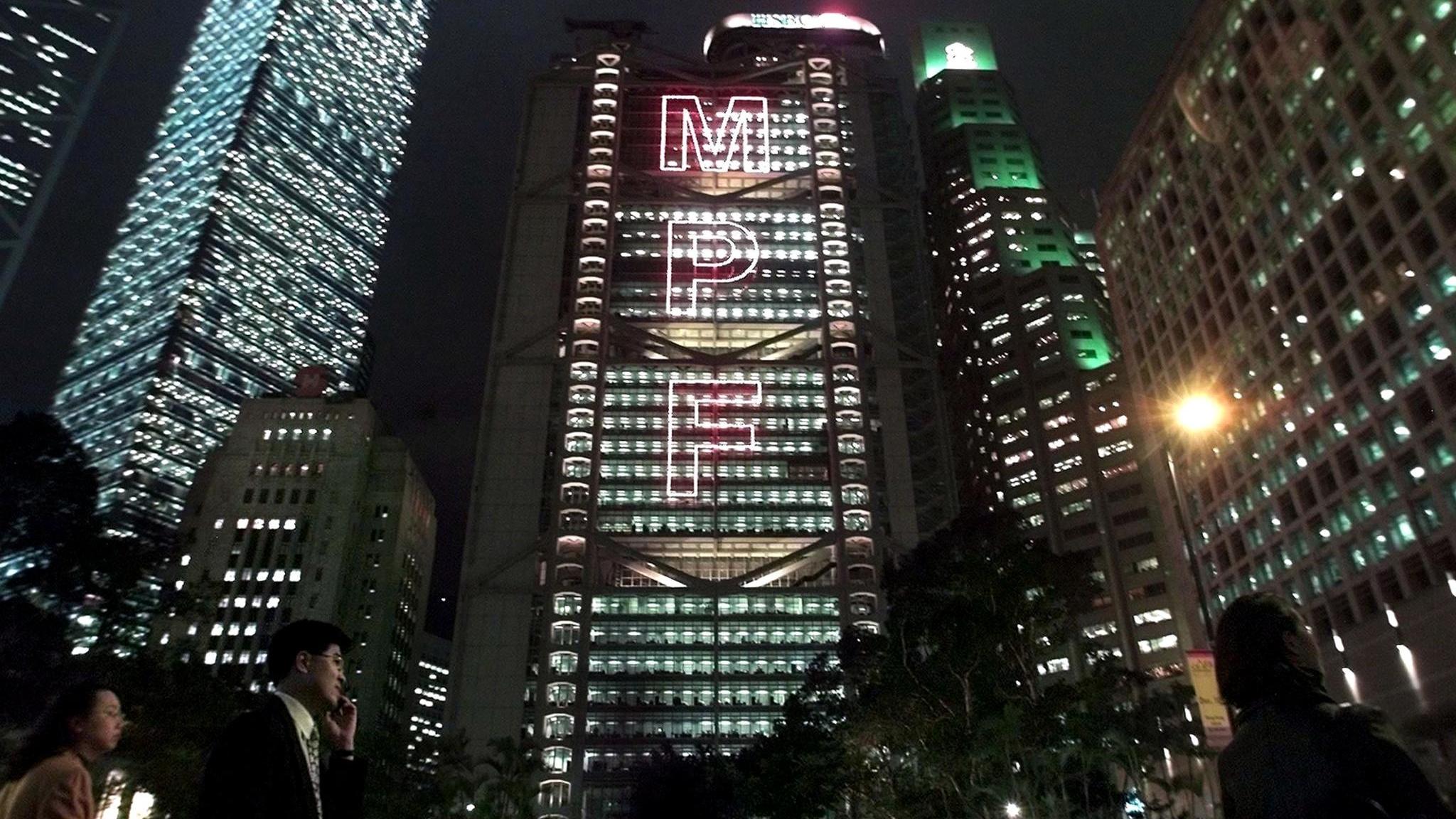
 The letters "MPF" light up on the exterior of Hong Kong Bank, 28 Nov 2000, as a reminder to the 01 December deadline for Hong Kong's territory-wide pension scheme, the Mandatory Provident Fund. (PHOTO / AFP)
Each Mandatory Provident Fund member in Hong Kong lost an average of HK$5,463 ($698) from September 1 to 22, representing a negative 2.3 percent return, as weak performance in Hong Kong’s and the Chinese mainland’s stock markets weighed down on financial returns, according to a report by MPF consultant GUM on Friday.
The 4.69 million members of the compulsory pension fund each received an average return of HK$717 since the start of the year, it said.
The disparity in returns between different categories of stocks is substantial, especially this year, when the difference between Greater China’s equity indices and other regional stock indices could be as high as 20 percent
The firm attributed this month’s losses to the rebound in the US Consumer Price Index (CPI) data in August, which sparked concerns about a revival in inflation. Therefore, the market expects a prolonged period of high-interest rates, which in turn has affected the performance of the stock market for this month.
READ MORE: MPF members in HK lose $995 on an average in August
“Concerns still linger in the Chinese mainland and Hong Kong markets over domestic real estate debt and sluggish economic data,” said Michael Chan, executive director of GUM. “Despite slight improvement in the mainland’s external trade data in August, the Hang Seng Index remains weak, dropping to 17,500 points with price-earnings ratio declining to 10.8 times. The market's downward trend persists despite stimulus measures by the central government.
“The fourth-quarter MPF outlook hinges on factors such as economic data in the Greater China region, interest rate trends, and the state of US-China relations.”
Martin Wan, a strategist and analyst from GUM, commented, “Looking at the year-to-date performance of global stock funds, the Japan Equity Fund and US Equity Fund have displayed outstanding results, achieving returns of 18.1 percent and 15.6 percent respectively. The Global Equity Fund and European Equity Fund followed suit with gains of 10 percent and 8.8 percent respectively.
“On the other hand, the Hong Kong Equity Fund and Greater China Equity Fund have performed the poorest, experiencing negative declines of 9.8 percent and 6.7 percent respectively since the start of the year.”
The disparity in returns between different categories of stocks is substantial, especially this year, when the difference between Greater China’s equity indices and other regional stock indices could be as high as 20 percent. In the fixed-income asset category, there is also a notable discrepancy of nearly 4 percent in returns between conservative funds and bond funds since the beginning of the year, according to Wan.
He emphasized that the stock market is still under the current climate of high interest rate and investors should carefully consider its impact when allocating their assets.
READ MORE: MPF members lose HK$11,400 on average in August
"High-risk investors may consider allocating a portion of their assets to Japanese stocks, while considering phased investments in the Greater China stock market in the long term. Meanwhile, it is unlikely that the Hang Seng Index in Hong Kong will dip below the 17,000-point mark in the near future,” suggested Chan.
“The recent mandatory actions taken against Evergrande Group's chairman Hui Ka-yan on suspicion of illegal activities suggest that we are witnessing the most critical phase in the Chinese mainland real estate market,” he added.
“Low risk investors may consider increasing their allocation to conservative funds, as they continue to benefit from high interest rates, which are expected to persist longer than anticipated.”
