

Editor’s Note: This year marks the 25th anniversary of Hong Kong’s return to the motherland. Over the past quarter-century, many Hong Kong people have crossed the border to seek new lives on the Chinese mainland. In the second part of China Daily’s “Anniversary Talks” series, we put the spotlight on them to record the dramatic changes on both sides and reveal how the closer cross-border connections have left an imprint on their lives.
In this article, Yip Hing-wah, CEO of Foshan-based startup incubator Gungho Space, shares how his education and work experiences on the mainland changed his life, and his efforts to help Hong Kong young people learn of the opportunities in the Guangdong-Hong Kong-Macao Greater Bay Area through his incubator.
 Yip Hing-wah, CEO of Foshan-based startup incubator Gungho Space. (PHOTO PROVIDED TO CHINA DAILY)
1. What motivated you to work and live on the Chinese mainland? How has this decision changed your life?
I have been living on the mainland for 10 years, counting my college days. Now I have settled in Foshan, Guangdong province, after having lived in cities like Beijing, Ningbo of Zhejiang province, and many Guangdong cities.
The decision to stay on the mainland changed the course of my life. You don’t have to stay in Hong Kong for career development. Coming to the mainland has helped me find my value and allowed me to give full play to my strengths.
The decision to stay on the mainland changed the course of my life. You don’t have to stay in Hong Kong for career development. Coming to the mainland has helped me find my value and allowed me to give full play to my strengths
2. Hong Kong people living on the Chinese mainland are significant practitioners of “one country, two systems”. As one of them, would you please share with us the policy’s specific effects on your life?
I completed my university and postgraduate studies on the mainland. My identity as a Hong Kong student allowed me to tap the mainland’s high-quality education resources through an application process different from my mainland peers’. The college experience has benefited me to this today.
ALSO READ: Nation advances GBA building in Guangzhou's Nansha

3. There have been many moments of mutual support between the mainland and Hong Kong, including the assistances amid the COVID-19 pandemic. What impressed you most? Could you share with us some sweet moments of the integration of the two places you feel on the mainland?
In March, subways, buses, residential buildings and offices in Shenzhen, Guangdong province, were suspended in view of the pandemic. I remember in particular a piece of news that touched me deeply. It was an announcement made by Shenzhen authorities, which said fresh food and daily necessities supplies to Hong Kong from Shenzhen would not be affected by the suspension. Guangdong province is Hong Kong’s closest kin geographically. It’s the tacit understanding between family members when Guangdong rushed to our rescue even when they were also trapped in a quagmire.
Hundreds of mainland medical workers and countless supplies poured into Hong Kong at the height of the pandemic. As a Hong Kong resident, I was deeply moved by that. It made me feel strongly that that our motherland will always have our back.
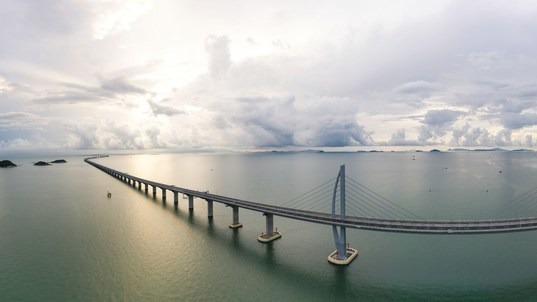 Aerial panoramic photo taken on Sept 12, 2020 shows the Hong Kong-Zhuhai-Macao Bridge in South China. (CHEN YEHUA / XINHUA)
Hong Kong has many excellent designers, but they did not know about the opportunities on the mainland. So I bridged the gap here by introducing them to designers with international backgrounds and made the deal. It got me thinking that the mainland and Hong Kong can achieve win-win cooperation as they have many complementary resources
4. Could you share about the developments of your industry in recent years, especially under the framework of the Guangdong-Hong Kong-Macao Greater Bay Area blueprint? How has the Hong Kong and mainland people’s understanding of each other changed?
The exchange is definitely better and closer as the understanding and collaboration deepen. I helped a Foshan-based home design company a few years ago. At that time, the company needed more high-quality designers with international backgrounds to expand its business. Hong Kong has many excellent designers, but they did not know about the opportunities on the mainland. So I bridged the gap here by introducing them to each other and made the deal. It got me thinking that the mainland and Hong Kong can achieve win-win cooperation as they have many complementary resources.
ALSO READ: GBA 'best entry point' for HK to integrate into nation's plan
In recent years, as the head of a startup incubator based in Foshan, I have organized many webinars to introduce the mainland’s entrepreneurial policies to Hong Kong students. They show great interest in starting a business in the mainland.
5. The central government has introduced many measures to benefit Hong Kong over the past decade, not only to support Hong Kong’s local development, but also to facilitate Hong Kong people living on the mainland. Which policies are directly convenient to you? How do you think these policies will affect you personally and your industry?
The central government has rolled out many favorable policies for Hong Kong, fully demonstrating its care and support of Hong Kong. Among them are many down-to-earth policies, especially policies facilitating the young people’ integration into the mainland. These policies provide them opportunities to seek development and a stage to show off their talents on the mainland. They can study, work, or start their own business.
READ MORE: Film director calls upon HK youth: Have a go in GBA
These measures encourage young people to devote themselves to national development and serve society with their strengths.
