

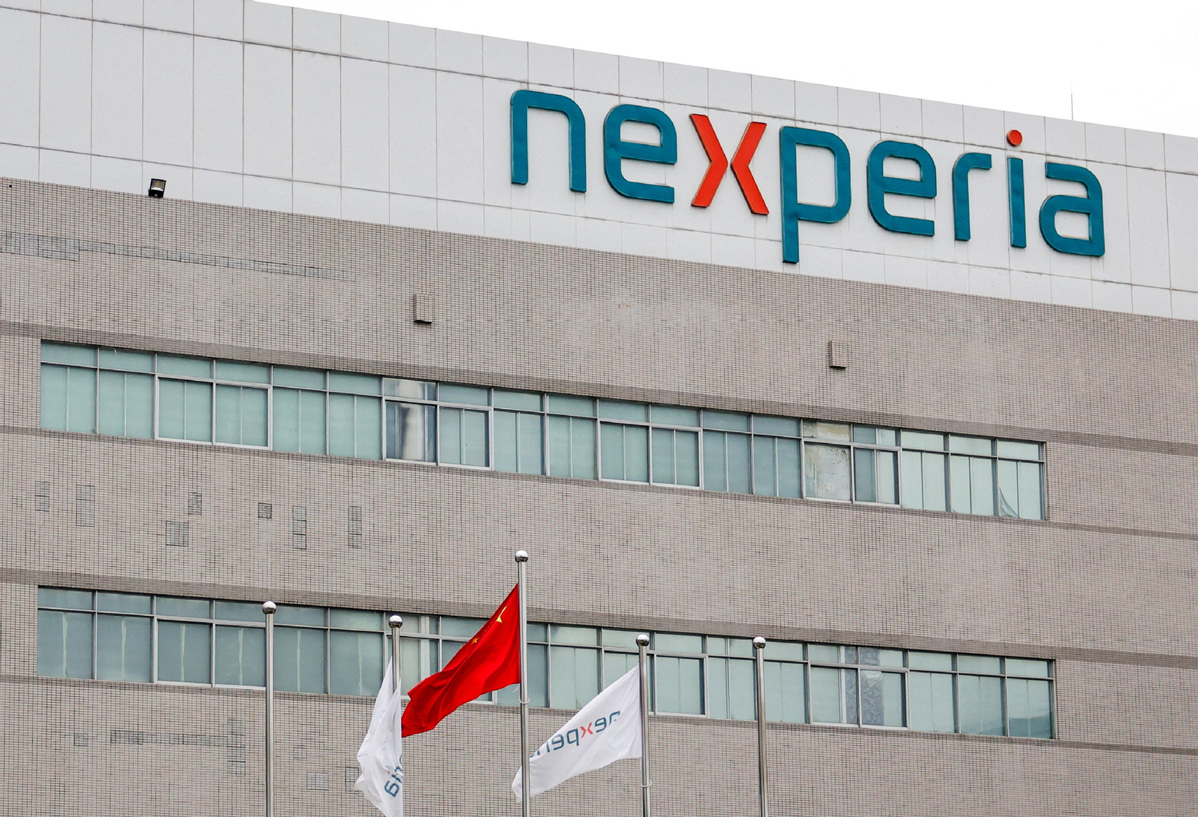
The dispute between China's Wingtech Technology and Dutch chipmaker Nexperia has widened beyond a fight over corporate control, with a proposed split of the chipmaker's China and overseas businesses and fresh cross-border legal action raising new questions over the future of its global semiconductor supply chain, said industry experts.
The latest flashpoint is a so-called "Two Circles" restructuring plan proposed by Nexperia's court-appointed administrators, which would divide Nexperia into two separately operated businesses.
Under the proposal, Wingtech would retain control of the China business, while an outside investor would take a controlling stake in the overseas business, leaving the Chinese company with only a minority stake. Wingtech said on Wednesday that it had rejected the proposal but remained open to constructive negotiations.
ALSO READ: Wingtech seeks over $1b in damages from Dutch chipmaker Nexperia
"The dispute has moved beyond a conventional boardroom struggle over control and entered a critical phase in which cross-border legal confrontations are unfolding alongside a de facto split in operations," said Guo Tao, an angel investor and senior artificial intelligence expert.
"Control remains the surface issue, while the focus of the dispute is increasingly shifting toward the division of manufacturing processes, customer channels and supply-chain systems," Guo said, adding that the previously integrated power semiconductor business was now building alternative supply routes on both sides.
Meanwhile, Wingtech has also rejected a $2 billion damages claim filed by Nexperia's Dutch operations against the Chinese company, its founder Zhang Xuezheng and two Chinese subsidiaries, saying it had not received formal service of the legal proceedings as of Wednesday.
Nexperia alleges that the Chinese entities breached internal agreements and disrupted its business by establishing an independent supply chain.
READ MORE: Supply disruption fails to chip away at Nexperia China's resilience
Jian Junbo, director of the Center for China-Europe Relations at Fudan University, warned that the dispute could undermine Chinese companies' confidence in mergers, acquisitions and greenfield investment in the Netherlands and across Europe.
"The Dutch side should return to the principle of fairness and avoid further judicial and political intervention in normal commercial activities," Jian told the Global Times.
Before the dispute, Nexperia operated a globally integrated manufacturing model, with front-end wafer production mainly in Germany and the United Kingdom, and major back-end assembly and testing facilities in Dongguan, Guangdong province, according to the company.
The operational split has prompted the Chinese unit to strengthen domestic wafer supply and packaging and testing capacity, while Nexperia's overseas operations have been developing alternative supply chains and expanding partnerships in Asian markets including India, Malaysia and the Philippines.
READ MORE: China, Netherlands agree to help firms resolve Nexperia dispute
"The two sides are building parallel supply chains, which will inevitably come at the cost of some operational efficiency," Guo said. "They would have to independently rebuild manufacturing-process interfaces, product certification and supply-chain management systems, increasing capital expenditure and recurring operating costs," he noted.
Furthermore, overseas operations lacked Dongguan's established large-scale assembly and testing support, while Chinese operations still faced gaps in some mature processes and overseas channels. Customers seeking compatible products could add pressure for a settlement, Guo said.
In this regard, a business separation could be more feasible in the short term, but renewed cooperation would better preserve long-term value, he added.
"Looking forward, the risks of asset impairment and losing core customers will push both sides to explore a compromise framework that accommodates the interests of all parties," Guo said.
Contact the writer at lijiaying@chinadaily.com.cn
