

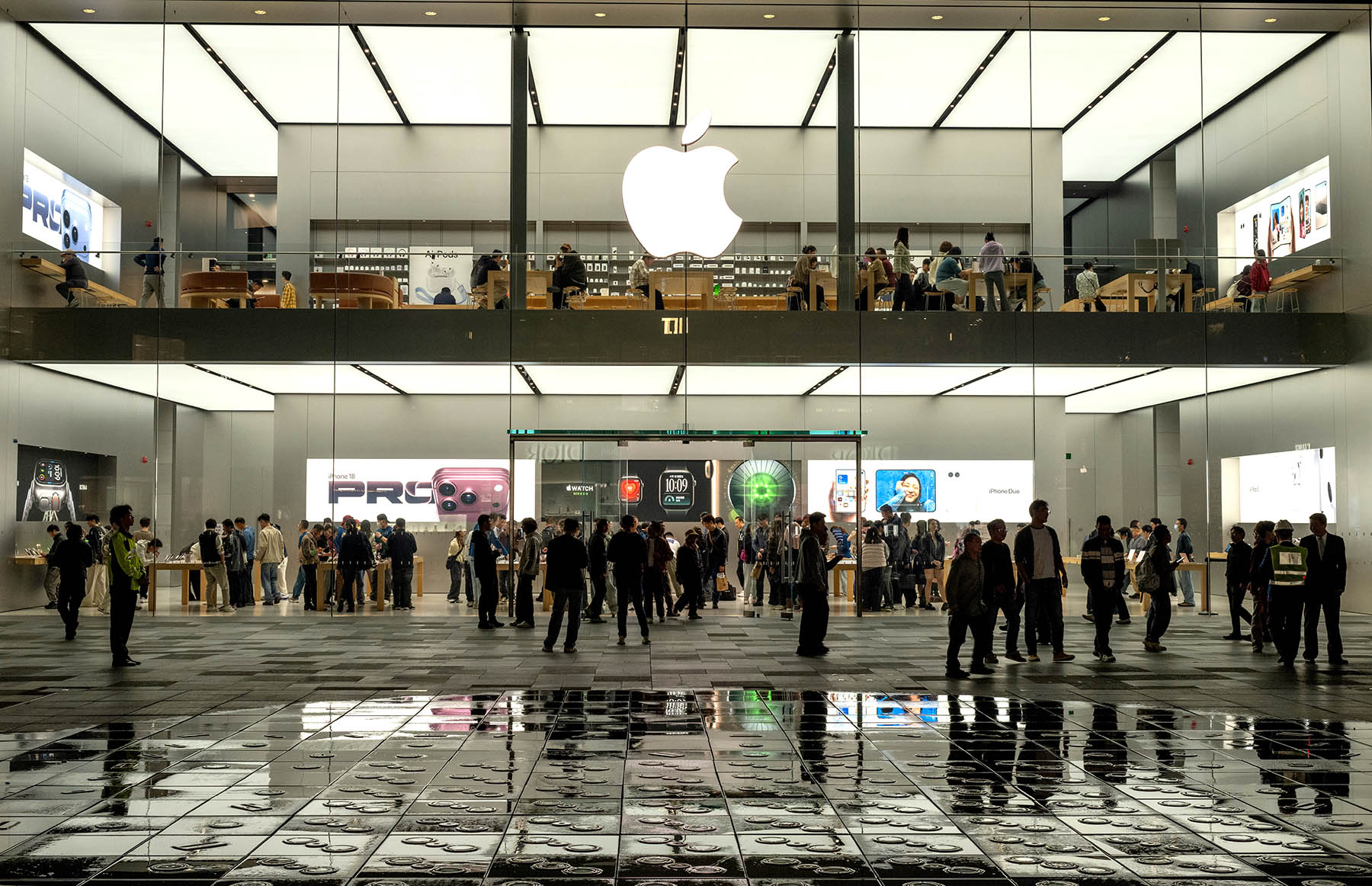
Apple Inc's long-awaited artificial intelligence features will officially launch in China in December, injecting fresh competition into the world's largest smartphone market as vendors scramble to roll out AI-powered devices, experts said.
The announcement came after Apple confirmed it will bring advanced AI technologies to China, its second-largest market, with the support of Alibaba Group Holding. The first batch of Apple Intelligence services will reach Chinese iPhone users alongside the iOS 27.3 update in December, following an open beta test with developers starting Wednesday, the US company said in a statement over the weekend.
The initial rollout will include around 18 new features, such as writing tools for summarizing and proofreading, live translation for phone calls and messages and visual intelligence via camera controls. However, Chinese users will not enjoy the same access as those in many international markets. Apple noted that its latest Siri AI capabilities and other next-generation AI services launched in September will be excluded from this initial release.
READ MORE: Alibaba's Qwen-powered Apple AI to launch in China in December
The move comes as Apple's iPhone 18 Pro series posted strong momentum in China. According to Counterpoint Research's weekly smartphone sales tracking report, global sales of the iPhone 18 Pro series rose 3.1 percent year-on-year in the first three weeks after launch compared with the iPhone 17 Pro series. Sales in China surged 29 percent year-on-year, contributing most of the global incremental volume, while sales in the United States and Japan declined.
Sujeong Lim, associate director at Counterpoint Research, said it remains to be seen whether China's strong performance reflects sustainable demand or consumers purchasing ahead of schedule.
Counterpoint said that this year's market environment differs markedly from last year, with memory cost-driven price increases and macroeconomic uncertainty dampening smartphone upgrade willingness and lengthening replacement cycles. Whether demand holds steady after the initial sales peak will also affect Apple's performance in the fourth-quarter holiday shopping season, it added.
While the global smartphone market continues to contract, AI-powered devices have emerged as a rare bright spot. The US market research firm International Data Corp forecasts that global smartphone shipments could decline 13.9 percent year-on-year in 2026, driven by memory chip shortages and other factors.
Yet within this challenging environment, AI is emerging as a key differentiator. IDC forecasts that AI-capable phones will account for 53 percent of China's smartphone market in 2026, with shipments reaching 147 million units.
CITIC Securities said in a research report that AI agents represent a core scenario for AI application deployment, and their proliferation on end-devices will drive a revaluation of the entire consumer electronics supply chain.
ALSO READ: Chinese developers boost Apple App Store
Domestic players are also advancing. ZTE's Nubia released its NaviX Ultra on Sept 16, calling it the world's first mass-produced AI-agent smartphone. Powered by ByteDance's Doubao AI Phone Assistant, the device integrates the AI model at the system level rather than as a stand-alone app.
"The essential difference is this: previous AI phones were 'hardware with AI features tacked on'. An AI-agent phone has the phone itself becoming an intelligent assistant," said Ni Fei, president of ZTE's terminal business division.
Contact the writers at masi@chinadaily.com.cn
