

The Asia-Pacific Economic Cooperation Finance Ministerial Meeting concluded in Hong Kong on Oct 21 ahead of the 33rd APEC Economic Leaders’ Meeting to be held in Shenzhen next month. This year’s APEC theme, “Building an Asia-Pacific Community to Prosper Together”, raises an important question: What role can Hong Kong play in advancing this agenda? The meeting focused on four key areas: macroeconomic and financial conditions, financial inclusion, financing for digital infrastructure, and networking among young finance professionals. Together, these themes provide a useful framework for considering Hong Kong’s future positioning within the region.
 An unsettled macroeconomic environment
The global backdrop remains uncertain. Geopolitical tensions show little sign of easing, and with both the United States and Russia expected to attend the 33rd APEC Economic Leaders’ Meeting, the aspiration of enabling 21 diverse economies to genuinely “prosper together” may prove difficult to achieve. Artificial intelligence, which has emerged as a priority across nearly all APEC member economies, presents a natural starting point for such cooperation.
Strengthen HK’s financial position
Hong Kong’s position remains strong. The city continues to rank among the world’s leading financial centers, placing third globally and first in the Asia-Pacific region according to the Global Financial Centres Index. It has also reclaimed its position as the world’s leading venue for initial public offering fundraising. These achievements rest on long-established strengths: a competitive territorial tax regime, a trusted common law system, and a currency peg to the US dollar that has endured for more than four decades.
Under the “one country, two systems” framework, Hong Kong remains the Chinese mainland’s gateway to international capital. This role is being reinforced by a new generation of listings in sectors such as biotechnology and AI. Looking ahead, Hong Kong should seek to attract more international companies, particularly those outside the mainland, to list on the city’s stock market. A more diversified issuer base would enhance both the depth and breadth of the equity market and further strengthen the city’s international character.
As traditional Western capital becomes more cautious, Hong Kong’s role as a superconnector must extend beyond its historic East-West orientation. The Middle East, the Association of Southeast Asian Nations, and Belt and Road Initiative-participating economies represent rapidly growing markets with youthful populations and increasing demand for capital. For these economies, Hong Kong offers a unique combination of deep capital markets, legal certainty under a common law framework, and unrivaled access to the mainland’s supply chains.
Deepen RMB internationalization
Hong Kong currently handles more than 75 percent of global offshore renminbi clearing. Yet while offshore RMB usage has expanded, the range of available RMB-denominated financial products has not kept pace. As the RMB becomes increasingly important as a trade settlement, reserve, and investment currency, demand for RMB assets is likely to outstrip supply, creating opportunities for competing financial centers.
To maintain its leadership, Hong Kong must broaden the offshore RMB ecosystem. This means expanding the availability of RMB-denominated bonds, equities, exchange-traded funds, derivatives, and structured products. It also requires more diverse and efficient payment channels so that investors can hold and deploy RMB with the same ease as other major reserve currencies.
Build a competitive digital asset ecosystem
Digital assets are becoming an increasingly mainstream investment class. Greater financial inclusion should allow both retail and institutional investors across the region to participate safely in these markets. However, sustainable growth requires robust prudential regulation and effective investor protection.
In this regard, Hong Kong is well positioned to serve as a testing ground for the responsible development of digital assets and cryptocurrency markets. By balancing innovation with appropriate safeguards, Hong Kong can establish itself as a leading jurisdiction for digital finance in Asia.
Finance Asia-Pacific’s digital infrastructure
Digital infrastructure encompasses data centers, cross-border payment systems, and the distributed ledger technologies that support tokenized assets and stablecoins. These foundations are essential for the future development of AI and inclusive financial services.
Such projects are capital-intensive and require long-term financing, precisely the type of investment that Hong Kong’s deep and liquid capital markets are well suited to support. By mobilizing green bonds, infrastructure funds, and public-private investment vehicles, and by establishing clear regulatory frameworks for tokenized financial instruments, Hong Kong can help channel regional savings into digital infrastructure projects across the Asia-Pacific region while further strengthening its position as a regional digital finance hub.
Expand financial inclusion for SMEs
One important challenge is improving access to finance for small and medium-sized enterprises (SME) in developing APEC economies. Traditional bank lending has often struggled to reach these businesses at scale.
Addressing this gap will require innovation beyond conventional banking models. Alternative-data credit assessment, supply-chain financing, and fintech-enabled lending platforms all have the potential to expand access to capital for underserved enterprises. Hong Kong’s financial expertise and regulatory experience position it well to contribute to these developments.
Invest in future regional cooperation
Hong Kong is one of Asia’s leading higher education centers, and its universities have long supplied the talent that underpins the city’s financial services industry. In recent years, enrollment by students from across the Asia-Pacific region has increased significantly.
One gap remains, however: There is no established regional platform for sustained exchange among early- and mid-career finance professionals. Hong Kong is well placed to fill this void.
Just as the Harvard Kennedy School in the US serves as a global convening point for public policy practitioners, Hong Kong could establish short-term professional programs for regulators, bankers, and fintech specialists, particularly from developing economies. Such programs would allow participants to exchange regulatory experience, learn from local market practices, and build the professional networks that facilitate future cooperation.
No single university can achieve this alone. Success would require sponsorship and participation from finance chiefs, regulators, and industry stakeholders across the region. The next stage of regional cooperation will not be built solely through high-level meetings. It will emerge through education, professional exchange, and networks that endure beyond political cycles.
If successfully developed, such an initiative would place Hong Kong at the center of Asia-Pacific financial cooperation and regional development for decades to come.
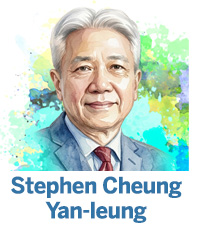
The author is president of Saint Francis University, Hong Kong.
The views do not necessarily reflect those of China Daily.
