

Liyuan Comedy Festival brings street performers, international acts and eager audiences to the historic courtyards of Dabaodao, Xing Wen reports.
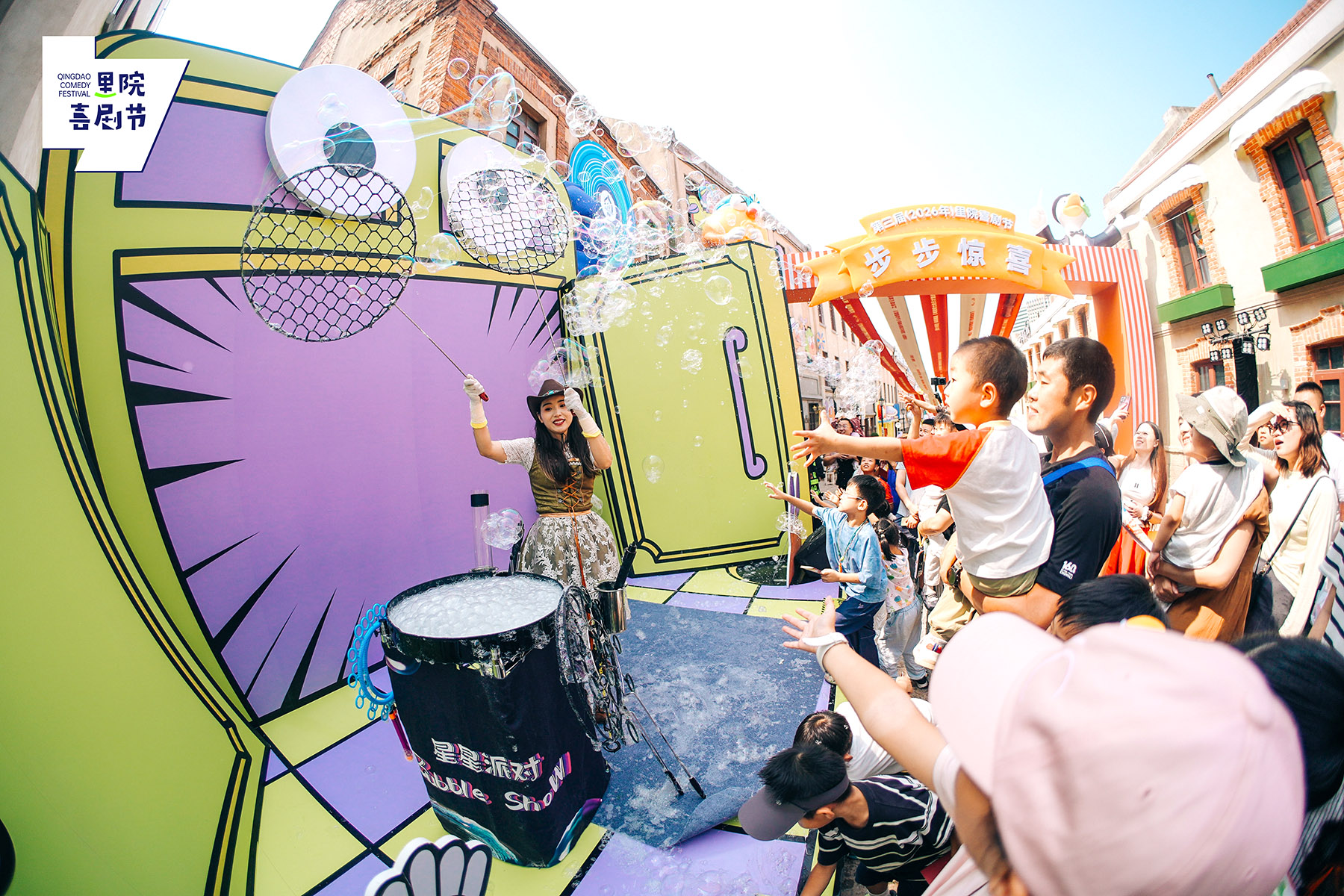
Step through an arched passage in Qingdao's historic Dabaodao district, pause on a flagstone path, or drift into a courtyard — any one of these can land you in the middle of a joyful street performance at the Liyuan Comedy Festival.
Dabaodao is home to the city's distinctive Liyuan courtyard compounds, mainly built in the early 1900s, that blend Western-style grid streets with the enclosed courtyard form of the traditional Chinese siheyuan. Usually two to three stories high, they mix shops on the first floor with homes above, all arranged around a shared inner yard that once served as the social heart of a close-knit community of ordinary working people: clerks, laborers, farmers, fishermen and small traders.
For Huang Bo, the Qingdao-born film star who started the festival, these courtyards are where he grew up.
"My grandma lived here, and so did many of my relatives and schoolmates. We'd drop by friends' houses, run wild in the lanes, grab grilled skewers from street corners, and play games on open patches of ground. This was our childhood — the life that nourished us," said Huang, who rose to fame with the 2006 hit comedy Crazy Stone.
"The lanes were narrow, paved with flagstones fitted piece by piece. The uneven surface would rattle cars driving over them. Yet this urban texture of the old town feels so distinctive, so vivid and so memorable to me now."
In the 1990s, as Qingdao's urban core pushed eastward and its infrastructure aged, these Liyuan courtyards fell into decline and gradually lost their former bustle. In 2019, the city launched a preservation and renewal effort across the historic blocks. By 2022, the Liyuan area around Zhongshan Road and Dabaodao was under concentrated restoration, and trendy shops, themed hotels, and immersive theaters soon moved in.
To further energize these restored buildings, and with support from the local government, Huang launched the comedy festival two years ago, inviting comic troupes of various styles to perform and rallying Qingdao-born celebrities to lend their support.
"It's about tucking contemporary cultural vitality into the cracks between the flagstones of these courtyards, breathing fresh cultural energy into the old town," said Huang.
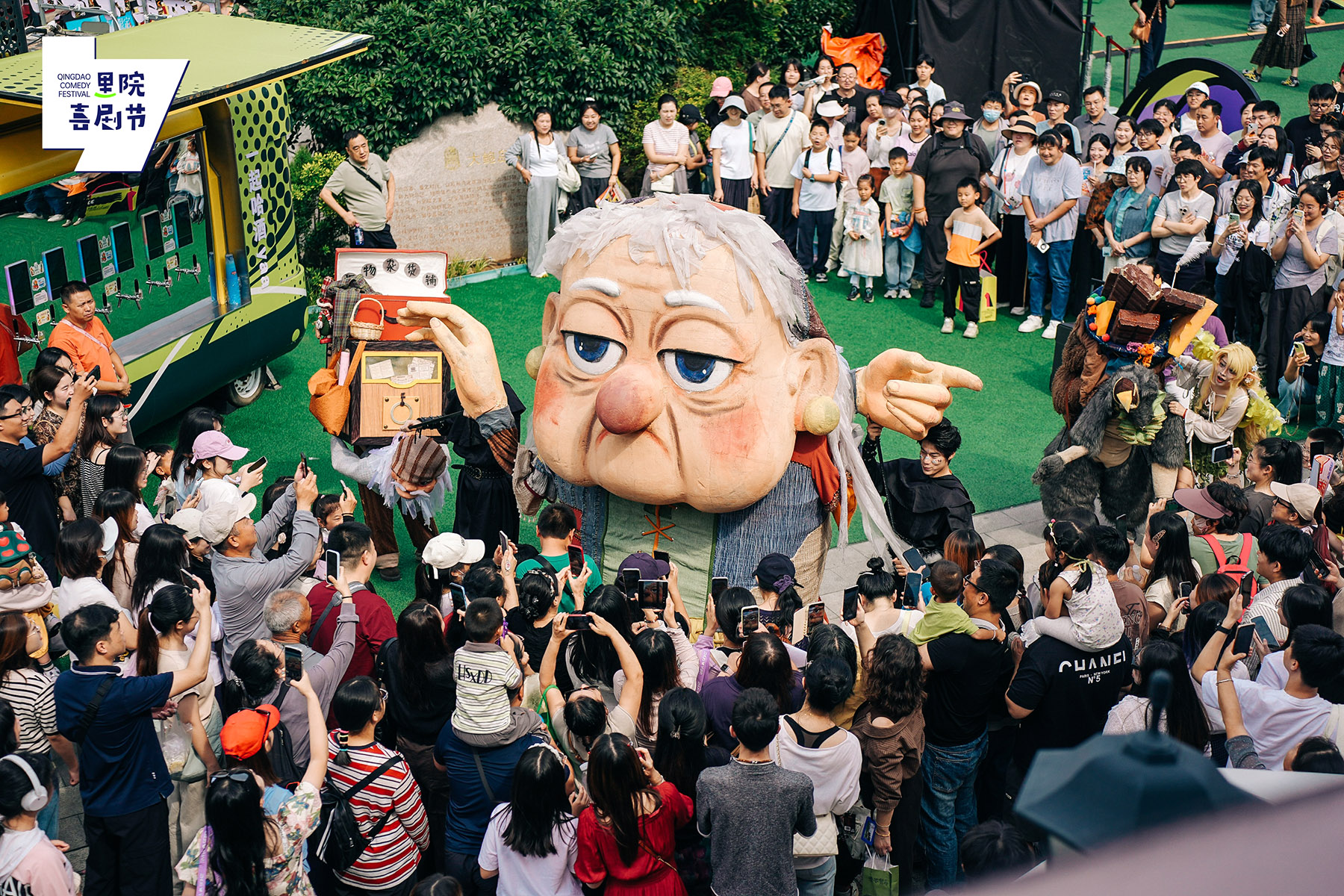
This year's festival turned places that once hummed with everyday life into stages packed with laughter. More than 35 comedy formats and over 1,000 shows were staged across the city's historic blocks, primarily in Shinan district.
Stand-up, sketch, theater, mime, magic, musical parades, interactive games, improv comedy, and clowning could be found on the streets and in theaters from Sept 19 to 28.
Meanwhile, at No 97 Zhongshan Road — Qingdao's first Chinese-run cinema, founded in 1931 — classic comedy films were screened throughout the festival.
The festival mainly unfolded across two areas. Around Huangdao Road and Sifang Road, people could wander the lanes and watch the street acts; in the enclosed courtyards near Beijing Road, audiences could sit down and take in a full performance. Day passes cost 9.9 yuan ($1.48) for one area and 16.99 yuan for both, while specially invited productions staged indoors were ticketed separately.
The timing is deliberate. As summer holidays end and Qingdao slips into a brief lull in the tourist season, the festival is meant to inject the city with fresh appeal, Huang added. It seems to have worked: this year's edition drew some 2.15 million visitors to the Liyuan, with daily foot traffic peaking at 270,000.
For theater director Meng Jinghui, who came for a forum during the event, a festival is simply an excuse for people to gather and have fun — comedy, pratfalls, theater, music, all kinds of forms coming together.
What makes this comedy festival special, he said, is that "beyond just entertaining ourselves, something else seems to accompany us". These old buildings, with their pillars and beams, are unassuming, he noted, yet their sense of history draws people closer across time and space.
This year's festival had an international reach, welcoming artists from six countries. Among them were Danish performer Clara Luna Morch Nani, Australian artist Shep Huntly Shepard, and Cuban comic Liubin Lima Manzano, each bringing a distinctly different form of comedy to the courtyards.
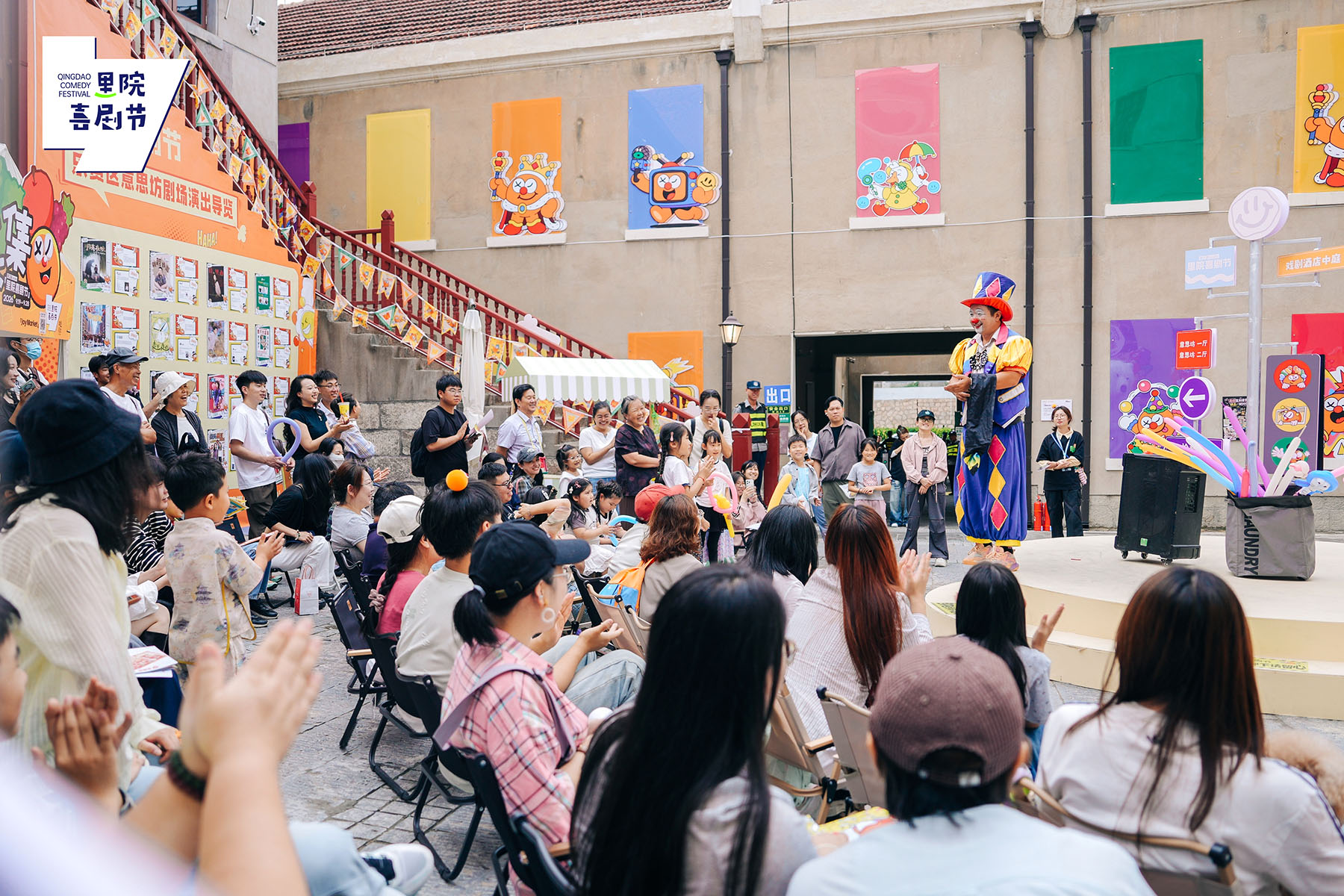
Nani writes, performs, and even builds the props for her wordless solo show Frida's Incredible Journey, which was staged during the festival.
"It's amazing to be able to travel the world doing wordless theater. A lot of our themes are things most people can relate to in some way. It's about sharing the magic with as many people as possible," she said.
Nani had also performed in Shanghai last year. Chinese audiences, she finds, tend to appreciate clever jokes. The children's strong curiosity, though, is what she remembers most. She recalled a brother and sister who stayed to study the scenography for 15 minutes.
It was her first time in Qingdao, and she explored the city on foot until her legs were sore — especially the areas where the festival was staged.
"The festival is really well put together. There is so much merchandise, colored lights, decorations on the rooftops. It feels like Disneyland in a way," she said.
For veteran performer Shepard, who has toured across Europe and his home country of Australia over the past 30 years and taken part in art festivals around the world, the one in Qingdao still felt fresh.
"There are lots of different things going on. It feels like around every corner, there is something else," he said.
"Laughter is the best medicine, and laughter transcends all languages. And when people laugh together, they feel connected."
A street performer since the 1990s, Shepard sees the challenge of street performance as getting people's attention — and holding it.
"You just don't let them deviate from the show. You have to keep them engaged the whole time. And it's difficult. But when it's working, it's just pure magic."
That magic was on full display in an open square, where Cuban performer Lima drew in the crowds with a comedy about a cleaner with musical dreams. Both adults and children alike were eager to be picked to join him on stage.
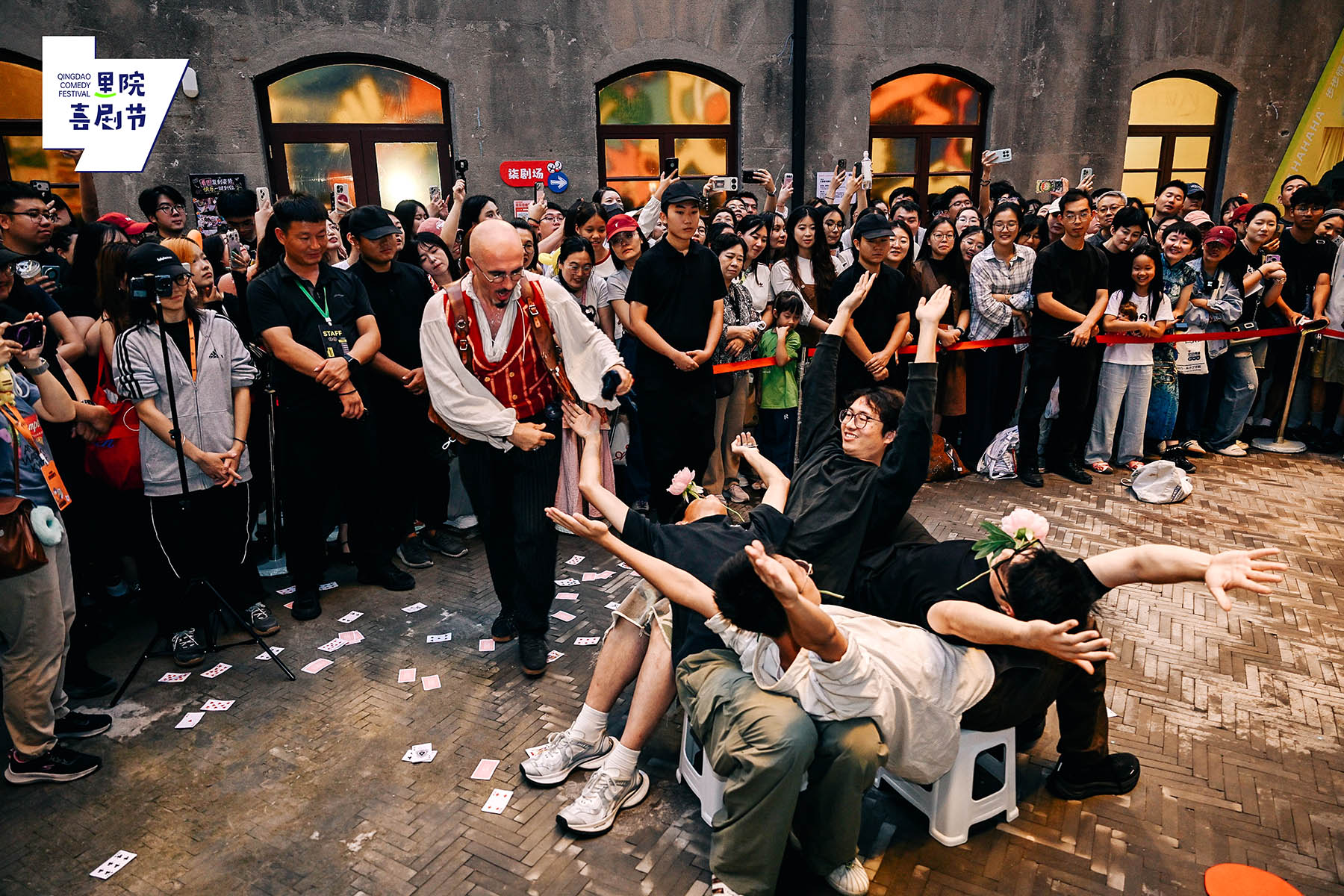
Ding Ting, a visitor from Changsha, Hunan province, found the show engaged with the audience from start to finish. Yet every spectator asked to participate seemed naturally funny and utterly unafraid of the stage.
"Everyone really throws themselves into it. Some improvised reactions even made the show funnier," she said.
She came for a short getaway during the Mid-Autumn Festival holidays. Back home in Changsha, she often catches stand-up shows with friends. After strolling the festival areas and catching several theater shows, she said: "The best part of watching comedy in Qingdao is the audience. They're the quickest to catch a joke of any crowd I've ever seen.
"It's a perfect way to spend a holiday in a place where everyone seems to put happiness above all else."
In Huang's view, Qingdao has a comedic atmosphere all its own. Natural humor runs through the locals' everyday conversations in the local dialect.
"People have their confusions and hardships in life, and they have this way of dissolving them. Their humor is a bit rough-edged, and sometimes it turns into self-deprecation."
Now, in the restored historic blocks, beyond the comedy festival itself, more humor is fermenting as theater troupes and comedy clubs are incubated in these spaces. Improvised comedy, theater workshops, and other activities keep running.
ALSO READ: More Chinese paying for a laugh
On the third floor of the former residence of Zhao Taimou, a renowned modern educator in Shandong, a small space is packed with young audience members.
They sit cross-legged in a circle on the floor, leaving a small clearing in the middle as a stage for improv comedy. The performers stand at the center and riff off whatever keywords the audience tosses out.
"Here at the former residence, we've already set up two regular communities: an improv comedy workshop and a parent-child theater workshop. We hold events every weekend or holiday, and both young people and families love coming," said Li Dami, manager of a local comedy club named Tangdou.
The shows have ended. The magic in these courtyards will continue.
Contact the writer at xingwen@chinadaily.com.cn
