

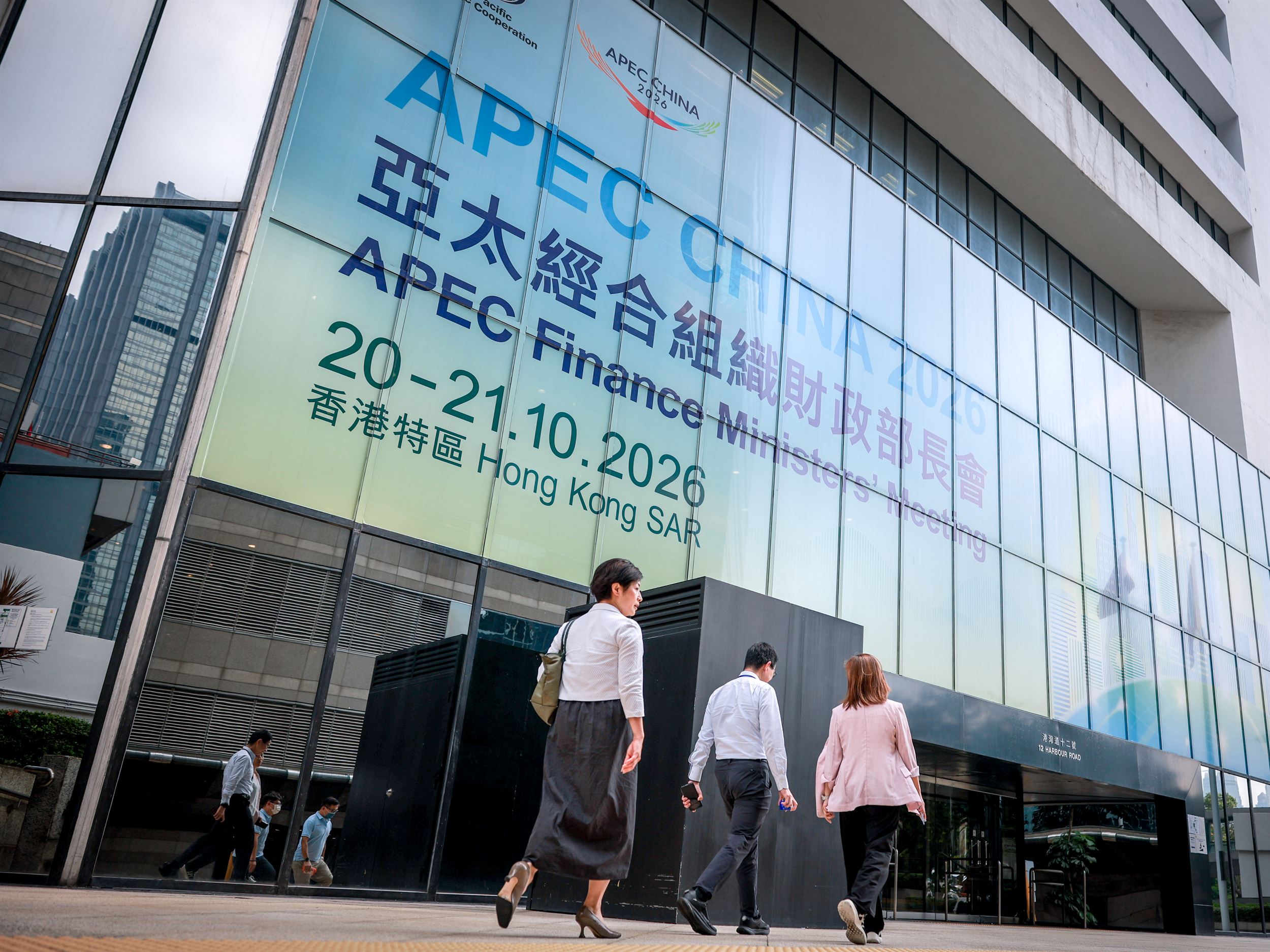
The 33rd Asia-Pacific Economic Cooperation Finance Ministerial Meeting, which began in the Hong Kong Special Administrative Region on Tuesday, offers a platform for strengthening economic cooperation among the grouping’s 21 member economies, experts said.
And, with Hong Kong and most of the Association of Southeast Asian Nations economies being APEC members, they can utilize this valuable opportunity to discuss how to step up economic cooperation.
Hong Kong itself can play a very important complementary role in supporting the supply-chain restructuring process in the 11-member ASEAN grouping by providing a host of professional services, economists told China Daily.
READ MORE: Closer cooperation seen as HK gears up for APEC
Backed by Asia’s strong inter-regional trade due to market diversification and deeper trade ties, International Monetary Fund projects in Asia would contribute two-thirds of the world’s economic growth in the next few years.
The ASEAN economies, in particular, have been driven by a technology boom and strong growth in exports of semiconductors and artificial intelligence infrastructure.
“The rise of technology has provided a sizeable boost to several major Asian economies, with exports growth having risen sharply in the first half of this year. This was driven by technology products, strong demand for AI infrastructure, and investment in data centers,” said IMF Asia and Pacific Department Director, Krishna Srinivasan.
Asia’s exports strength extends beyond the technology boom, with trade performing better than expected despite tariffs, including non-technology exports. This was supported by the diversification of export markets, robust intra-regional trade and more trade agreements.
READ MORE: Hong Kong aims to drive capital flow at APEC
“Growth, surprisingly, has been stronger in India, while South Korea and some ASEAN economies have seen significant growth on the back of the technology boom,” Srinivasan said.
Besides strong exports, another economic transformation driver for the ASEAN economies is supply-chain restructuring.
The China Plus One (C+1) strategy is a business and supply-chain approach with companies maintaining operations in China while establishing production or sourcing capacity in at least one other country to diversify risk and reduce dependency.
As this strategy is becoming less effective due to widespread tariffs imposed by the United States, many countries are shifting to hedging strategies, localizing production and exploring domestic markets. As a result, after experiencing strong export growth, ASEAN economies are now demanding professional services to facilitate supply-chain restructuring.
Tang Hei-wai -- associate vice-president (global) and director at The University of Hong Kong’s Asia Global Institute -- said Southeast Asia has benefited greatly from supply-chain restructuring with the signing of trade pacts under the Regional Comprehensive Economic Partnership, robust infrastructure, and openness to foreign direct investment.
READ MORE: APEC CEO Summit 2026 ‘to help promote cooperation, prosperity’
He said Hong Kong, as a financial and professional services hub, can support the ASEAN economies in supply-chain restructuring through trade finance and insurance.
“For Hong Kong to be a member of the RCEP, it can help some of the grouping’s economies overcome some of the challenges in supply-chain restructuring, especially when it comes to financial support and offering professional services, such as insurance, and supply-chain management,” Tang told China Daily.
Financial Secretary Paul Chan Mo-po said besides ASEAN, Middle Eastern and Central Asian countries can also leverage Hong Kong’s professional services in promoting economic growth.
“As Middle Eastern and Central Asian economies continue to develop and diversify, the SAR can support their economic growth by mobilizing long-term capital, broadening currency options, and managing and sharing risks,” Chan said.
The finance chief said international multilateral organizations, financial institutions and insurers can cooperate by using innovative methods to promote more efficient capital mobilization and risk management.
“With Hong Kong’s concentration of relevant professional expertise, abundant capital and extensive experience, the city can help structure projects to make them bankable, fostering a virtuous cycle in driving growth and investment opportunities,” he said.
