

The 12th Global Tourism Economy Forum gathered some 1,300 government officials, representatives of international organizations, business leaders, scholars and media personnel from more than 20 countries and regions in Macao, discussing the latest shifts in global travel and witnessing a string of industry agreements.
Hailing the forum as a premier global tourism platform, stakeholders from across the world said it offered excellent opportunities for business matching, exchanging views on emerging trends and exploring ways of strengthening the tourism business. They also voiced confidence in the industry’s prospects and invited travelers and partners to their cities and countries.
Established by the Macao Special Administrative Region Government in 2012, the forum has, across its first 11 editions, hosted more than 15,500 guests from 88 countries and regions and welcomed nearly 800 internationally-renowned speakers. It has been backed over the years by leading institutions from the Chinese mainland and worldwide, such as United Nations Tourism and the World Travel and Tourism Council. This year, Spain is the partner country and China’s Hainan the featured province.
This year’s conference, held from Thursday to Saturday, was themed “Crisis, Resilience, Evolution — Building a Tourism Economy for a Shared Future”. Industry players from around the world delivered keynote speeches and held discussions across 13 sessions, covering talent development, artificial intelligence applications, investment attraction and capital flows, the Asia-Pacific’s rising tourism market, and tourism’s integration with culture and sport.
Besides business-matching and promotional sessions, the forum also organized field trips offering global merchants and investors a deeper insight into Macao’s cultural heritage, cuisine and traditional Chinese medicine and health industries.
At Friday’s closing ceremony, officials and organizers also announced that next year’s forum will be held on Hainan in October — its first edition on the island province.
Maria Helena de Senna Fernandes — director of the Macao Government Tourism Office — said the forum featured prominent decision-makers, promoters and industry leaders in the global tourism economy, and has grown into “an international platform for building consensus and setting trends” with “depth, breadth and influence”.
She said this year’s theme is also a vision Macao hopes to realize with world partners, hoping the event will open up boundless possibilities for future cooperation.
Pansy Ho Chiu-king — a prominent Hong Kong and Macao entrepreneur and the forum’s vice-chairperson and secretary-general — echoed this year’s call for sustainability and distilled the key insights from the discussions. She outlined core pillars for a resilient, sustainable tourism future, including people-to-people bonds, openness, local identity, and a return to the human spirit alongside technological transformation.
Stressing the need to balance tourism with ecological protection, she said she looked forward to more visionary ideas at next year’s Hainan conference.
Bateer — executive vice-governor of the Hainan Provincial People’s Government — told the closing ceremony Macao has built leisure tourism into a world-class benchmark over the decades, with the forum’s success standing as strong proof. He pledged Hainan would make all-out efforts to host the 2027 Global Tourism Economy Forum, fostering closer tourism links between the two places, and invited global stakeholders to Hainan next year.
International experts, practitioners and industry leaders said the gathering created an excellent platform for exchange and cooperation, bringing together wisdom from different countries and regions to advance the industry.
Gloria Guevara — president and CEO of the World Travel and Tourism Council — said conversations at the forum have sparked many ideas. For instance, Chinese tech companies asked how to adapt their products for European consumers, while she discussed with them ways of using digital tools popular in China to create marketing campaigns tailored to the Chinese mainland and other parts of Asia.
Beyond networking, Guevara said the council aimed to achieve concrete outcomes, including connecting not just first-tier cities in China and Europe, but also their second- and third-tier cities. She hoped the forum’s wide participation would “make it easy for people in China to visit lesser-known destinations in Europe, and for Europeans outside big capitals and major cities to come to China”.
Mayuree Chaipromprasith — president of corporate partnership and communications at Thailand’s Siam Piwat, a real-estate developer and destination operator in Bangkok — said the forum gave the company valuable opportunities to showcase its projects, exchange views and explore partnerships with global industry leaders.
The insights gained, she added, will help her company realize its vision of creating global experiential destinations that will become national landmarks and attract visitors worldwide.
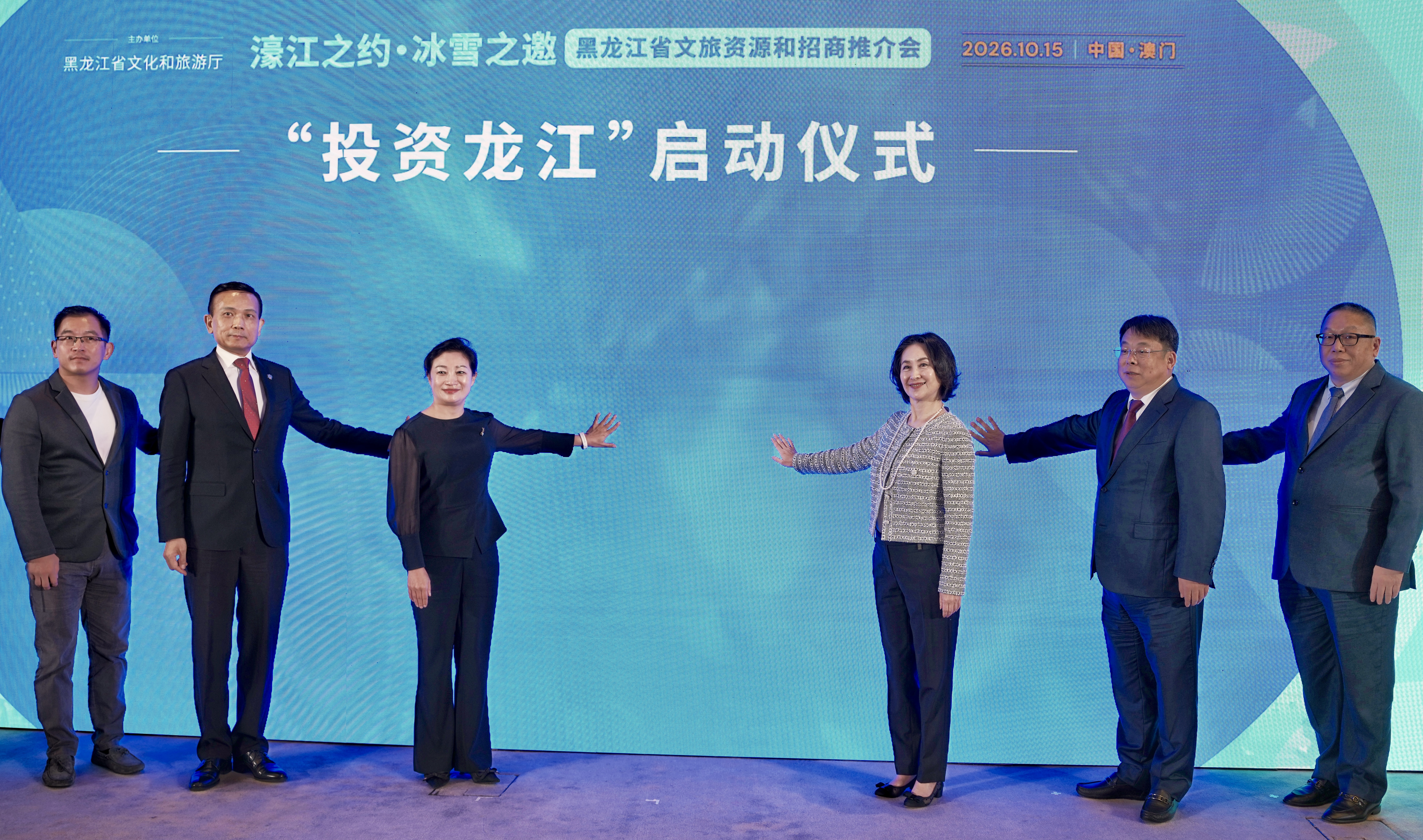
A side event of the forum showcasing Heilongjiang province’s cultural tourism resources and investment potential, witnessed the signing of multiple cooperation agreements between businesses and organizations in Macao, and cities across Heilongjiang including Daqing, Yichun and Heihe.
The northern cities introduced themed travel routes and special offers targeting visitors from Macao. Yichun announced it would waive entrance fees for Macao tourists. For business collaborators, Heihe will offer complimentary advertising resources in neighboring Russia to tap inbound tourists from there.
Leo Zhang Xu, vice president and general manager of the destination cooperation department at Trip.com Group, cited data showing a rise in visitors to Heilongjiang from Hong Kong and Macao. Northbound ice-and-snow tourism has become an emerging travel trend in the two SARs, he said.
Contact the writer at amberwu@chinadailyhk.com
