

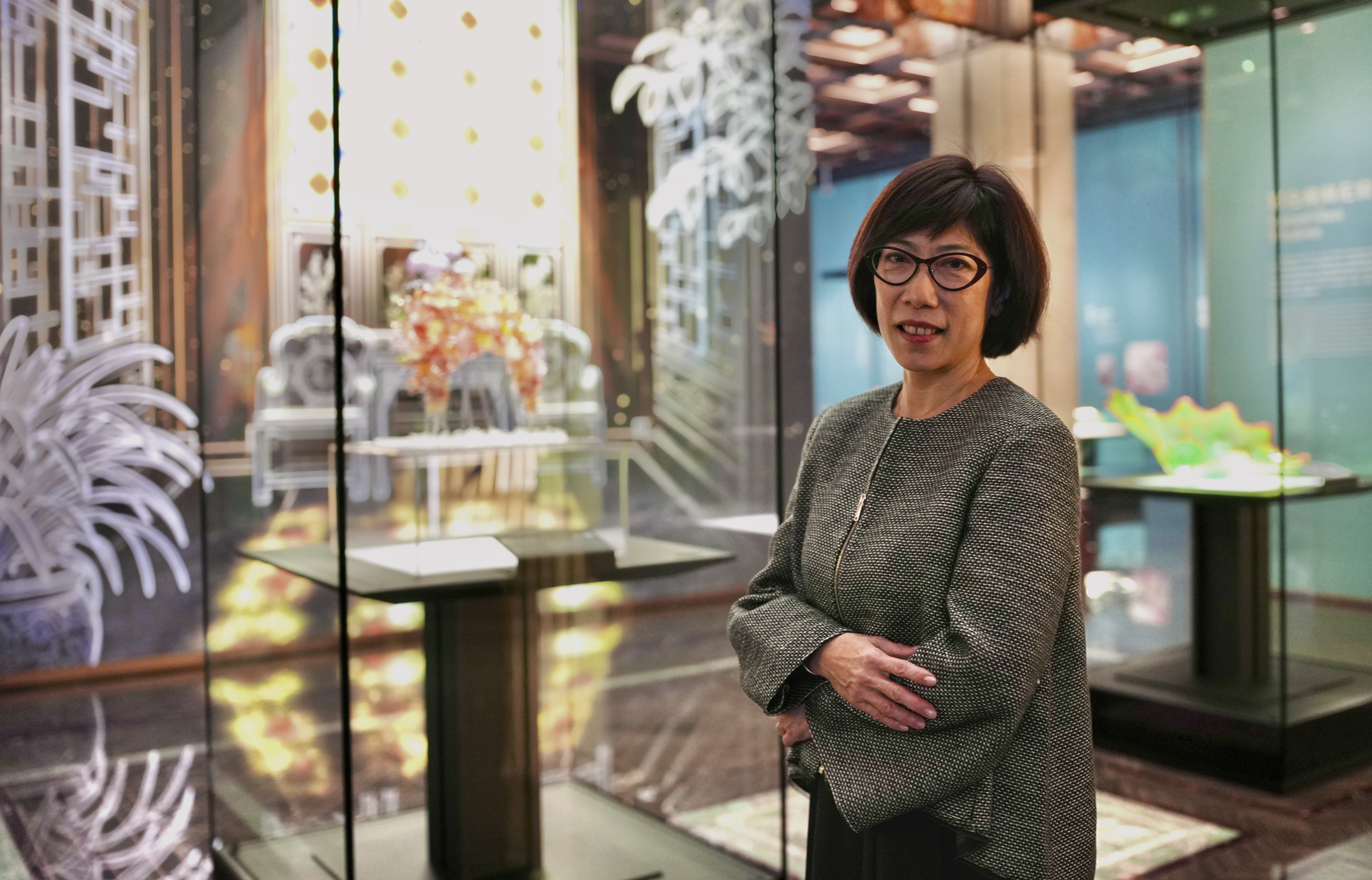
The Macao Special Administrative Region’s role as a meeting point between East and West makes it a natural setting for bringing Chinese cultural heritage to wider audiences, while technology is helping visitors better understand the objects on display, an arts executive said.
Cristina Kuok, senior vice-president of arts and culture at MGM, made the remarks to China Daily on Thursday, as Luminous Brilliance: The Artistry of Zibo Liuli — an exhibition of glasswork from East China’s Shandong province — opened at the Poly MGM Museum.
The exhibition brings together nearly 180 historic artifacts and contemporary works, introducing visitors to the glassmaking traditions of Zibo. The city’s liuli-making techniques are recognized as national-level intangible cultural heritage.
For Kuok, liuli’s appeal lies partly in its easily appreciated beauty and its connections to glassmaking traditions in both East and West.
Organized by the Poly MGM Museum in collaboration with the National Museum of China and the Zibo Ceramic and Glass Museum, the exhibition follows a presentation at the National Museum that began in June 2025.
ALSO READ: Luminous brilliance
Poly MGM Museum’s exhibitions center on the Silk Road, whose rich history offers a wealth of stories to tell, Kuok said.
“Macao is a very unique place with a lot of Eastern and Western (mixed) culture, and is also one of the ports on the Maritime Silk Road,” she said.
Kuok said an exhibition focusing on the Xinjiang Uygur autonomous region is planned.
Technology also has a role to play in helping visitors understand cultural heritage, she said.
“We do have to use technology to help us create more storytelling,” Kuok said, adding that digital tools can make artifacts easier to understand, regardless of where they come from.
Alongside exhibitions featuring Chinese traditions, Kuok said the museum plans to bring more international exhibitions to the Macao SAR, building on previous collaborations with the culture ministries of France and Italy.
