

As traditional career boundaries blur, graduates are venturing into emerging sectors where adaptability and curiosity can matter as much as degrees.
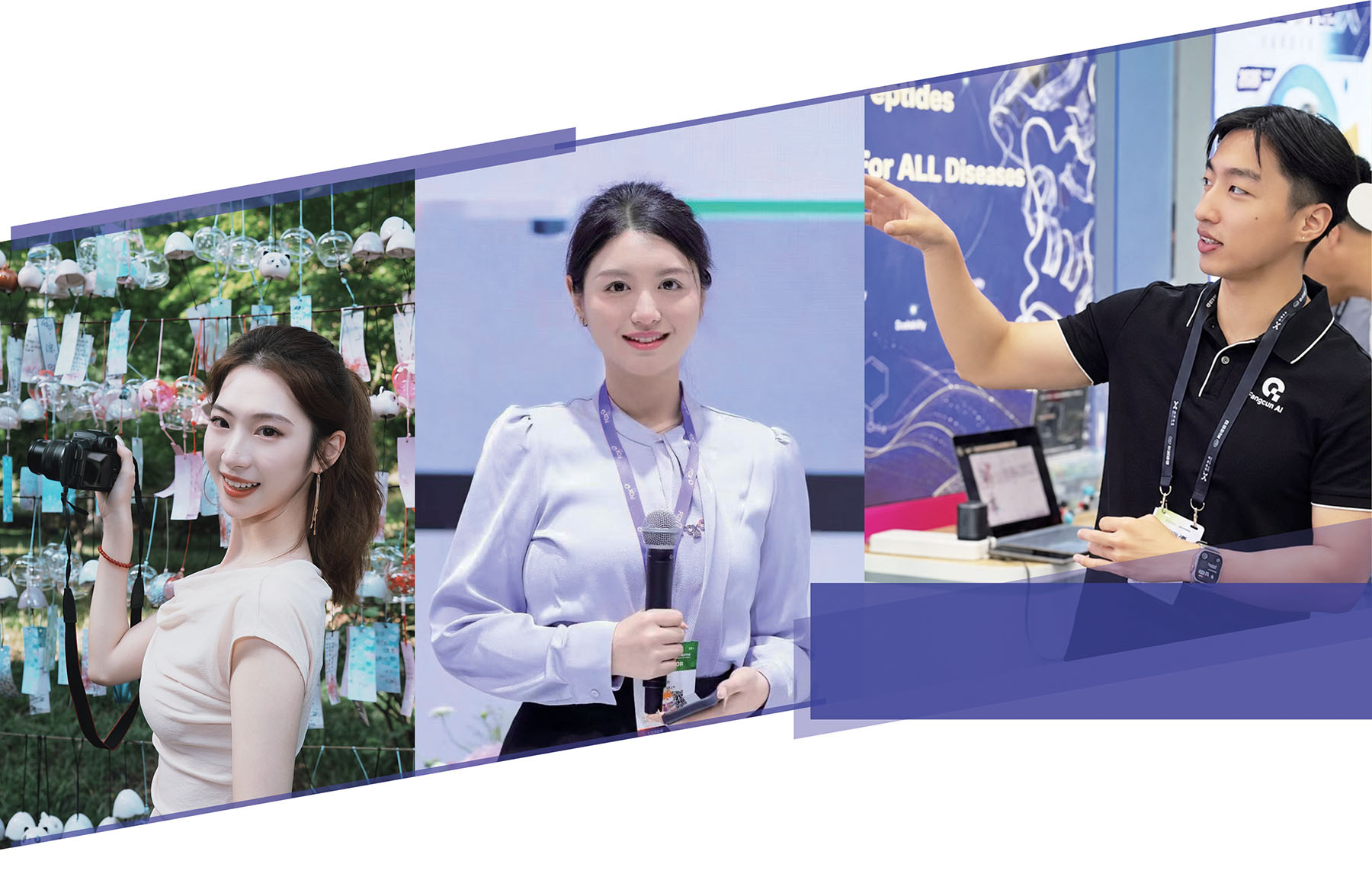
Three months ago, as graduation caps flew into the air at Central South University in Changsha, Hunan province, Wang Chunchun was preparing to follow a path unlike that of most of her classmates.
While many opted for postgraduate studies, Wang, an automation major, was the only one in her class to head straight into the workforce.
She is now training as an AI product manager at Alibaba Cloud, one of China's major technology companies, where she works at the intersection of client needs and technical development, helping translate technical capabilities into practical applications.
That decision has placed her in an industry evolving at extraordinary speed.
"AI is changing so quickly," Wang said. "Every day brings a flood of new information, and a technology that barely existed yesterday can suddenly become the next big thing."
Far from being overwhelmed by the pace, Wang said the rapid change is precisely what draws her to the field.
"I enjoy being challenged and learning something new every day. I can feel myself growing constantly, and that sense of progress is deeply rewarding," she said.
Wang's choice reflects a broader surge of interest among young Chinese job seekers in emerging industries such as AI, robotics and clean energy — sectors closely linked to the country's push to develop "new quality productive forces".
According to a report by Chinese recruitment platform Zhaopin, graduate job openings in the robotics industry rose 83.8 percent year on year from January to May 2026, while openings in new materials increased by 60.1 percent and those in optoelectronics by 30.7 percent. New-generation information technology accounted for the largest share of graduate openings among the emerging industries tracked by the report, at 46.4 percent.
The expanding range of opportunities is also attracting graduates from outside traditional science and engineering backgrounds.
Zhao Leran, 25, majored in legal studies at the University of California, Berkeley, and previously worked in talent recruitment at a Chicago-based quantitative trading firm. Seeing the surge in AI hiring firsthand prompted him to experiment with the technology himself.
He started using AI coding tools such as Claude and Codex to build small projects, even though he had taken only one introductory coding course. To his surprise, he was able to create functional tools that he had once assumed only professional programmers could build.
"That experience changed the way I saw AI," Zhao said. "When a single prompt can yield results that far exceed your expectations, you start to rethink what the technology — and what you yourself — are capable of."
That hands-on experimentation ultimately steered him toward a new career path. In April this year, Zhao joined AI safety startup Fangcun AI as a brand ambassador, responsible for community, go-to-market strategies and business development.
Attending this year's World Artificial Intelligence Conference (WAIC) in Shanghai reinforced his confidence in that decision.
"While other sectors may be experiencing a slowdown, the energy at WAIC was electric," Zhao recalled. "Everyone seemed driven by passion and a strong sense of purpose. You can clearly feel the public's growing appetite for AI insights."
Zhao's move illustrates how AI's increasing accessibility is opening opportunities for humanities graduates. The rising number of sales, marketing and business-development roles means that working in the industry no longer necessarily requires being a programmer.
Song Shuye is one of those graduates. She earned a master's degree in marketing communications from the University of Melbourne two years ago and now works in China's renewable energy sector, focusing on global digital marketing and international brand communications for a Chinese clean-energy company expanding overseas.
Her career path has taken her through beauty, consumer electronics, commercial real estate and clean energy, requiring her to continually adapt to new markets, products and industries.
Rather than seeing those transitions as setbacks, Song views adaptability as a strength.
"For young people, acquiring new knowledge across disciplines is genuinely exciting," she said. "Many ways of thinking and working are transferable across industries, and with consistent learning habits — such as listening to podcasts and keeping up with industry developments every day — you can quickly build an understanding of a new field."
Her experience has also reshaped how she views the role of graduates from nontechnical backgrounds in an increasingly technology-driven economy.
"Humanities graduates shouldn't limit themselves to traditionally humanities-related careers," Song said, adding that their skills can be equally valuable in technology-intensive sectors.
Modern marketing, she noted, combines creative storytelling with data analysis and strategic product positioning — skills that remain highly relevant even in industries driven by advanced technologies.
For students still exploring their career paths, Song encourages hands-on experimentation and learning through trial and error, rather than trying to plan their entire careers in advance.
"The real value of an internship is that it gives you a low-risk way to test whether you actually enjoy a specific field," she said.
Contact the writers at guojiatong@i21st.cn
