

Updated grid forecast to accommodate 900 million kW of distributed new energy
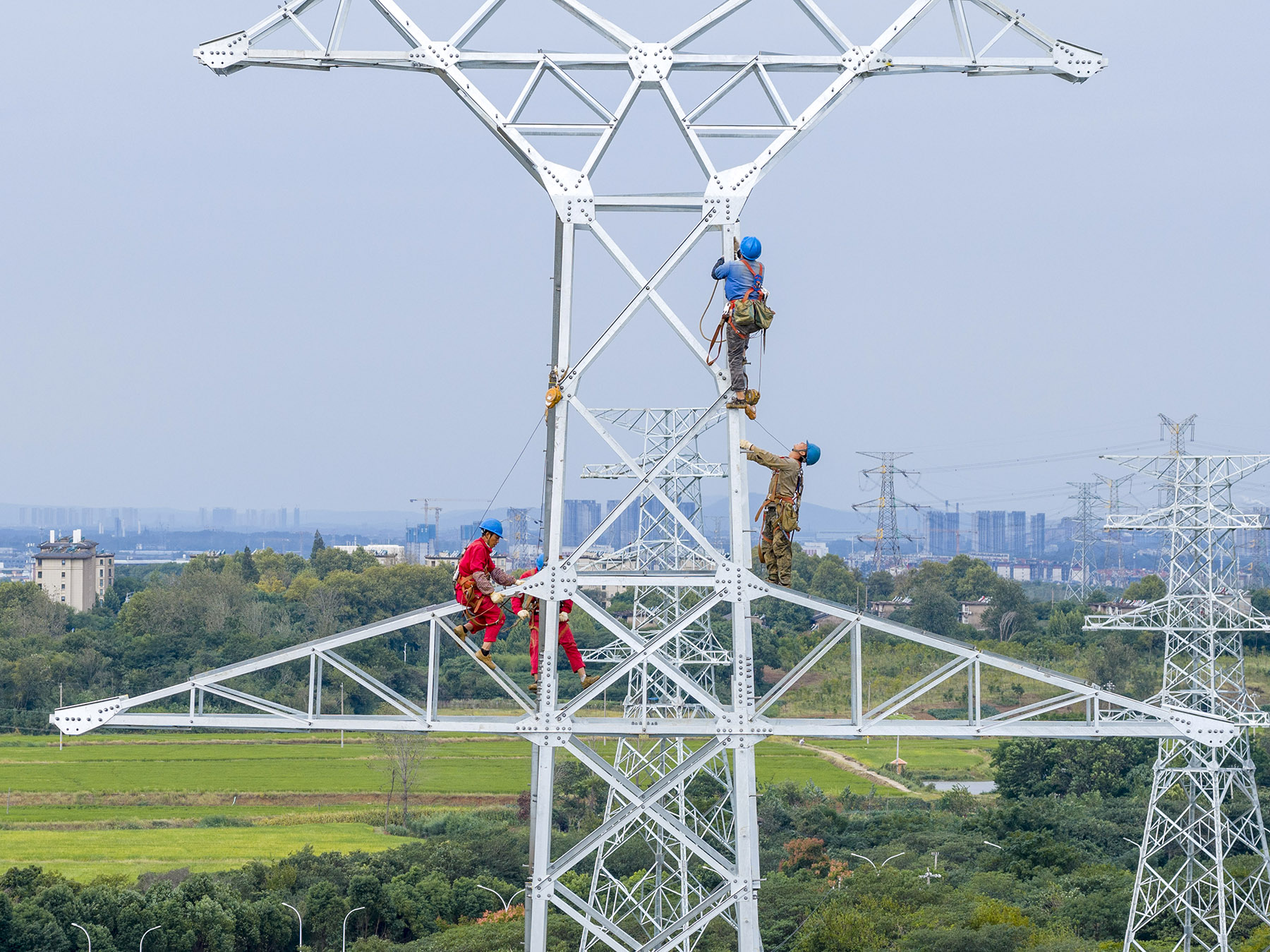
China is gearing up for an unprecedented transformation of its national power infrastructure, with the country's two dominant grid operators unveiling massive, coordinated investment blueprints to build a highly resilient, intelligent and green energy network during the 15th Five-Year Plan period (2026-30).
Driven by the rapid expansion of clean power and the looming surge in advanced computing loads, Beijing is leaning on next-generation energy infrastructure as a macroeconomic ballast.
Combined capital expenditure from State Grid Corporation of China and China Southern Power Grid is expected to reach a record of around 5 trillion yuan ($747 billion) over the next five years, aiming to eliminate renewable integration bottlenecks, propel the nation toward its carbon peaking goals and accelerate industrial modernization.
READ MORE: Solar eclipses coal as China's top power source
Industry experts view this historic capital injection as a sophisticated macroeconomic lever. Ye Xiaoning, a senior engineer at the new energy department of the State Grid Energy Research Institute, said the country is pivoting toward advanced energy infrastructure to serve as a new bedrock for the broader economy.
"By significantly increasing capital expenditure compared to previous cycles, China is leveraging the utility sector to drive domestic consumption, anchor industrial supply chains and foster new quality productive forces," Ye said.
He noted that such investments offer high multiplier effects across the industrial chain — boosting demand for everything from copper and power semiconductors to high-end software — at a time when traditional economic growth drivers are maturing.
Echoing this sentiment, financial heavyweight Goldman Sachs said in a recent report that this wave of capital represents an evolution from simple infrastructure expansion to a profound structural reshaping.
With wind and solar power projected to account for 30 percent of China's total power generation by 2030, its inherent intermittency will inevitably exacerbate grid volatility, structurally necessitating a massive investment shift toward intelligent systems and digitalized grid management.
While ultra-high voltage transmission is expected to be the fastest-growing segment in 2026, grid investment from 2028 to 2030 will pivot sharply toward smart infrastructure. This implies an unprecedented strengthening of the grid's "nervous system" — comprising software, control systems and sensors — and its "capillaries", such as distribution networks and smart microgrids, the report said.
Demonstrating the scale of this ambition, CSG, which serves southern industrial hubs including Guangdong, Yunnan and Hainan provinces, recently released a comprehensive roadmap detailing its new power system strategy for the 15th Five-Year Plan.
The blueprint sets aggressive targets for the end of the decade. By 2030, nonfossil energy is projected to account for 64 percent of the southern grid's total power generation, with new energy capacity making up 50 percent of the total.
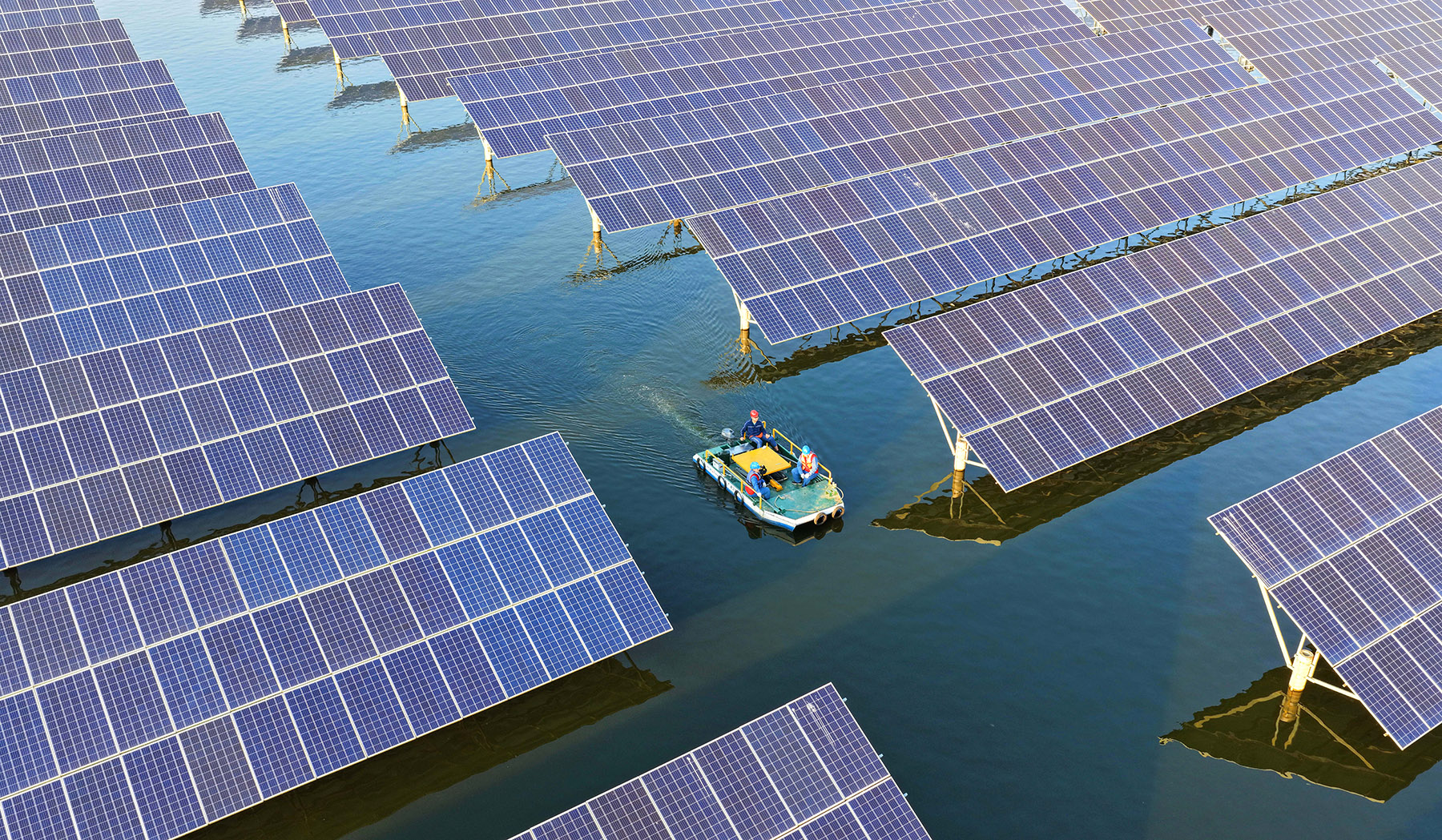
Aiming to outpace national benchmarks, CSG is targeting a 35 percent share of nonfossil energy in total end-user consumption by 2030 — 10 percentage points above the national goal — while pushing the electrification rate of terminal energy consumption to 38 percent.
During the 2026-30 period, CSG plans to add 230 million kilowatts of new energy capacity, bringing its total to 500 million kW by 2030. To manage this volatile green influx, the operator will simultaneously bring 88 million kW of supporting power and over 6 million kW of grid-forming equipment.
Furthermore, CSG is accelerating multi-technology storage and flexible load solutions. By 2030, it aims to achieve 60 million kW of novel energy storage and 29.43 million kW of pumped hydro storage.
While CSG fortifies the southern economic powerhouses, State Grid, which covers the vast remainder of the country, has pledged to proactively serve the development of emerging market entities.
The State-owned utility vowed to provide fair, efficient and seamless grid-connection services for novel storage and integrated microgrids. Crucially, State Grid will standardize and publicize available capacity information for its distribution networks, guaranteeing that an average of more than 60 million kW of newly installed distributed power capacity will be promptly connected to the grid annually through 2030.
Ye emphasized that these consistent upgrades have drastically improved the nationwide optimization of renewable resources.
"By bridging the geographical gap between the wind-swept western provinces and regions and the energy-hungry eastern coast, Beijing is successfully mitigating the curtailment issues that once hampered its solar and wind sectors," Ye said.
As both grid operators push to fortify their distribution networks, the impact is already transforming eastern industrial hubs like Suzhou, Jiangsu province, where traditional passive distribution grids are being upgraded into active, flexible platforms.
By the end of August, Suzhou's total photovoltaic installed capacity reached 9.08 million kW. Crucially, distributed solar accounted for 8.9 million kW of that total, ranking first in Jiangsu.
Benefiting from flexible site selection and localized consumption, distributed PV has become a primary tool for industrial parks and manufacturing enterprises seeking energy-saving retrofits and carbon reductions.
To systematically clear bottlenecks for these projects, local grid operators are dynamically assessing the carrying capacity of distribution networks. This proactive service approach has facilitated rapid project deployments.
This urgent need to upgrade the grid's outermost layers is not only driven by distributed solar, but also by an impending boom in new quality load demands, particularly from electric vehicles and artificial intelligence computing.
According to International Energy Agency forecasts, global information technology loads are expected to see a cumulative increase of 106 gigawatts between 2025 and 2030. To ensure a stable and efficient power supply for energy-hungry AI data centers, distribution systems have become a critical component, now accounting for approximately 10 percent of total data center investments, the IEA said.
Goldman Sachs believes a new grid platform centered on UHV, smart distribution and digitalization is the only viable path to accommodate high proportions of wind and solar energy while meeting these massive AI computing demands.
As distributed power sources, EV charging piles and virtual power plants are integrated at scale, investments in smart meters, automation terminals and distributed control systems will serve as a more sustainable growth engine than traditional transmission lines, the report said.
Zhang Lin, director of planning and development at the China Electricity Council, emphasized that strengthening the synergy between the backbone grid, local distribution networks and microgrids is now a strategic necessity.
"This deeper integration is essential to support emerging energy business models and ensure that renewable energy providers can participate on a level playing field within the national power market," Zhang said.
According to the investment plans of the two utility giants, the updated grid will be engineered to accommodate 900 million kW of distributed new energy. There will also be a massive expansion of the nation's EV infrastructure, providing the essential capacity to support more than 40 million chargers nationwide. These targets reflect a vital shift from simply building renewable generation plants to ensuring that clean power actually reaches the end consumer reliably.
Beyond resolving long-standing green energy bottlenecks, industry experts view this trillion-yuan annual spending as a sophisticated macroeconomic lever.
Lin Boqiang, head of the China Institute for Studies in Energy Policy at Xiamen University, said that offering high multiplier effects across the industrial chain, this capital injection comes at a critical time when traditional growth drivers are maturing.
ALSO READ: State Grid unveils plan to add 200 GW of wind, solar capacity annually
For every billion yuan spent on ultrahigh voltage lines or smart substations, there is a corresponding surge in demand for copper, steel, power semiconductors and high-end software. "By investing and planning ahead, Beijing is effectively de-risking the industrial sector," Lin said.
State Grid Chairman Zhang Zhigang recently emphasized that the utility must play a "foundational and leading role" in stabilizing growth, stating that investment should be "moderately ahead of demand" to support major strategic projects and strengthen supply chain resilience.
CSG echoed this sentiment, announcing plans to spend at least 50.6 billion yuan on massive equipment upgrades and digital-intelligent transformation this year alone.
Market analysts suggest that this wave of capital will create a powerful pull effect. According to AVIC Securities, sectors involved in UHV technology, main grid equipment and distribution network upgrades are expected to see a multiyear windfall as the nation replaces aging hardware with smarter, bidirectional components.
Furthermore, robust global demand for grid upgrades is creating significant overseas opportunities for Chinese equipment manufacturers. By leveraging a comprehensive industrial system, supply chain advantages and a profound "engineer dividend", China's power sector is well-positioned to capitalize on the unprecedented global wave of grid modernization, AVIC Securities said.
Contact the writers at zhengxin@chinadaily.com.cn
