

Households viewing physical bullion as safe-haven asset, store of wealth
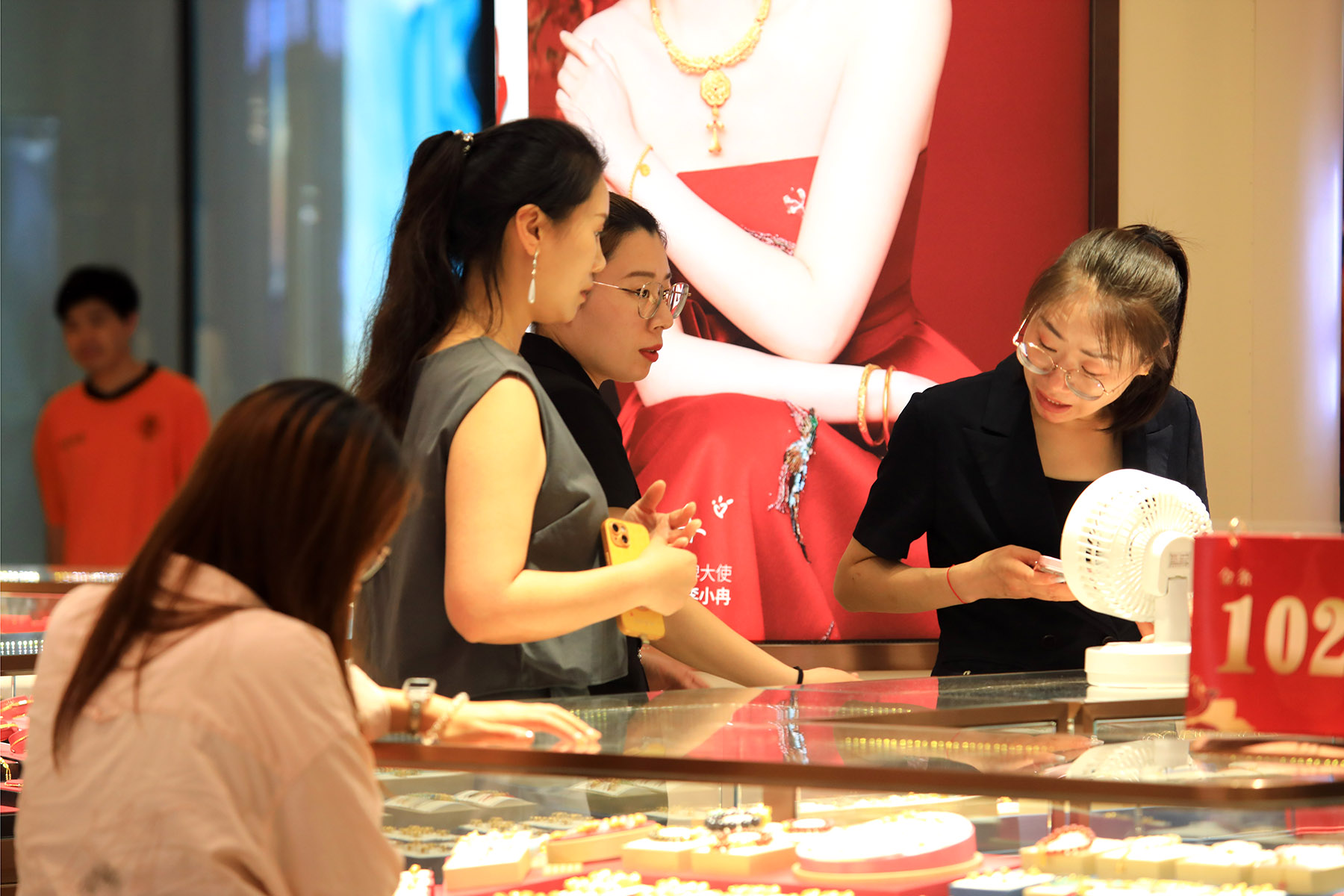
Shoppers crowd jewelry counters during major Chinese holidays, yet a noticeable shift is unfolding across retail outlets nationwide: sparkling gold ornaments are losing ground to plain gold bars and coins.
For ordinary households, gold is evolving from a festive gift or fashion statement into a favored store of household wealth.
For Fu Hao, a 35-year-old marketing manager in Beijing, the calculation has entirely changed.
While he once purchased intricately designed gold bracelets for family milestones, he now opts for unadorned bullion.
"The premiums you pay for jewelry craftsmanship just aren't worth it anymore," Fu said shortly after purchasing a 50-gram investment bar at a local bank.
READ MORE: Mixed results for China's gold sector as consumption changes
"We want our purchases to hold their pure value. It may not be wearable, but a plain gold bar provides real peace of mind."
This retail trend mirrors a far-reaching strategic shift, according to a recent report by S&P Global. Far from a short-term rush, China's growing engagement with gold spans household asset allocation, domestic mining expansion, central bank reserve building, cross-border financial infrastructure, and outbound resource investment — all unfolding against a broader wave of gold accumulation across emerging economies.
Chinese buyers are re-prioritizing gold bars and coins over decorative jewelry, with many families now viewing physical gold as an alternative safe-haven asset, according to the industry data released by the China Gold Association.
This structural divergence is becoming increasingly pronounced. According to the CGA, China's gold consumption reached 511.41 metric tons in the first half of 2026, up 1.23 percent year-on-year. However, demand for gold jewelry plummeted 33.88 percent to 132.13 tons, while robust investment demand pushed the consumption of gold bars and coins to 339.34 tons, surging 28.42 percent.
Periodic price pullbacks have consistently stimulated sales of gold bars through domestic banking channels, cementing them as a popular hedge against market risks.
"This demand cannot be suppressed, even with gold prices at historical highs," said Zhao Xiangbin, chief strategist at Beijing Gold and Forex Fortune Investment Management.
"Investor anxieties about geopolitical situations and tariff wars have intensified, leading to a gold market rush to balance asset portfolios and hedge against risks," he said.
This consumer phenomenon is not unique to China. S&P Global data point to similar patterns across emerging markets: retail investors are cutting spending on ornamental gold while lifting investment-grade gold purchases when geopolitical and domestic economic risks rise.
Even with changing buying patterns, China retains its title as the world's largest gold consumer, with total household gold demand dwarfing that of the United States and European markets combined.
Gold's status in Chinese policy documents has undergone a meaningful upgrade. Under mounting global geopolitical and trade uncertainties, Chinese authorities have re-defined gold not merely as a commodity or financial asset, but as a "strategic mineral" underpinning national financial and industrial security.
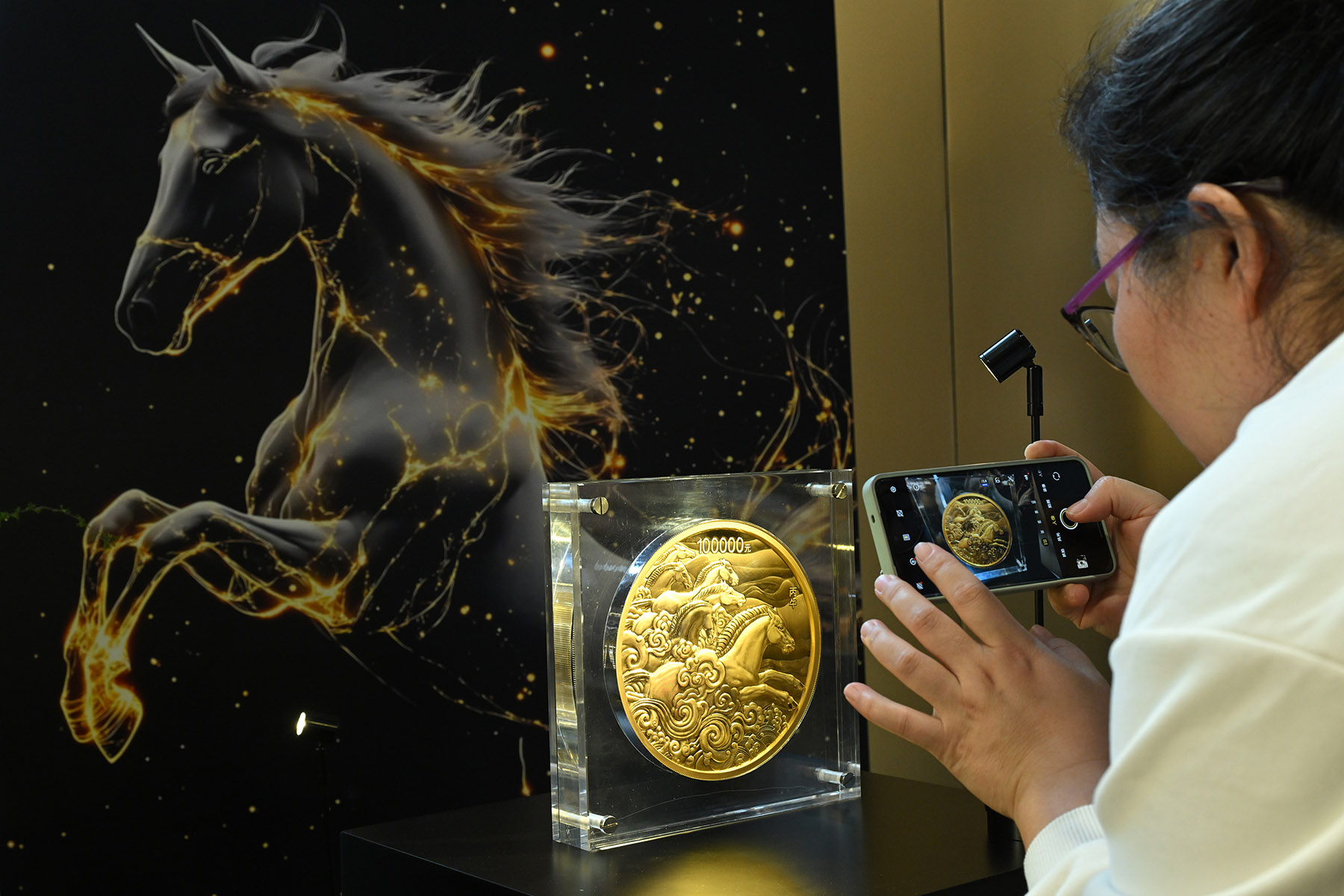
Released last year by nine central government departments including the National Development and Reform Commission and the Ministry of Industry and Information Technology, the Gold Industry High-Quality Development Action Plan 2025-2027 marks this policy turning-point.
According to the S&P Global analysis, China's gold-related policies serve long-term objectives: bolstering domestic economic resilience and expanding the global usage of the renminbi.
Progress will likely unfold gradually, underpinned by consistent policy commitment rather than short-term, opportunistic moves, it said.
According to the China Gold Association, China added 40.12 tons of gold in the first half, lifting its official reserves to 2,346.45 tons — the fifth-largest stockpile globally. Despite this scale, S&P Global notes that gold represents just 6.7 percent of China's total official reserves, trailing significantly behind median allocations in developed markets (16.6 percent) and African nations (17.5 percent).
This gap creates underlying sentiment for further gold accumulation, either through central-bank spot purchases or expanded domestic and overseas mine output, it said.
According to the People's Bank of China, China's gold reserves grew by over 40 tons in the first half of 2026 — more than double the 19 tons in the first half of the previous year.
The buying spree coincided with fresh regional conflicts and sharp swings in international gold prices. It also aligns with a worldwide trend: emerging-market central banks across Africa, Latin America and Asia have ramped up gold reserves since 2022, while developed-market physical stockpiles have stayed largely flat.
According to Wang Qing, chief macroeconomic analyst at Golden Credit Rating International, higher gold reserves can strengthen confidence in the renminbi as a sovereign currency and support its gradual internationalization.
The necessity of increasing gold holdings is rising from the perspective of optimizing the country's international reserve structure, Wang added.
Despite China's total official reserve assets sitting at roughly $4 trillion, its gold reserves remain relatively low in both absolute terms and as a share of total assets compared to major global economies, said Zhao Qingming, a specialist in international finance.
Pointing to the growing momentum of global de-dollarization, Zhao believes that with US dollar assets facing certain risks, moderately trimming dollar holdings in favor of gold is a logical safe-haven strategy.
While international gold prices have surged in recent years, global mine output has remained largely stagnant. Average lead time for new gold projects from discovery to commercial production has stretched to 17.5 years for 2020-25 projects, nearly doubling from the 10.6-year average seen in 2000-09, according to S&P Global.
Rising capital expenditure, falling ore grades and strict permitting processes discourage aggressive expansion among Western mining majors, it said.
Chinese gold producers are charting a different course. Major domestic miners balance commercial returns with national resource-security priorities.
According to the CGA, State-owned giants including China National Gold Group and Shandong Gold Group reported steady production growth abroad during the first half this year. Overseas mine production by these large groups reached 48.10 tons, a robust 21.43 percent year-on-year increase, it said.
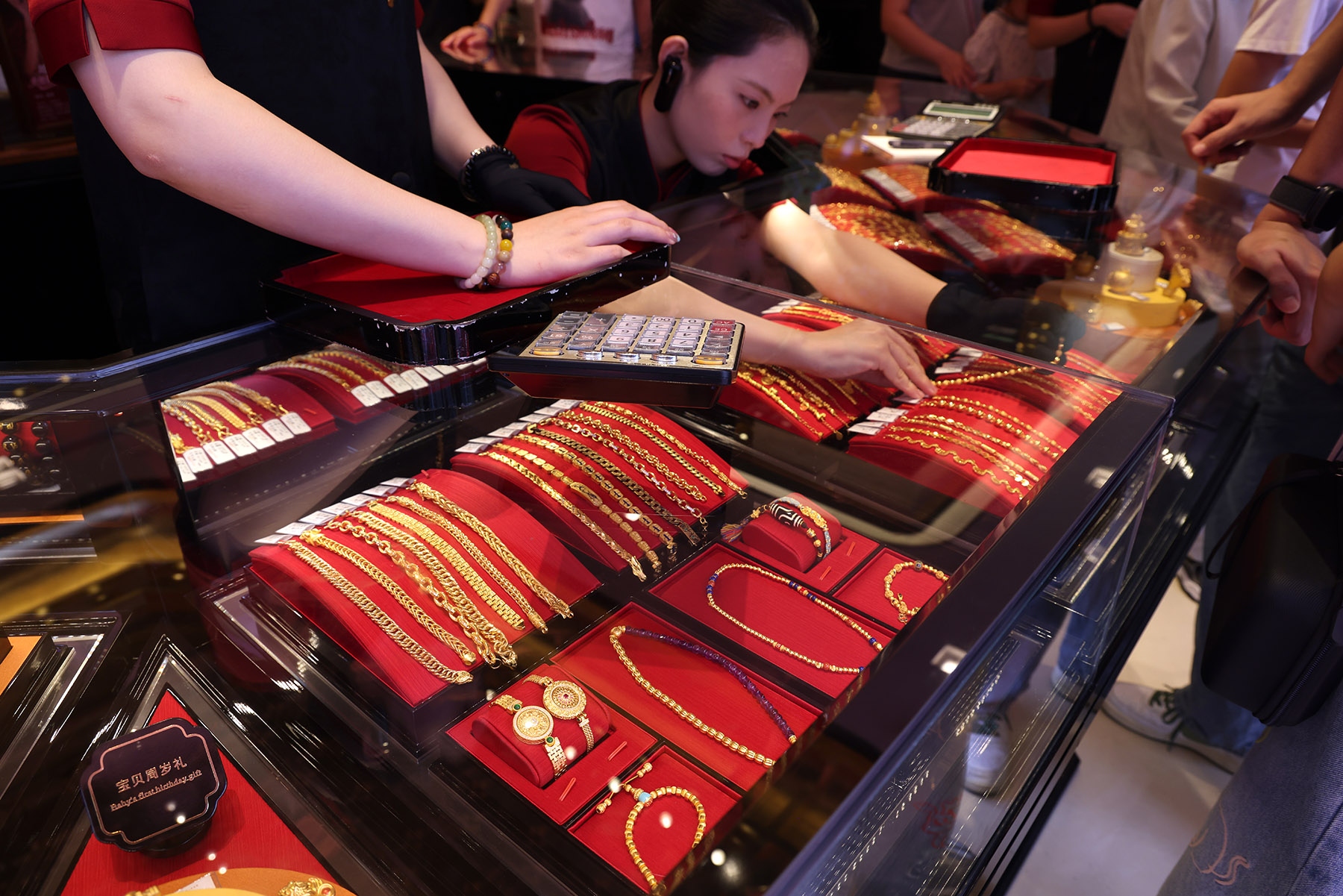
According to S&P Global, China's domestic gold mine output edged up merely 1 percent to 381 tons last year, yet overseas production from top Chinese gold firms jumped 25 percent to 90 tons meanwhile.
Leading players including Zijin Mining and Shandong Gold have scaled-up cross-border mergers and acquisitions since 2022, closing multi-billion-dollar deals across Latin America, Central Asia, Africa and Oceania, it said.
Improved project-execution capacity, solid balance sheets and ample financing allow these companies to press ahead with global expansion without material weakening of their credit profiles. More Chinese miners are expected to climb into the ranks of the world's top gold producers, it said.
This outward momentum has continued robustly into 2026. While domestic gold output from raw materials dropped 14.62 percent year-on-year to 152.91 tons in the first half due to strict safety and environmental inspections, overseas mine production by large State-owned groups reached 48.10 tons, a 21.43 percent increase, according to the CGA.
As the world's largest gold consumer, China's rising offshore output demonstrates that proactive mergers and acquisitions are serving as a vital buffer, Zhao noted.
"Chinese enterprises are securing high-quality assets at attractive valuations while deploying advanced extraction technologies," Zhao said.
"By securing upstream physical assets globally, domestic mining giants are anchoring the country's physical reserves and steadily expanding China's long-term influence over global precious metal market."
Obstacles remain. Easily accessible, high-grade shallow gold deposits are increasingly scarce worldwide. Cross-border regulatory hurdles also create uncertainty for outbound deals. Still, domestic exploration continues to deliver large-scale new gold discoveries inside China, he added.
China's multi-faceted push on gold reflects both domestic needs and wider global shifts. Geopolitical fragmentation has pushed numerous developing nations to diversify official reserve assets. Chinese households, central-bank planners and domestic miners are each responding to this new environment.
ALSO READ: China reports slight increase in gold consumption
Industry experts believe that gold will continue to serve multiple functions: festive ornament for consumers, wealth-preservation tool for households, strategic reserve asset for policymakers, and critical mineral resource for industrial players.
As global tensions persist, China's footprint within international gold markets looks set to deepen, they say.
Trading on the Shanghai Gold Exchange has maintained strong momentum this year. According to Zhao, this vigorous market activity deepens China's footprint across the global gold supply chain and advances the nation's push for international pricing authority.
"China has long anchored the market as the world's top gold producer and consumer, backed by the central bank's steady accumulation of reserves and the aggressive global expansion of domestic miners," Zhao noted.
"Amid today's geopolitical turbulence, China has forged a highly resilient, end-to-end gold ecosystem — spanning physical extraction and logistics to spot trading and complex financial derivatives," he added.
Contact the writers at zhengxin@chinadaily.com.cn
