

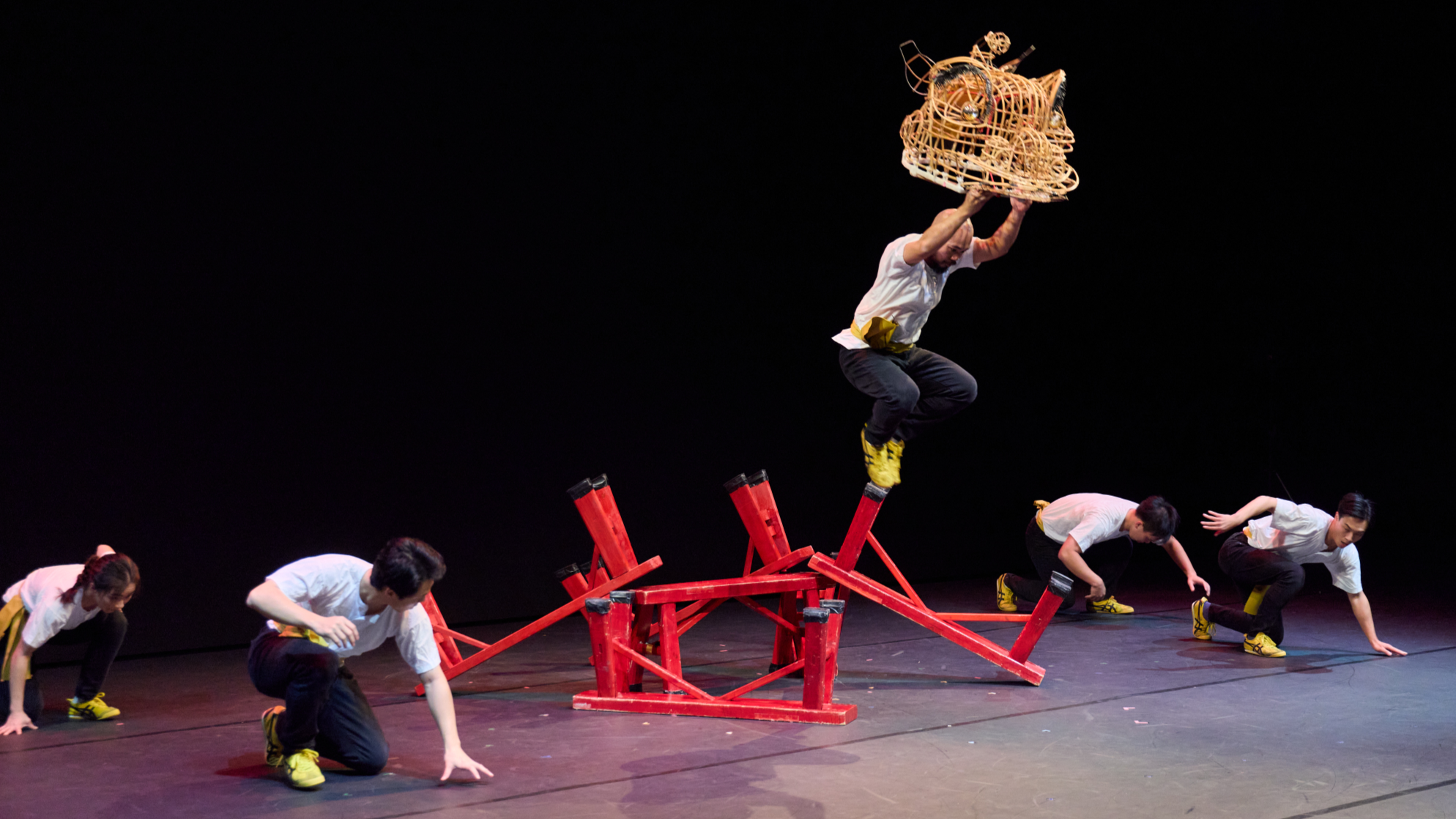
The Association of Asia Pacific Performing Arts Centres Annual Conference (AAPPAC), which opened at Freespace in the West Kowloon Cultural District on Wednesday, kicked off with a reimagined version of the ritual folk dances performed to mark Chinese festivals.
The event marks the 30th anniversary of the association — the largest network of arts centers and organizations in the Asia-Pacific region. The conference features four days of exchanges and activities, running through Friday.
Performed by Hong Kong’s TS Crew, No Dragon No Lion strips the lion-dance form of its elaborate costumes; mixes traditional dance moves with kung fu, parkour, breakdance and Cantonese Opera; and replaces beating drums with live beatboxing and the allegro movement from Vivaldi’s “Spring” concerto.
If that sounds a bit much, it resonates with the “messiness” that Yvonne Tham, chairperson of the AAPPAC executive committee, said was inherent in the diversity that the network represents. Over 350 cultural leaders from close to 70 cities are attending the conference.
As Tham says, even if the multitude of voices can seem a bit overwhelming, the idea is to hear each other out in order to bring about more collaborative projects and resource sharing connecting cities and cultures.
AAPPAC has returned to Hong Kong after 20 years. In her opening speech, Betty Fung Ching Suk-yee, CEO of the West Kowloon Cultural District Authority, and deputy chair of the AAPPAC Executive Committee, remarked on the significance of this moment. Resonating with the government’s ambition to consolidate Hong Kong's position as an East-meets-West center for international cultural exchanges, Fung said that the core mission of WestK was rather similar — to build a center of cultural exchange, driven by the ideas of “bringing in and going global”.
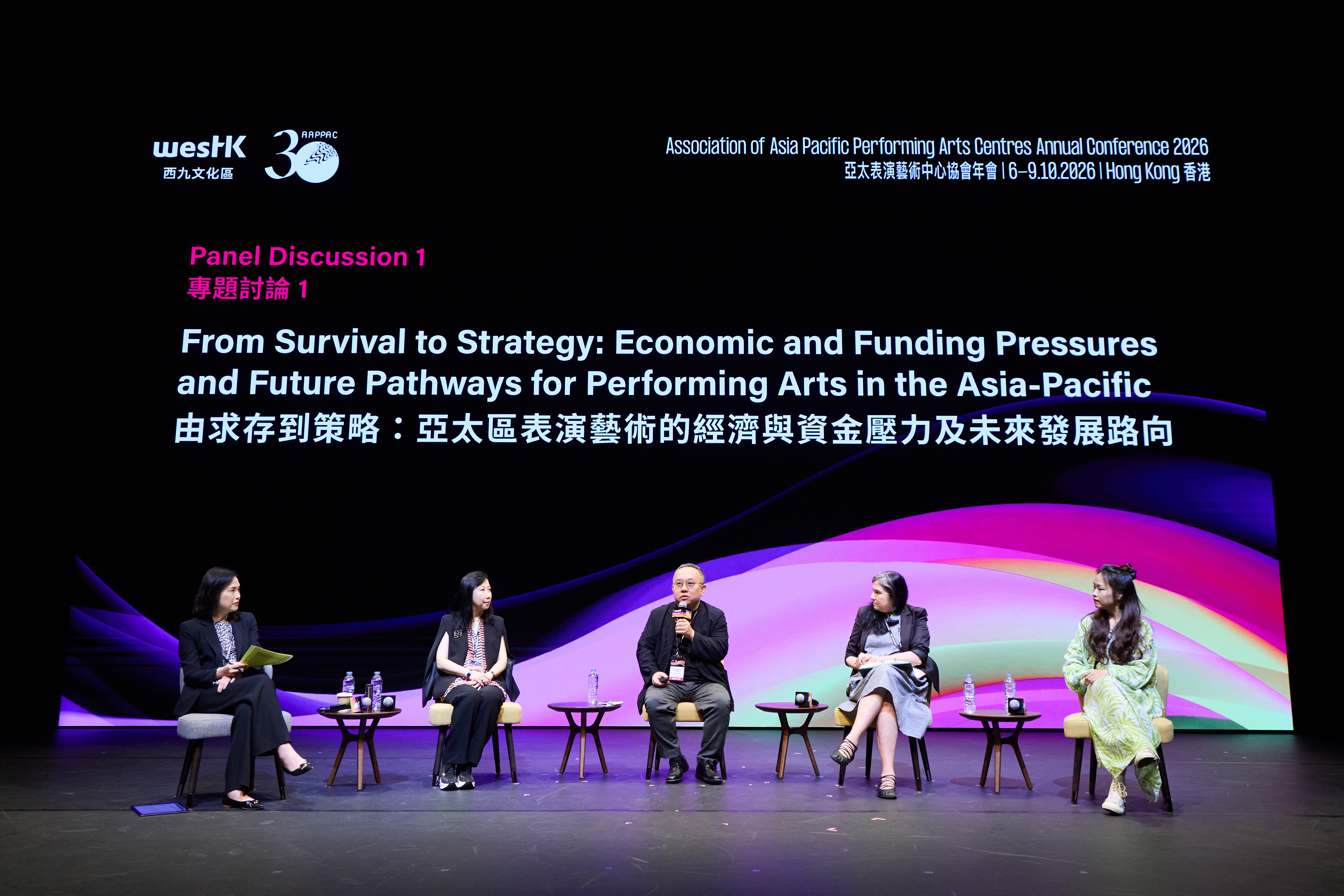
She said that so far, WestK has signed 50 memorandums of understanding with top international performing arts centers. As the cultural district’s newest facility, the WestK Performing Arts Centre, a state-of-the-art theater complex with infrastructure to support a diverse range of performance forms, including musicals, nears completion, the moment is ripe to reach out to prospective partners and collaborators around the world.
Across the border, Shenzhen too has seen rapid expansion of cultural infrastructure lately. The spectacular Ateliers Jean Nouvel-designed 222,000-square-meter Shenzhen Opera House, when it opens in 2029, will be in need of a large and appreciative audience.
Ding Zhongyuan, deputy director general of the Shenzhen Municipal Bureau of Culture, Radio, Television, Tourism and Sports, said that his team is keen to “balance content quality and market demand”. To that end, they are developing a public-focused program. The hope is to make the cultural district in the Shenzhen Bay area a rallying point for arts aficionados from the cities in the Guangdong-Hong Kong-Macao Greater Bay Area.
But can alliances like AAPPAC make a real difference to protecting livelihoods in the time of funding cuts and the looming threat of AI replacing jobs in the arts sector? New-media artist and academic Keith Lam, a panelist at the conference, said that AAPPAC can help build “bridges that might help professionals like engineers, artists, and technology experts, even scientists, to come together without any predetermined agenda.
“A conference like this is very important for Hong Kong artists because our city is small. So we have to think of ways to make sure that our work is not limited to a Hong Kong audience.”
Brenna Hobson, the Sydney Opera House’s director of programming, said she prefers to look at the positive side of the presence of AI in arts. “Hopefully it can free people up to do less of the sort of work that involves manual drudgery and more of creative thinking. I do think that performing arts will be durable in that it involves people being in a room together, and that's what's special about it.”
At least one of the things she watched on her first day at AAPPAC 2026 has already piqued her interest. “Even as I was watching the opening performance, I wondered if we could get them on the Sydney Opera House Forecourt. So you're always hoping to see excerpts of full-length works that you could potentially work with in the future, and hear conversations about what work might be touring through your region, or who you could be working with.”
Contact the writer at basu@chinadailyhk.com
