

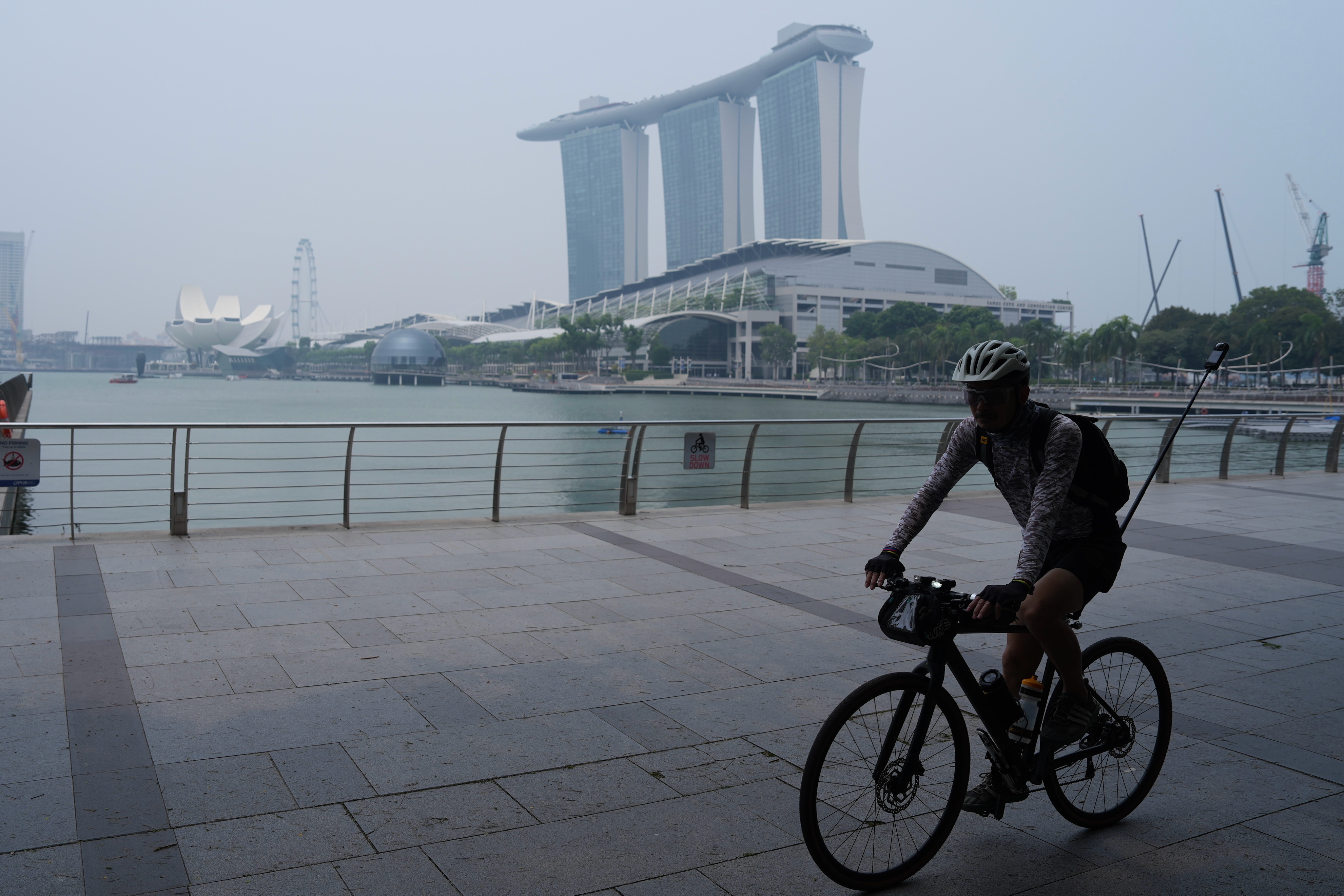
Singapore and Kuala Lumpur are choking under severe haze spewing from wildfires in neighboring Indonesia, with air quality deteriorating dramatically ahead of major sporting events.
The two cities currently rank among the top five most polluted in the world, according to data compiled by IQAir. Forecasts show that the conditions driving the latest haze episode, including widespread dryness and prevailing east-to-southeast winds, are expected to persist for another week.
Malaysia is due to host its first Formula One race in nine years this weekend at the Sepang International Circuit, alongside the Standard Chartered Marathon in Kuala Lumpur, and the acrid conditions could disrupt both events. Organizers of the long-distance running race said they are weighing contingency plans should conditions deteriorate.
The organizers of the F1 event and Sepang International Circuit didn’t immediately respond to requests for comment.
ALSO READ: Indonesia reopens Jakarta, Bandung airports as ash risks recede
That scenario played out in Singapore last weekend, when a half marathon was shortened at the last minute because of poor air quality. The city-state is also due to host an F1 race after the Malaysian event, starting Oct 9. Organizers of the Singapore Grand Prix didn’t immediately respond to a request for comment.
“Singapore’s air quality will vary day to day depending on wind direction and local showers, but at this stage, there is no clear sign of a sustained pattern change that would quickly end the haze,” said Fergus Keatinge, founder and director of WeatherMapping.com.
Transboundary haze is a near-annual problem in Southeast Asia, but this season is the worst in years as a powerful El Niño brings abnormally hot and dry conditions to Indonesia, fanning wildfires stemming from slash-and-burn land clearing and complicating efforts to bring the blazes under control.
ALSO READ: Indonesian fires drive regional haze alerts and school closures
Rainfall across the archipelago since June has been about 80 percent below normal, and wet-season rains that usually help extinguish the fires are expected to arrive late this year, according to meteorologists.
The Indonesian Forestry Ministry’s fire-monitoring platform has recorded 15,461 hotspots this month, exceeding levels seen in 2019 and second only to 2015. The fire weather index, a measure of conditions that influence the risk and behavior of fires, remains very high across large parts of Kalimantan and southern Sumatra, according to the country’s weather agency.
In 2015, another strong El Niño year, haze from Indonesia’s catastrophic fires caused school cancellations, flight diversions and diplomatic tensions across the region. Singapore enacted the Transboundary Haze Pollution Act a year earlier, allowing it to fine companies that cause or condone fires as much as S$100,000 ($78,000) a day, though enforcement has proved challenging.
As of early Wednesday, four of Singapore’s five regions recorded “unhealthy” levels of air pollution, according to the National Environment Agency. In its latest outlook, the agency said the “hotspot and smoke haze situation may improve in areas experiencing showers but also continue to stay elevated in areas experiencing prolonged periods of dry weather.”
