

Currencies, inflation under pressure amid soaring oil prices, analysts say
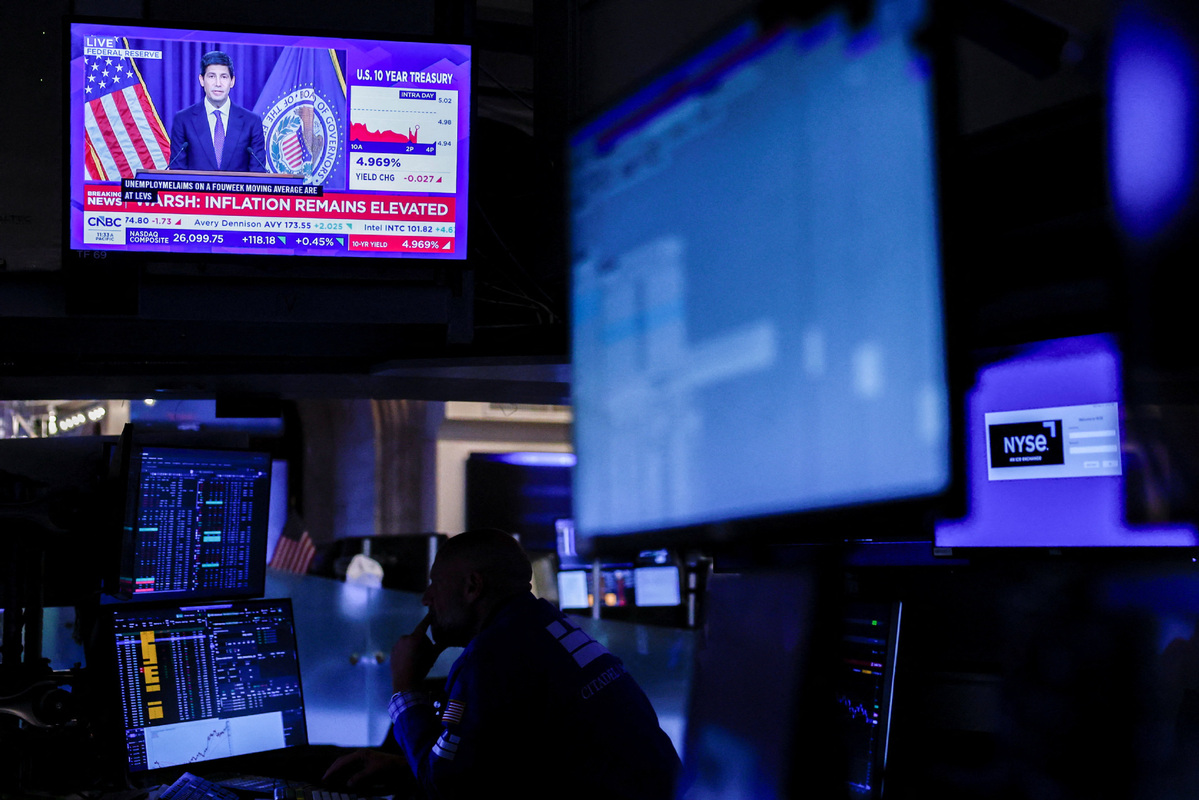
The United States Federal Reserve's move to raise interest rates is putting pressure on the currencies and inflation levels across the Asia-Pacific, as the region continues to struggle with soaring oil prices and a "super" El Nino, analysts said.
The Indian rupee, Indonesian rupiah, and Philippine peso — which fell to record lows against the US dollar in the past few months — are expected to remain the worst-performing Asian currencies, owing to their high dependence on imported oil.
On Wednesday, the Fed raised interest rates for the first time since 2023. The Federal Open Market Committee voted unanimously to lift the benchmark rate by 25 basis points to a range of 3.75 to 4 percent. Fed Chair Kevin Warsh said inflation has been "too high for too long".
READ MORE: Fed raises rates to curb inflation, drawing rebuke from Trump
With the Fed rate hike firming the US dollar and tightening global financial conditions, this may put pressure on some Asian currencies and bond markets, according to Navin Saigal, head of global fixed income for Asia-Pacific at BlackRock, a US-based investment firm.
Stronger dollar
However, Saigal said the impact of the stronger dollar will vary significantly across the region "because inflation and growth dynamics are very different from market to market". He said the central banks in the region are also trying to maintain currency and inflation stability without unnecessarily undermining growth.
"That's why we're seeing more targeted and differentiated policy responses rather than a one-size-fits-all approach," Saigal told China Daily.
Lavanya Venkateswaran, a senior economist for the Singapore-based Oversea-Chinese Banking Corporation, sees most central banks tightening monetary policy as the crisis in the Middle East continues to disrupt global energy supply. "It's more a question of the magnitude of the rate hike that we're looking at, and whether this is a start of a (policy) tightening cycle across the region," Venkateswaran said.
The Philippine and Indonesian central banks have raised key rates three times this year to ease inflationary pressures and stabilize their respective currencies.
Soon after the Fed raised its interest rate, the Bank of Japan increased the rate from 1 percent to 1.25 percent — its highest level since 1995.
Traders said it was likely that the Reserve Bank of India, or RBI, intervened in the foreign exchange market on Thursday as the rupee fell below the 96-per-dollar mark for the first time in over a month following the Fed rate hike, Reuters reported.
Nawazish Mirza, a professor of finance at the Excelia Business School in France, said Asian governments are trying to manage inflation but not at the expense of economic growth.
"Policymakers have limited room for aggressive tightening. Many are combining interest rates with currency intervention, liquidity management and targeted fiscal measures," Mirza said.
In India, for example, the RBI will likely wait until December before hiking rates, according to Shumita Sharma Deveshwar, chief India economist at London-based analysts GlobalData TS Lombard.
Deveshwar said the RBI has a large war chest of foreign reserves to support the rupee from any strong depreciation pressures.
ALSO READ: Fed impact on A shares not seen as heavy
Therefore, she expects the Indian central bank to "tilt toward supporting growth for as long as possible instead of trying to fight supply-side led inflation that can't be influenced by monetary policy".
Suryaputra Wijaksana, an economist at Singapore-based brokerage UOB Kay Hian, expected "significant pressure" on the Indonesian central bank to increase the policy rate amid a stronger US dollar and rising inflation.
The Fed has flagged more rate hikes in the coming months, and analysts said Asian policymakers need to prepare for key risks, including a stronger dollar, market volatility, and higher imported inflation.
Contact the writers at prime@chinadailyapac.com
