

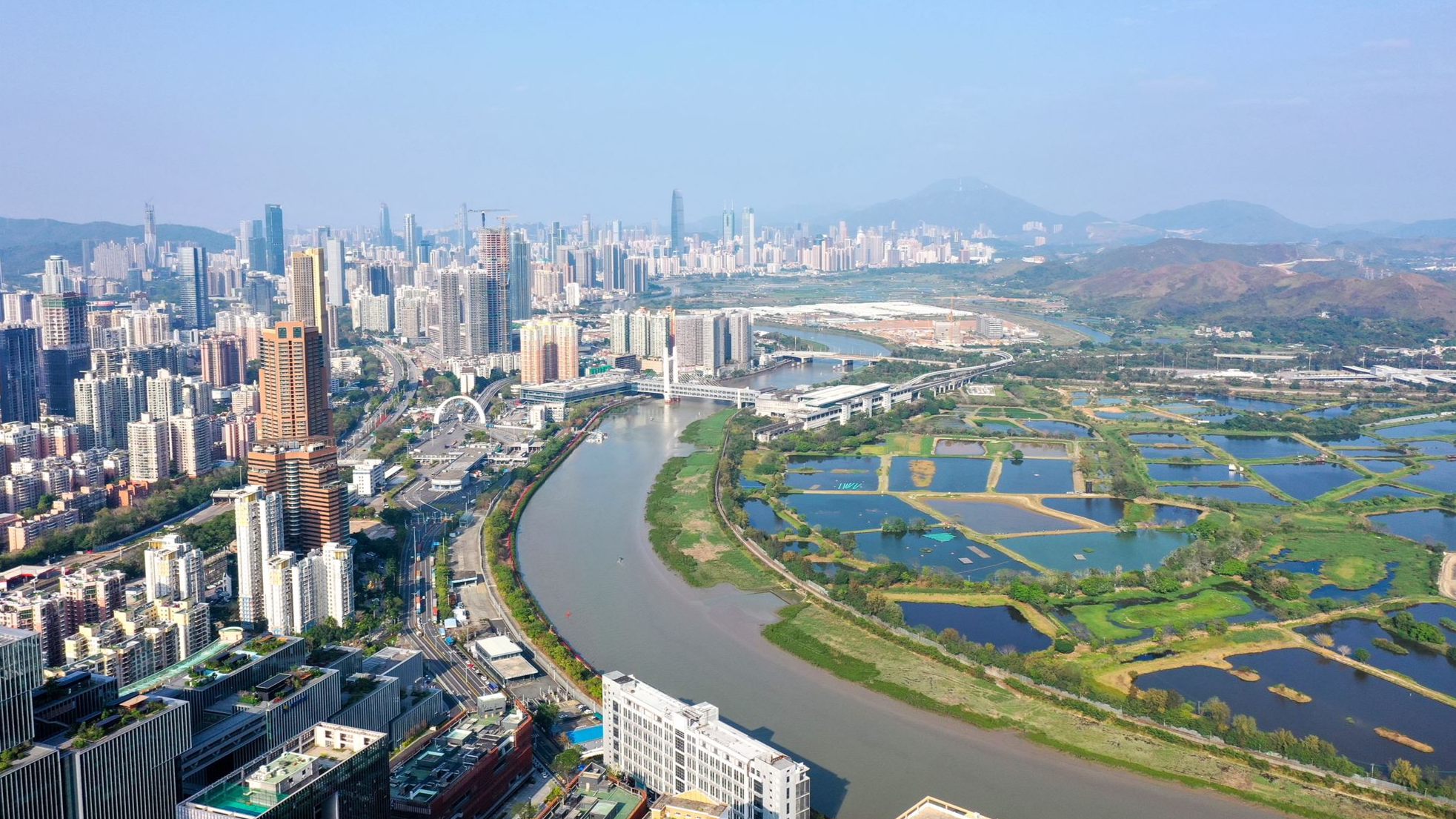
Hong Kong’s first five-year plan, which marks the city’s more proactive integration into national planning, will further reduce the uncertainty and institutional costs associated with cross-boundary cooperation, thereby enhancing the Guangdong-Hong Kong-Macao Greater Bay Area’s global competitiveness, experts say.
Guo Wanda, executive vice-president of the China Development Institute, said that the plan, unveiled on Wednesday, represents the special administrative region’s governance shift towards more medium- and long-term planning, enabling it to coordinate resources in a more comprehensive manner.
Noting that five years can bring substantial changes, he said that the plan not only aims to consolidate Hong Kong’s traditional advantages, but also devotes considerable attention to fostering emerging industries. In particular, initiatives related to the development of the Northern Metropolis Area, low-altitude economy, new industrialization and flows of production factors are of vital importance for the Greater Bay Area' development.
ALSO READ: Hong Kong's first five-year plan helps chart development vision of the SAR
These promising new developments in Hong Kong, along with closer cross-border industrial cooperation, will help the Greater Bay Area become more integrated and enhance its global competitiveness in areas such as institutional openness, innovation and technology, and talent attraction, Guo said.
Gong Xiaofeng, director of the Greater Bay Area emerging industry development research institute at Shenzhen University, said Hong Kong’s formulation of the five-year plan helps transform national support into the city’s industrial development capabilities, further underpinning its role in the coordinated development of the Greater Bay Area.
He said the plan combines industrial cooperation, flows of key factors for scientific and innovation and division of roles among collaboration platforms, providing a more specific implementation pathway for Hong Kong’s participation in the Greater Bay Area’s industrial upgrading.
Gong said he expects Hong Kong in the next five years to further integrate into the Greater Bay Area at the industrial level and channel greater support to the region’s enterprises with its in-financing, technological cooperation, and alignment with international rules.
Given the rapid development of mainland enterprises, he suggested increasing their participation in the city’s landmark projects while ramping up efforts to attract their investment through continuous improvements in approval processes, talent support, and cross-boundary services.
READ MORE: Central govt: HK’s 5-year plan holistic and a milestone
Yang Yongcong, deputy director of the Guangdong-Hong Kong-Macao Greater Bay Area Research Institute at the Guangdong University of Foreign Studies, said that under this plan, Hong Kong’s role in the Greater Bay Area is no longer limited to an international financial, trade and shipping hub, but is extending toward a source of innovation, high-end service provision, a hub for rule alignment, and a node for international connectivity.
He said implementation of the plan could further reduce uncertainty and institutional costs in cross-boundary cooperation, turbocharging the Greater Bay Area’s mission to lead China’s high-quality development.
Highlights of initiatives involving regional collaboration include deepening the integration of innovation chains and industrial chains, promoting connectivity of computing power infrastructure and accelerating rule alignment, he said.
READ MORE: HK highlights innovation-industry integration in GBA collaboration
With these efforts, he said, the Greater Bay Area will develop stronger innovation clusters, achieve closer market integration, and build a more robust global connectivity network.
Guo said that many policies related to Greater Bay Aera cooperation need support from the central government and Guangdong province. He said he hopes to coordinate these efforts effectively and conduct dynamic assessments and adjustments in response to changes in both internal and external conditions.
In addition, Yang calls for specific action guidelines and supporting measures to turn the grand vision of the landmark plan into reality.
Yao Xi contributed to the story.
Contact the writer at bingcun@chinadailyhk.com
