

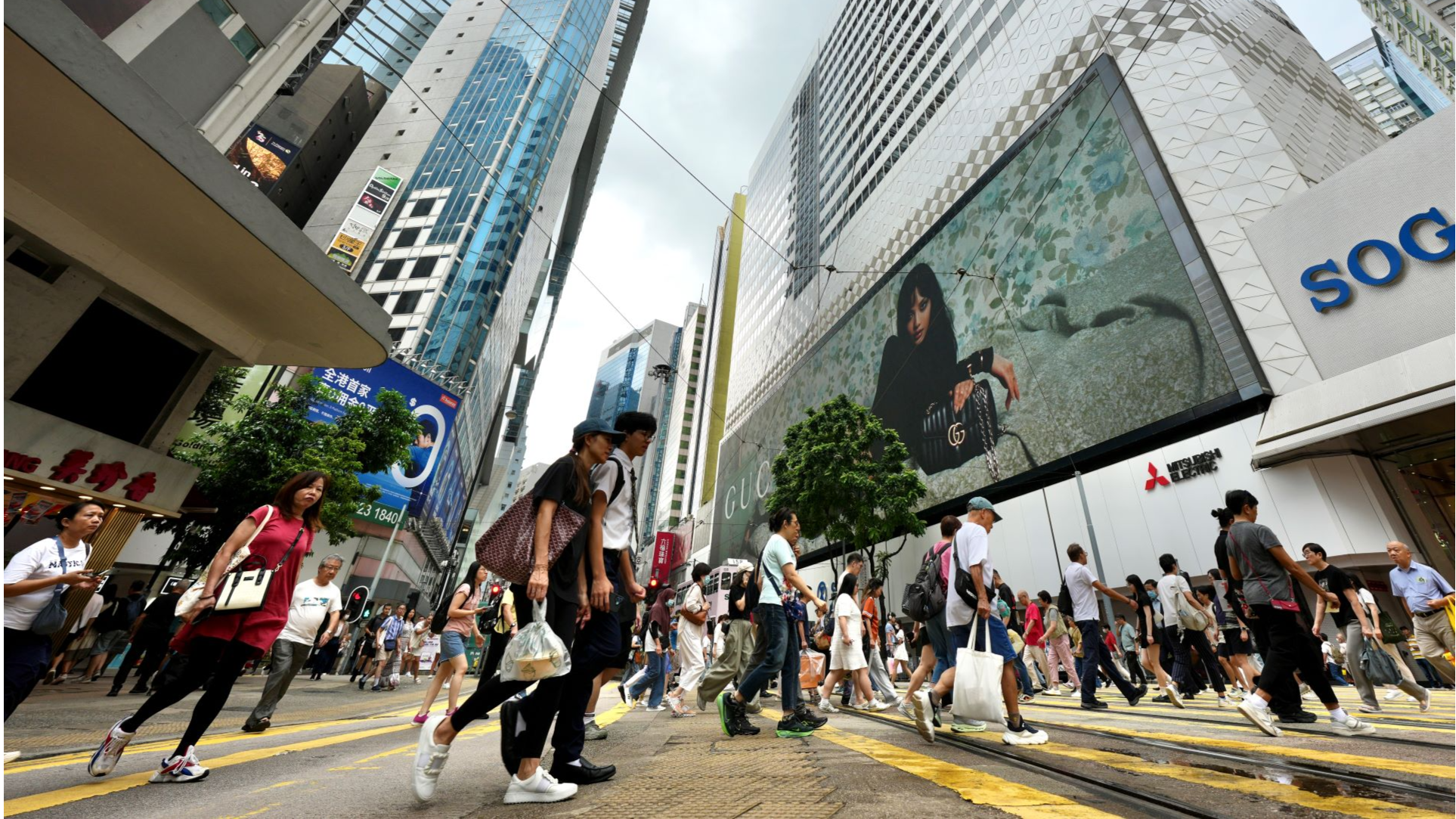
Upgrading livelihood facilities to improve residents’ quality of life has topped the list of calls from lawmakers and the social welfare sector as Hong Kong awaits its first five-year social and economic development plan and the Policy Address to be delivered by Chief Executive John Lee Ka-chiu on Wednesday.
The facilities include infrastructure like community living rooms and district health centers.
In a signed article published by Hong Kong’s major media outlets on Monday, Lee said that improving quality of life is a key concern voiced by the public in support of Hong Kong’s inaugural five-year plan.
“I want the people of Hong Kong — every one of you — to share in the dividends of development, and feel a sense of happiness and fulfilment,” he wrote.
In an earlier social media video reflecting on the current administration’s livelihood policies, Lee said the five-year plan will continuously improve people’s well-being through long-term strategies, while the Policy Address will introduce concrete measures in key areas such as housing, livelihoods and healthcare.
Sze Lai-shan, deputy director of the Society for Community Organization — a nonprofit group campaigning for the welfare of low-income residents — proposed that existing community facilities, such as youth centers, should receive equal attention.
Community Living Rooms, an initiative introduced by Lee in his 2023 Policy Address, are a key part of the government’s targeted poverty alleviation efforts. Since the first such facility was launched in Kowloon’s Sham Shui Po district in late 2023, there are now 16 in operation across Hong Kong, with two more scheduled to open by the end of this year.
“It’s not necessary for such facilities to be dedicated centers,” Sze said, calling for enhancing public awareness of these facilities, and expanding the types of services on offer.
ALSO READ: Lee pledges to boost economy, livelihoods in his 4th Policy Address
Legislator Bill Tang Ka-piu agreed that the number of community living rooms should be increased as they provide critical amenities for grassroots households.
He proposed that the government could convert industrial buildings or underutilized public markets into community living rooms, which are nonresidential day facilities with fewer land-use constraints.
“The upcoming five-year blueprint serves as a crucial policy tool to design and execute initiatives that will directly elevate residents’ sense of well-being and happiness,” Tang said, emphasizing the importance of long-term strategic planning.
On the other hand, district health centers, which aim to boost community healthcare and disease prevention, can act as central hubs to proactively link up with residents and promote overall health management.
READ MORE: Livelihood initiatives introduced in Policy Address meet public expectations
Currently, Hong Kong has 10 district health centers and eight district health express facilities, which together operate more than 100 service points and had about 600,000 registered members as of late June.
Since January, district health centers have been providing first-contact physiotherapy services for patients with low back pain and osteoarthritic knee pain. Eligible residents can receive assessment and treatment directly from physiotherapists at these facilities without the need for a doctor’s referral. The service currently covers 10 centers and is expected to be extended to the other eight within this year.
Starting Oct 5, elderly individuals who originally received chronic disease management at elderly health centers will be transitioned to district health centers, as part of the Department of Health’s district health network service integration initiative.
Tang said services that are essential for maintaining long-term health should be institutionalized as routine, networked support.
Another lawmaker, Roy Chu Lap-wai, cited the case of a resident in Hong Kong Island’s Southern district who joined the Chronic Disease Co-Care Scheme through the local district health center. After enrolling, the resident had cut down on dining out, adopted healthier eating habits, built a regular exercise routine, and encouraged family and friends to join as well.
Chu called for strengthening cross-departmental collaboration by setting up an integrated health-welfare-housing network with formal cross-referral mechanisms connecting livelihood-related facilities, such as district health centers, community living rooms and neighborhood centers for the elderly.
Contact the writer at atlasshao@chinadailyhk.com
