

Hong Kong’s first drug watchdog sparks a regulatory overhaul — can the city also pioneer herbal medicine rules? Jessica Chen reports from Hong Kong.
Never bet against Hong Kong. At every transformative moment, the special administrative region has staked its future on bold wagers and reaped the rewards. This year is no exception.
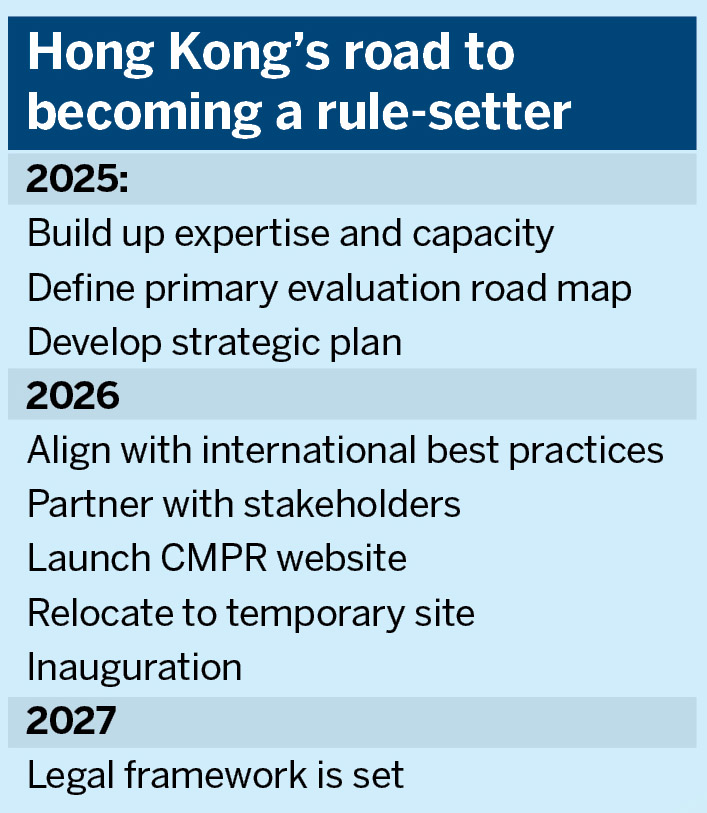
Sources say that the city’s budding drug regulator is going to have a director in place about two months after a monthslong global hunt. The Hong Kong Centre for Medical Products Regulation (CMPR), described as the SAR’s equivalent of the United States’ Food and Drug Administration, is expected to have its top leadership in place, representing what government officials say is the most significant overhaul of Hong Kong’s medical regulatory system in decades.
The CMPR’s creation was proposed in the chief executive’s 2023 Policy Address with the goal of registering drugs, medical products and devices, under a “primary evaluation” approach.
READ MORE: Commissioner: HK to boost international integration of Chinese medicine
The Department of Health said in April that a workforce of about 420 experts is in the pipeline as professionals are being recruited worldwide amid a dearth of local expertise in overseas drug regulations.
David Lam Tzit-yuen, chair of the Legislative Council Panel on Health Services, tells China Daily that the new institute is expected to be granted independent statutory status, cementing its authority.
Industry backing
Industry veterans have thrown their weight behind the move. Zheng Jianxiong, a veteran traditional Chinese medicine (TCM) specialist at one of the largest TCM manufacturers, says the CMPR’s statutory status would help it win trust in new markets.
Zheng, who is deputy general manager of Guangzhou Baiyunshan Pharmaceutical Holdings, says he believes Hong Kong is in pole position in regulating botanical drugs, thanks to its two decades of sustained efforts in setting Chinese Materia Medica Standards. The high-profile enterprise, the parent of the Wong Lo Kat herbal tea brand, has a treasury and R&D center in the SAR, with plans in place for a manufacturing hub for Western markets.
Hong Kong’s playbook is straightforward — leaning toward what it already does best, which is regulating botanical medicine — to capture the world’s growing appetite for “natural therapy” alternatives, while streamlining approvals without compromising international standards.
Lo Yuk-lam, who helms the Hong Kong Bio-Med Innotech Association, tells local media he is confident the CMPR will position Hong Kong as a regulatory hub, rather than simply a faster approver of new drugs.
Zheng says he expects existing standards to be incorporated in the new agency’s framework, which he believes will win recognition nationwide and beyond, sparing pharmaceutical companies the “tedious, formidable” registration process required in target markets with distinct regulatory jurisdictions.
Xu Hongxi, chairman of the Belt and Road Alliance for Traditional Chinese Medicine, points to the World Health Organization’s elevation of traditional botanical drugs from “complementary” to “integrative” standards of care. The shift will bridge Chinese botanical drugs with international regulatory frameworks, fostering mutual standards and solidifying their role in global healthcare.
Xu stresses the importance of a clinical database in validating these drugs, citing China’s extensive Chinese medicine clinical database, which records more than 1 billion consultations annually, as a crucial resource for real-world research and evidence-based development.
By leveraging data science and artificial intelligence, this vast resource will provide robust validation for botanical therapies, positioning China to play a pivotal role in data-driven medical innovation, he says.
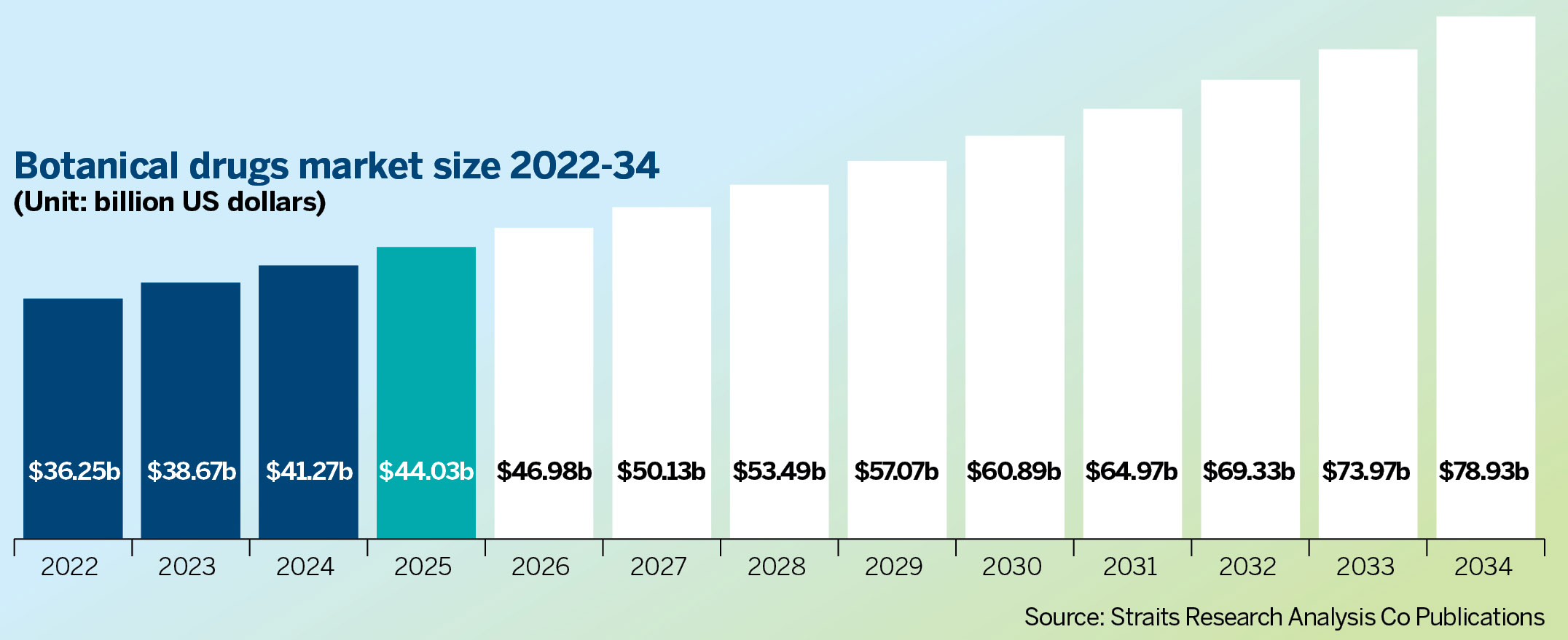
Straits Research, a market intelligence firm, projects that the global botanical drugs market will grow at an annual rate of 6.7 percent, from $44 billion in 2025 to $79 billion by 2034. A recent survey by India-based Business Research Insights says that over 72 percent of demand growth arose from wide acceptance of natural therapies, calling “regulatory delay” the biggest constraint.
However, frameworks for multicomponent herbal drugs remain underdeveloped almost everywhere, with FDA and its European counterpart, European Medicines Agency (EMA) having each approved just a handful.
Rule-setter ambition
Whoever builds a credible framework for multi-ingredient formulas stands to become a rules setter, says Lo, who is among the first to propose having a drug regulatory body in Hong Kong.
Hong Kong’s robust testing and regulatory system for herbal medicine has drawn favorable comparisons with the FDA and EMA, industry observers say. Led by the Government Chinese Medicines Testing Institute, the city has published 12 volumes of the Hong Kong Chinese Materia Medica Standards, covering 357 herbal materials cited in the International Organization for Standardization documents, as well as more than 420 academic papers.
According to Invest Hong Kong, the SAR government’s arm for investment promotion, the past two years of investments by overseas TCM and Western pharmaceutical companies marked a “critical watershed” for botanical medicines.
With a comprehensive industry chain linking government, the industry, academia, research and investment, Hong Kong is a “safe, reliable choice” for pharmaceutical enterprises, says Andy Wong Wai-cheuk, InvestHK’s head of innovation and technology.
“The city is building a complete industry chain, anchored by the Northern Metropolis and its priority innovation and technology sectors that InvestHK is leveraging to attract overseas pharmaceutical and medical device enterprises to invest and set up operations here,” Wong says.
In Lo’s view, it would be a potential “wellspring of regulatory science” if the CMPR were to convert that credibility into approval authority.
However, gaps remain in building trust and mutual recognition — a golden asset that players like Zheng expect Hong Kong to deliver.
Lam, who is also a practicing physician, says the CMPR’s independent statutory footing is intended to “strengthen its credibility when negotiating standards with overseas counterparts”.
ALSO READ: HK’s TCM literacy rated as ‘moderate’; concerted action urged
The city faces another challenge if it is to outpace Singapore: becoming a full member of the International Council for Harmonisation of Technical Requirements for Pharmaceuticals for Human Use. Singapore obtained full membership years ago, while Hong Kong remains an observer.
Lam says it would be essential to the city’s ambitions, adding that achieving it will be “a long journey”.
Converting such potential into a trading hub will take years. With the CMPR’s new chief due to take charge in a few months, whether Hong Kong can have a genuine voice in setting international standards for botanical drugs will become clearer in the coming years.
For this year, the nature of the wager is clear: Hong Kong wants to leverage its strength and plant the signpost.
Iris Muk contributed to this story.
Contact the writer at jessicachen@chinadailyhk.com
