

President Xi emphasizes development and security as SCO’s priorities in address at Bishkek summit in Kyrgyzstan

As the world faces growing geopolitical and geoeconomic fragmentation, the role of the Shanghai Cooperation Organization in promoting regional development and security cooperation, and in improving global governance, was highlighted at the SCO’s closely watched summit in Kyrgyzstan this week.
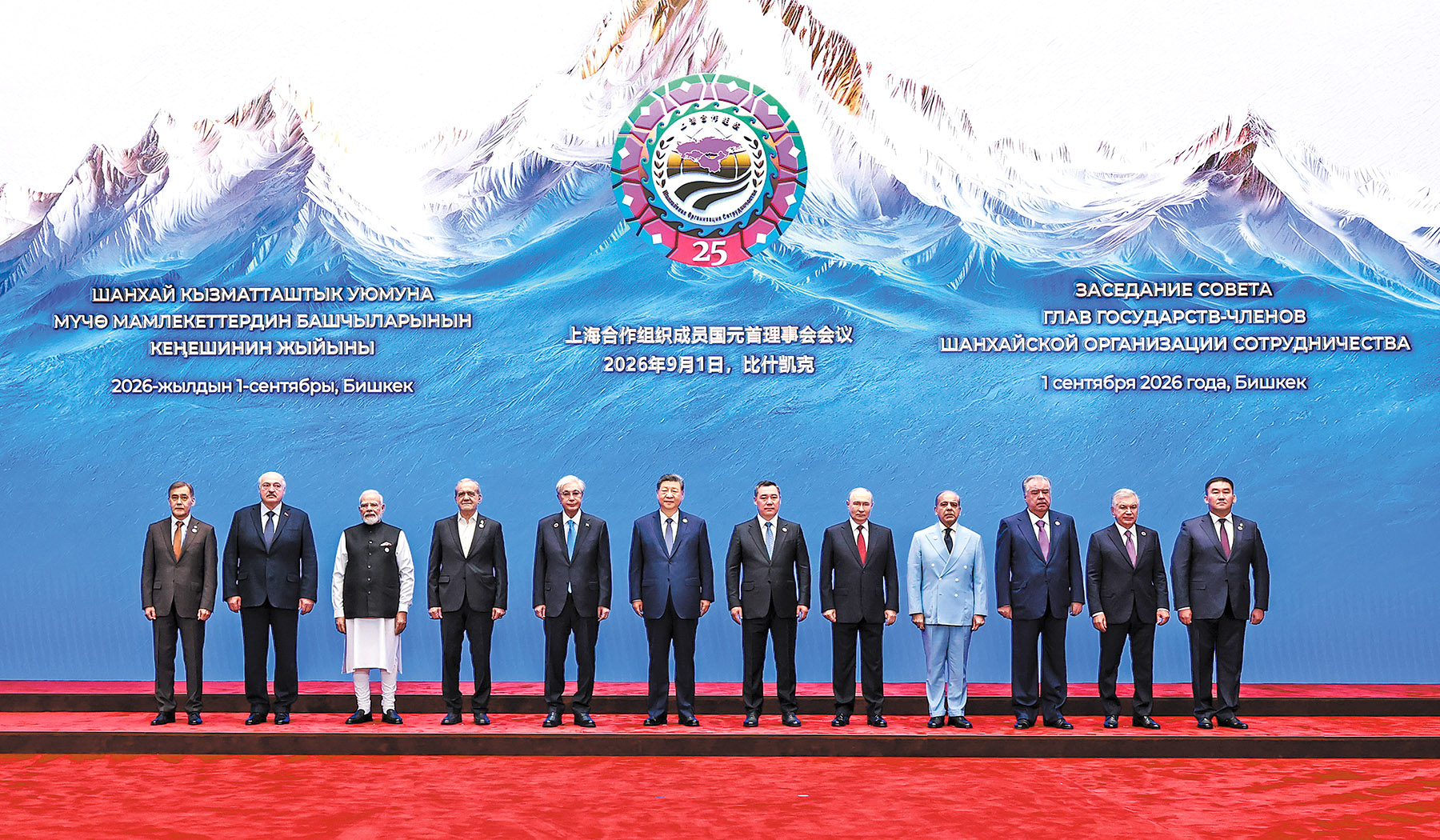
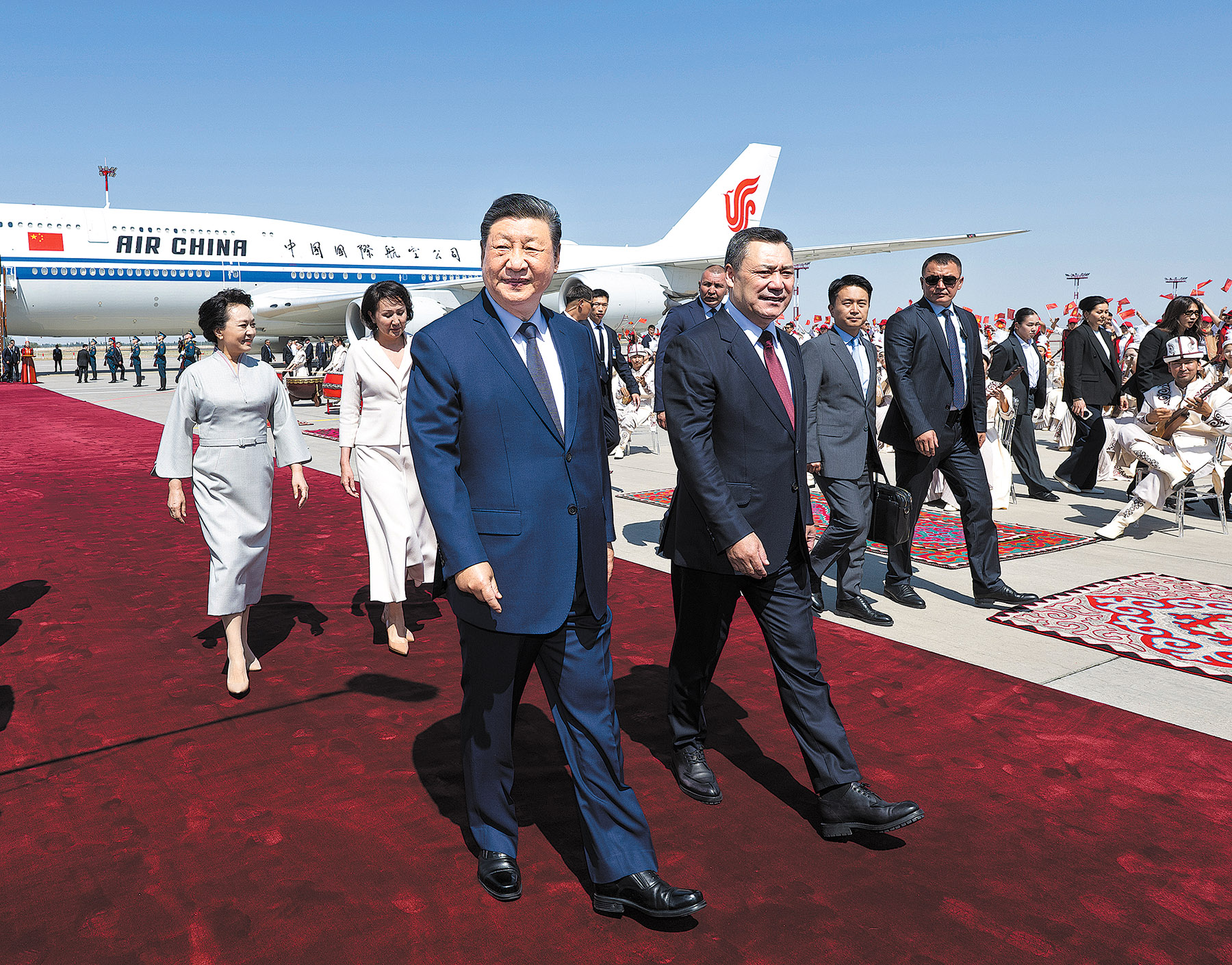
While addressing the 26th Meeting of the Council of Heads of State of the SCO on Sept 1 in Bishkek, the capital of Kyrgyzstan, President Xi Jinping called on the SCO to prioritize development and security to usher in a future of shared prosperity and foster an environment of universal security. He also underlined the need for the regional grouping to remain committed to dialogue and consultation for more equitable and orderly governance.
In his speech, Xi hailed the regional organization’s extraordinary journey over the past 25 years, saying that it has grown into a new type of regional cooperation grouping with the largest land area and population and enormous development potential.
Xi said the regional grouping’s most valuable spiritual asset is that it pioneered, and has since invariably followed, the Shanghai Spirit featuring mutual trust, mutual benefit, equality, consultation, respect for the diversity of civilizations, and pursuit of common development.
Its most important cooperation experience is that it has found the right way of coexistence featuring non-alliance, nonconfrontation, and not targeting any third party, enabling countries in the region to build a common home together, he added.
As the world undergoes accelerated changes unseen in a century, with the intensifying rivalry between dialogue and confrontation, win-win and zero-sum, and multilateralism and unilateralism, Xi urged the SCO to step forward to shoulder its historical responsibility and proactively steer the course for the future.
Founded in 2001 by China, Russia, Kazakhstan, Kyrgyzstan, Tajikistan and Uzbekistan, the SCO now comprises 10 member states, two observer states, and 15 dialogue partners, bringing together countries with diverse cultures, political systems, economic models, and historical experiences.
Maya Majueran, director of the Belt and Road Initiative Sri Lanka, an independent and pioneering organization with strong expertise in BRI advice and support, said that the SCO’s expansion is not about creating a new military bloc or replicating Cold War-style alliances, but instead reflects something that the Global South has long sought — cooperation without coercion, dialogue without domination, and partnership without political conditionality.
At a time when the world appears increasingly divided by rivalry and competing blocs, the SCO demonstrates that cooperation remains possible, Majueran said, adding that its emphasis on consultation, mutual benefit, and respect for diversity offers a different path, one that expands opportunities rather than imposes choices.
At the Bishkek summit, Xi called on the SCO to advocate universally beneficial and inclusive economic globalization, consolidate cooperation in traditional areas such as trade, investment, connectivity, energy, and resources, and expand cooperation in emerging fields, including artificial intelligence (AI), the digital economy, green industry, and green mining, to deepen and upgrade regional cooperation.
China sees the SCO as a priority area for promoting high-quality Belt and Road cooperation and implementing the Global Development Initiative, he said.
“We will continue to ensure the success of the SCO Digital Economy Forum, the SCO Agricultural Expo and other events. We will develop an international AI application cooperation center with fellow SCO countries,” Xi said, adding that China will implement 100 technological cooperation projects with other SCO countries in the next three years and will establish a China-SCO port economic cooperation center in Tianjin.
Xi urged the SCO countries to take coordinated measures to tackle traditional and nontraditional security threats, and called for efforts to prevent external forces from interfering in their internal affairs, endangering their political security, and undermining regional stability.
China stands ready to work with all parties to act on the vision of common, comprehensive, cooperative and sustainable security and make the SCO an important platform for implementing the Global Security Initiative, he added.
Xi also emphasized the need for the SCO countries to stay committed to a people-centered approach and cement the foundation for everlasting friendship. China stands ready to work with all parties to implement the Global Civilization Initiative, he added.
Guided by the Shanghai Spirit, the SCO has seen growing trade, deeper investment ties, and stronger regional connectivity, creating new opportunities for economic development across the region.
In 2025, China’s trade with other SCO members reached $523.5 billion, accounting for 8 percent of the country’s total foreign trade, up from $12.1 billion in 2001, according to statistics from the Ministry of Commerce. As of July 2025, China’s accumulated investment in other SCO member states had exceeded $84 billion.
Furthermore, the China-Kyrgyzstan-Uzbekistan railway, which is under construction, shows how infrastructure cooperation is driving regional development. The project was officially launched in December 2024. Once completed, the route will become a major transportation corridor linking China with Central Asia and the wider Eurasian region, greatly improving trade efficiency and creating broader economic opportunities.
Egor Prokhin, a researcher at HSE University in Russia, said China has played a central role in the SCO’s development.
“The Belt and Road Initiative has helped improve transportation and trade connectivity among Eurasian countries, while the Global Development Initiative has contributed to economic growth and improved livelihoods,” he said, adding that these initiatives closely align with the development priorities of SCO members, creating opportunities for businesses, and bringing tangible benefits to people across the region.
Ahmad Saidmurodzoda, deputy secretary-general of the SCO, said that China, as one of the founding members of the SCO, has consistently expanded the organization’s cooperation agenda and contributed to its development.
China has made significant contributions during each of its terms holding the SCO’s rotating presidency, helping advance cooperation in regional security, trade, and economic affairs, as well as cultural and humanitarian fields, while enhancing the SCO’s role and influence in regional and global affairs, Saidmurodzoda said.
The SCO’s Tianjin summit in 2025 adopted a development strategy for the group over the next 10 years.
At the latest summit in Bishkek, leaders of the SCO member states praised China’s significant contributions as a founding member state in promoting the organization’s development and agreed to implement the strategic blueprint from the SCO Tianjin summit.
They signed and issued the Bishkek Declaration to mark the organization’s 25th anniversary, approved the protocol on amending and supplementing the SCO Charter, and adopted more than 20 additional documents spanning security, artificial intelligence, energy, logistics, green technology, and people-to-people cooperation.
At the summit, it was decided that Pakistan will assume the rotating SCO presidency for the 2026-27 term.
Also on Sept 1, Xi attended the “SCO Plus” meeting, at which he called on the SCO to shoulder the responsibility of the times and work together to advance a more just and equitable global governance system, as well as an equal and orderly multipolar world.
In his address, Xi said that as a responsible major country, China advocates an equal and orderly multipolar world, in which sovereign equality and mutual respect should be upheld as fundamental principles; balance, order, and the rule of law should be essential requirements; multipolarism, dialogue, and consultation are key pathways; and mutual benefit, win-win cooperation, and universally beneficial and inclusive development should be the way forward.
“Major countries in particular should take the lead in observing international norms and honoring the rule of law, and work together to tackle global challenges,” Xi said.
Highlighting the role of the SCO, Xi put forward three proposals for the organization to advance common prosperity, promote the development and rise of the Global South, and guide the reform and improvement of global governance, to make greater contributions to an equal and orderly multipolar world.
As an important pillar of South-South cooperation, the SCO should carry forward the Shanghai Spirit, strengthen and expand the “SCO Plus” partnerships, and jointly speak up for peace, foster synergy for development, build bridges for cooperation, and pave the way for win-win outcomes, he said.
Xinhua contributed to this story.
Contact the writers at caodesheng@chinadaily.com.cn
