

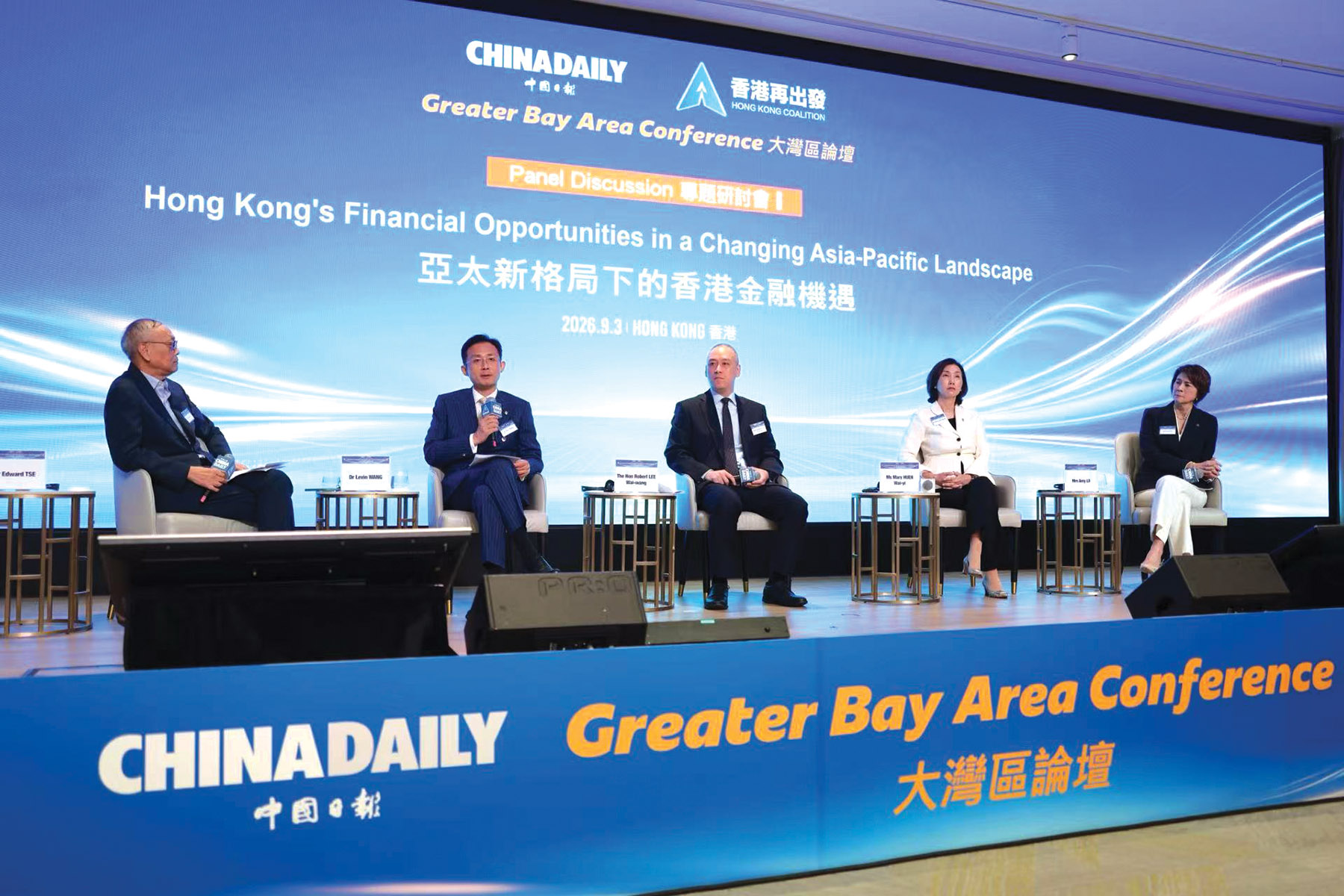
Financial regulators and industry leaders highlighted Hong Kong’s strategic role in the evolving Asia-Pacific financial landscape, especially in enhancing capital-market connectivity related to asset allocation and risk management.
Panelists made the remarks at a discussion session on Hong Kong’s financial opportunities in the changing regional landscape.
Carlson Tong Ka-shing, chairman of Hong Kong Exchanges and Clearing Ltd (HKEX), said the city already has unique connectivity to the biggest growth opportunities in Asia, especially in the Guangdong-Hong Kong-Macao Greater Bay Area. He cited the city’s innovation, entrepreneurial professionals, globally expanding companies, and vibrant investor demographics as key strengths.
Tong highlighted the importance of cementing a multiasset ecosystem in sustaining cross-border capital flows. “We must build on, expand, and strengthen our multiasset ecosystem. When global investors come here, we need to make it as easy as possible for them to get the most out of the region’s opportunities,” he said.
READ MORE: Consolidating Hong Kong’s role in capital market connectivity
Tong said that the HKEX will continue to build bridges in Central Asia, and the special administrative region already is the most popular destination for Southeast Asian companies seeking international listings.
Levin Wang Lei, CEO of Huatai Financial Holdings (Hong Kong) Ltd, recommended launching an IPO Connect program as quickly as possible, as the Hong Kong IPO market is currently very strong.
He also suggested establishing a “Connect Scheme 2.0” to strengthen risk-management tools. Connect 1.0 is about moving capital, and the 2.0 version must make that capital work harder, safer, and smarter, he said.
As for bringing in and keeping global capital in Hong Kong, Wang believes better risk-management tools are very important. “Opening a market without good hedging is just like opening a highway with no exit, no traffic lights and no insurance,” he said.
“Hong Kong needs to offer risk-management tools through more hedging products and more types of cross-border collateral risk-management tools to assist investors in managing interest rate risk, foreign exchange risk and credit risk,” Wang said. He added that his goal with “Connect 2.0” is not just to improve capital flows, but to improve quality flows.
Legislator Robert Lee Wai-wang suggested expanding the Cross-boundary Wealth Management Connect program by enhancing product variety and encouraging participation from securities companies.
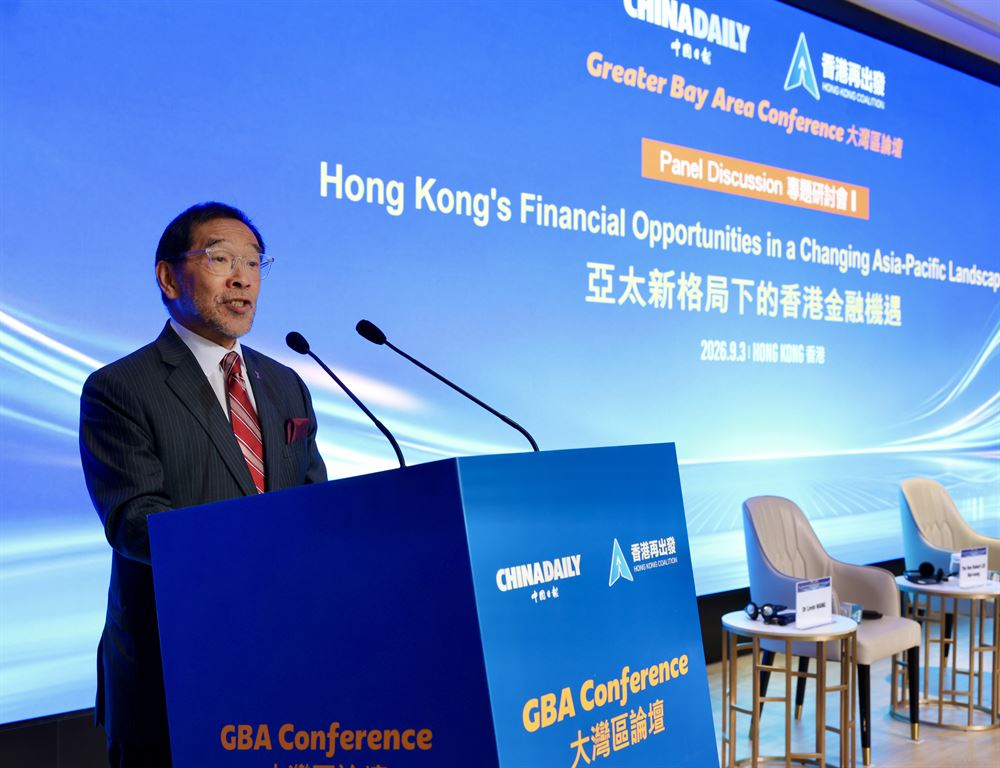
He also recommended refining the Stock Connect program to broaden investor access to various stocks and financial products. “For these Connect programs, it is really working to strike a proper balance between regulation, having high-quality markets, and protecting investors and allowing access,” he said.
Lee said Hong Kong’s financial regulators should avoid implementing measures earlier than other jurisdictions, or enforcing overly harsh regulatory requirements that other jurisdictions do not. This way, “we can make ourselves have a safe and highly regulated market while there will not be regulatory arbitrage at the same time,” he added.
Regarding renminbi internationalization, Mary Huen Wai-yi, CEO of Hong Kong and Greater China & North Asia at Standard Chartered, said the process is shifting from basic access toward deeper execution.
Suggesting that the issue be viewed through the lens of a corporate chief financial officer, Huen said the internationalization should focus on putting all the necessary “enablers” in place so that CFOs can confidently hold, hedge, invest and settle in renminbi.
She also urged Hong Kong to continue extending the renminbi’s reach beyond the Chinese mainland and the SAR into other markets worldwide, and called for closer cooperation among different stakeholders.
“We have to continue to work with exchanges and other partners for clients who want longer tenor, more product innovation, and different hedging solutions. And these are the things we need to cooperate on,” she said.
ALSO READ: HK well placed to explore new space economy
Amy Lo Choi-wan, chairman of UBS Global Wealth Management Asia and chief executive of UBS Hong Kong, said that the HKSAR had overtaken Switzerland to become the world’s largest cross-border wealth management hub. She attributed the city’s competitive edge partly to the Cross-boundary Wealth Management Connect Scheme in the Greater Bay Area.
“The Wealth Management Connect is something very unique to Hong Kong, but currently is not yet really relevant for the industry because the threshold (for participating) is quite high,” Lo said. She called for lowering the threshold and expanding the range of eligible products to engage more participants.
Lo also said that global investors are increasingly seeking risk-management opportunities and diversification across asset classes while navigating geopolitical uncertainties. This trend opens up opportunities for Hong Kong’s wealth management business, and the city should consider offering more risk-management tools and broader market access, she said.
Contact the writers at oswald@chinadailyhk.com
