

It is said that Brits can often see four seasons in one day, with surveys showing the UK weather as the main reason for booking a holiday abroad.
That has not been a worry this year during a summer of near uninterrupted sunshine and sizzling temperatures. The result is a welcome boost for the British tourist economy, according to industry data, as people increasingly opted to stay in the UK instead.
“The great weather we’ve enjoyed has certainly helped, but there’s also a broader shift in how people are holidaying,” said James Shaw, chief commercial officer at Sykes Holiday Cottages, which offers over 25,000 holiday homes in the UK and Ireland.
The preference for home breaks over vacationing abroad is a boon for a tourism industry that directly contributed 70 billion pounds ($95.2 billion) to the economy in 2024 — about 3 percent of total GDP — and supported 1.4 million jobs.
Britons have traditionally flocked abroad to guarantee holiday sunshine since the surge in package holidays in the 1960s and 1970s. However, this year has seen near perfect conditions for staycations.
The UK has spent much of the summer basking in record heat and dry weather, delighting sun worshippers but draining reservoirs and scorching parks. But many parts of Europe have been even hotter with temperatures exceeding 40 C unleashing wildfires in France and Spain. Meanwhile, the surge in energy costs has delivered a fresh cost-of-living squeeze.
ALSO READ: Researchers: Heat waves may have led to over 2,700 deaths in England, Wales
Bookings at Sykes are up 5 percent year-on-year for the summer period, with its own research suggesting that 38 percent of Britons plan to spend their main holiday domestically this year — up four percentage points on last year. A further 26 percent plan to take a domestic break alongside their main holiday.
“A UK break increasingly isn’t an alternative to going abroad,” said Shaw. “For many people it’s part of a wider mix of travel, whether that’s their main summer holiday, a shorter trip alongside an overseas break, or a last-minute getaway when the forecast looks good.”
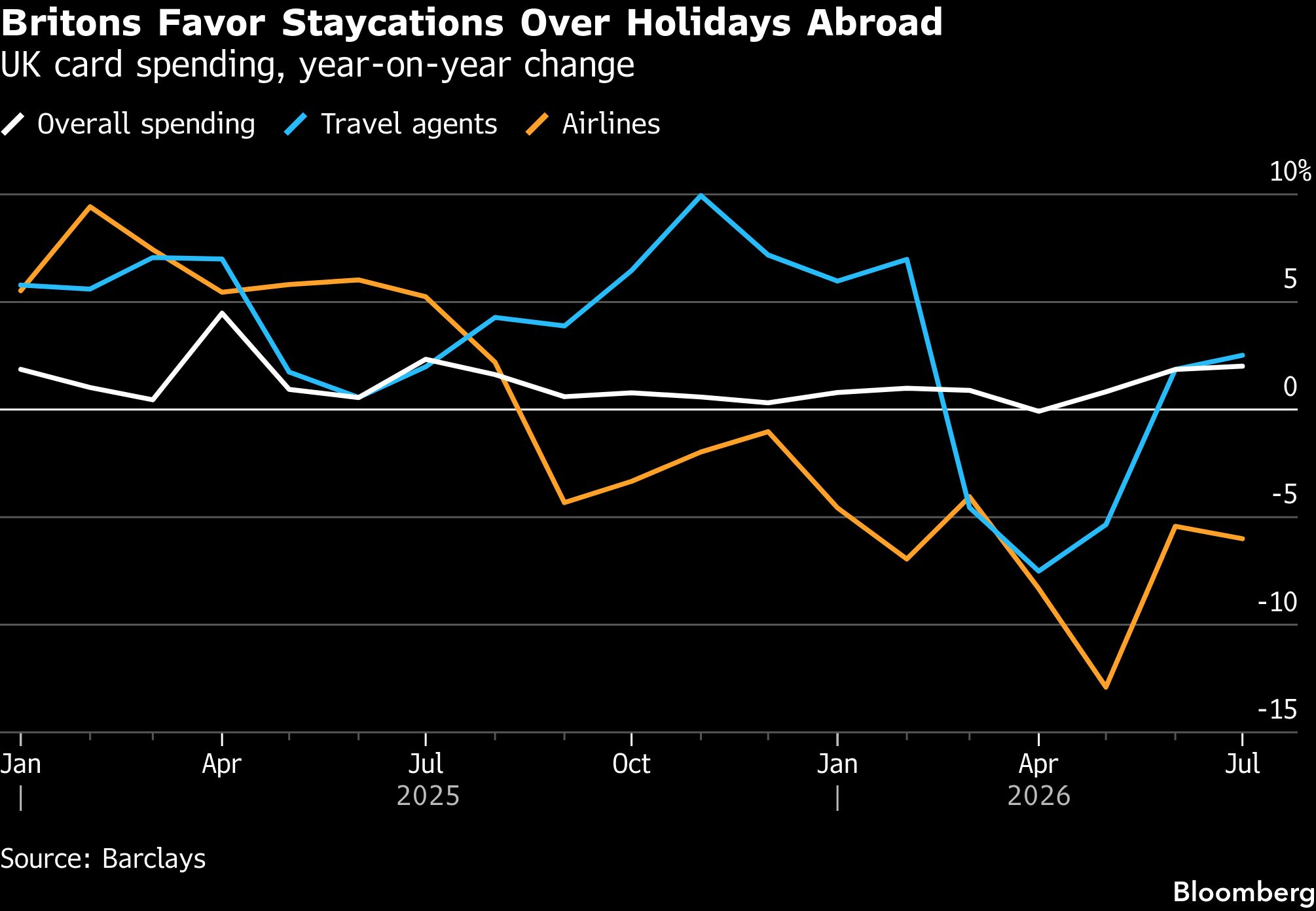
Barclays also believes its granular card spending figures are consistent with holidaymakers shunning trips overseas in favor of domestic travel.
While overall travel spending was down 0.3 percent year-on-year in July, the moves within the category suggest Britons prioritizing staycations over holidays abroad. Airline spending contracted 6 percent but travel agents saw a 2.5 percent boost and spending on hotels, resorts and accommodation grew 2.6 percent — hinting at a tilt toward domestic trips.
Even stronger motor fuel spending could be a sign that families were crossing the country to drive to getaways — the South West of England which includes Cornwall and Devon being the most popular destination in the summer months.
“There was an increase around about 2 percent in volume there as well, so potentially more staycationing — people driving longer distances, and a lot of people off to Center Parcs in the last couple of weeks, as an example,” said Rohan Kumar, head of client insights at Barclays.
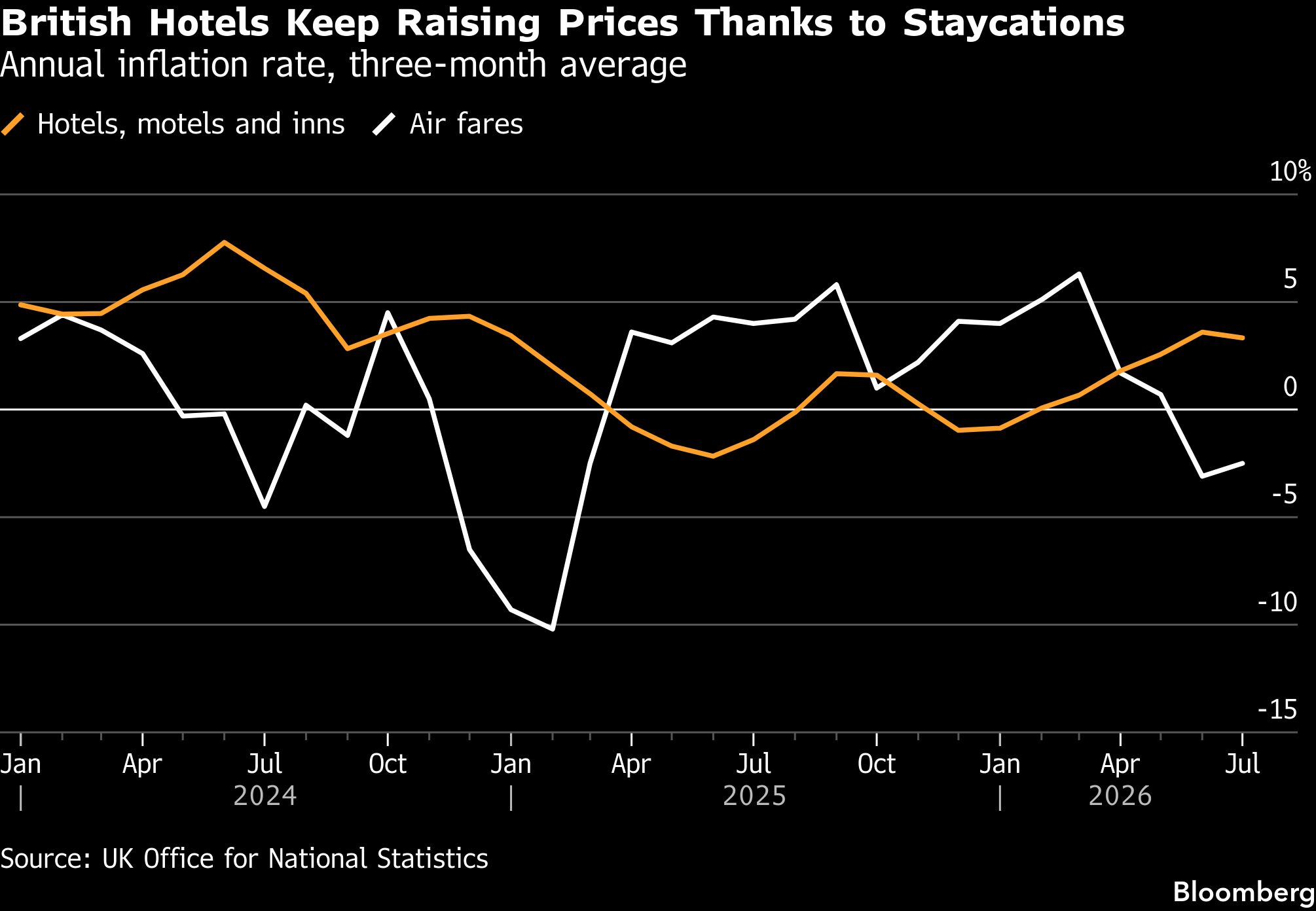
The shift is also evident in UK inflation data. While hotel prices have been rising more quickly, there has been an absence of those pressures in air fares. “This might be down to staycations,” said Bruna Skarica, chief UK economist at Morgan Stanley.
Hotels could be passing on higher operational costs, such as from business rates, Skarica said. However, she noted that said weak demand for flights seem to be preventing an increase in air fares caused by higher jet fuel costs.
The domestic travel industry may also be in a strong position heading into the 2027 season.
“If cost pressures persist, we may see some further shift towards staycations next year, as households continue to be price sensitive,” said Chloe Parkins, lead economist at Tourism Economics,. “Even so, short-haul international travel is likely to remain fairly price-competitive relative to some UK breaks, which could limit the scale of any increase.”
