

The much-anticipated verdict in the case of the “Hong Kong Alliance in Support of Patriotic Democratic Movements of China” for seditious subversion of State power was handed down on Friday. The defendants — the organization, its former chairman Lee Cheuk-yan, former vice-chairwoman Chow Hang-tung, and former vice-chairman Albert Ho Chun-yan — were jointly charged with one count of incitement to subvert State power. Ho had earlier pleaded guilty, while the remaining defendants entered pleas of not guilty.
 After 22 days of rigorous trial proceedings, the three designated national security law judges of the High Court of the Hong Kong Special Administrative Region —Justice Li Yun-teng, Justice Chan Chung-hang, and Justice Lai Wan-kei — lawfully ruled that the organization, Lee, and Chow were guilty of the offense of incitement to subvert State power.
This verdict is strictly in accordance with the law and grounded in conclusive facts and evidence. The defendants' unlawful activities were prolonged in duration and highly detrimental to the country in nature. The ruling upholds the spirit of the rule of law, and is reasonable and just. The legal proceedings and the verdict not only attest to Hong Kong's judicial independence but also serve as a reminder that national security offenses are taken seriously.
During the trial, the prosecution and the defense engaged in intense legal contestation over the boundary between freedom of speech and national security. The core points of contention profoundly touched upon the constitutional and legal bottom lines under the "one country, two systems" principle. The verdict has enhanced the clarity of that boundary.
In its closing submissions, the prosecution pointed out that the defendants' persistent advocacy of ending the Communist Party of China’s leadership in the country was an attempt to subvert the nation's fundamental political system. Such conduct had far exceeded the scope of freedom of speech protected by the Basic Law and the Hong Kong SAR National Security Law (NSL), and constituted an objective act of incitement to subvert State power through "unlawful means".
In response to the prosecution's charges, the defense sought to mount its case from the perspectives of “freedom of speech” and packaged the defendants' unconstitutional conduct that attempted to incite public hostility toward the Party and the national political system as “historical narrative”.
The court, in its ruling, clearly and forcefully refuted the defense's arguments. In the judgment, Justice Li pointed out that the prosecution had proved beyond reasonable doubt that Lee and Chow subjectively believed that their acts of solicitation could lead others to adopt unlawful means to subvert State power. This means that the court did not merely examine the content of the defendants' speech, but comprehensively considered their organisational activities spanning over three decades, their historical background, and the objective social impact of their activities.
The court determined that the group's advocacy platform and its organization of relevant rallies were not merely commemorative or academic in nature, but were sustained acts of incitement with clear political objectives. Ho, Lee and Chow, as the group’s core figures, acted with clear criminal intent and social harmfulness.
Analyzing the matter from a jurisprudential perspective, the court's ruling precisely delineated the boundary of freedom of speech. In a modern rule-of-law society, freedom of speech is never absolute. When speech involves incitement to subvert State power, it ceases to be a protected right and transforms into a criminal offense that must be sanctioned by law. The legislative intent behind the NSL was precisely to fill the legal vacuum in the HKSAR regarding the safeguarding of national security.
Through its ruling, the court has made it clear that the interpretation of "unlawful means" should not be narrowly confined to physical violence, but should encompass all conduct that contravenes the principles of the nation’s Constitution and the Basic Law of the HKSAR and all conduct that is intended to undermine the nation's fundamental political system.
This legal perspective clarifies the longstanding societal confusion surrounding concepts such as "democracy", “freedom of speech”, “rights”, and "justice", revealing that any attempt to paralyze State organs by exploiting institutional loopholes or to undermine the constitutional order will face severe legal sanctions.
The ruling once again proves that the HKSAR possesses a mature and independent judicial system. The three designated judges strictly adhered to legal procedures and legal principles throughout the trial, gave full hearing to the submissions of both parties, remained free from external interference, and ultimately rendered a just verdict based on law, facts, and evidence. The defendants duly exercised their rights, and the court, over 22 days of trial, afforded the defense ample opportunity to be heard, ensuring a fair and just trial. This represents not only a steadfast commitment to procedural justice but also a pursuit of substantive justice.
The court's ruling against the group and its associated defendants is an inevitable measure to safeguard national sovereignty, security, and development interests, and represents a landmark case in the comprehensive and accurate implementation of Hong Kong’s national security laws. The ruling significantly helps to dispel some misunderstandings regarding national security issues.
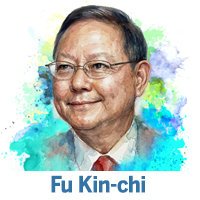
The author is a law professor, director of the Chinese Association of Hong Kong and Macao Studies, and president of the Association for the Promotion of Rule of Law, Education and Technologies.
The views do not necessarily reflect those of China Daily.
