

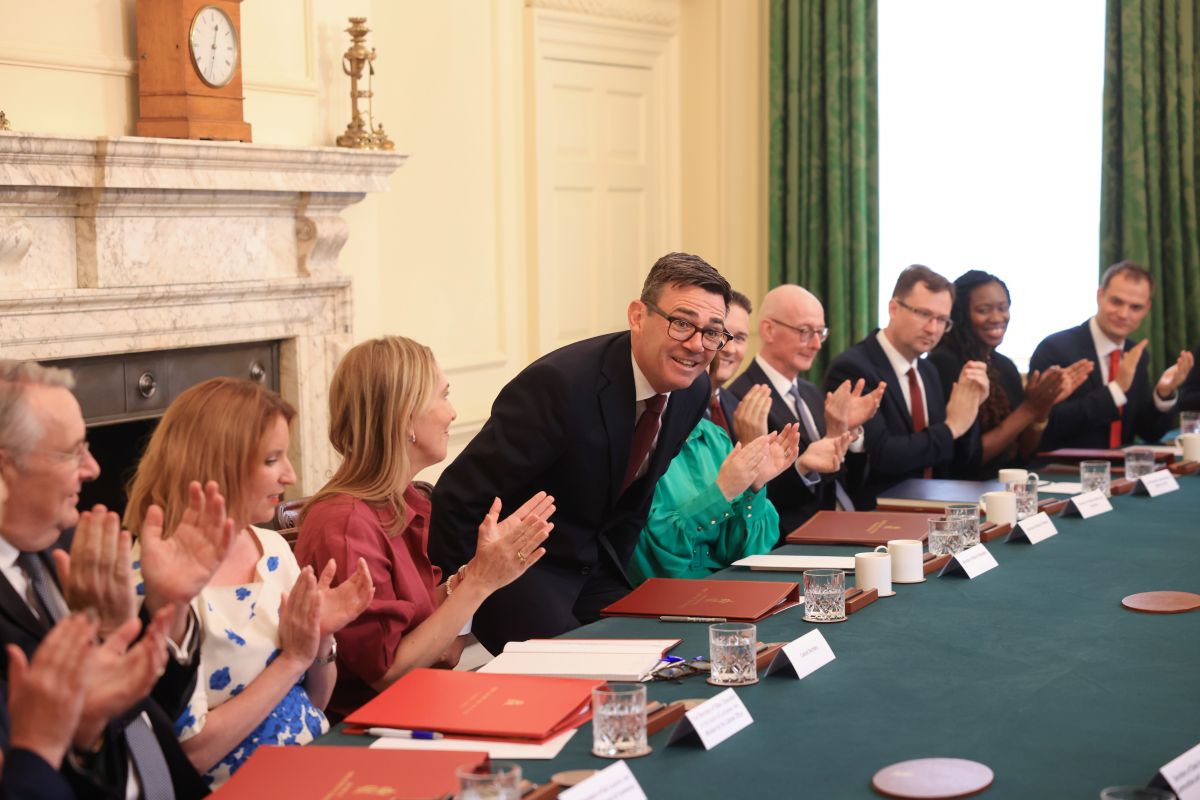
Addressing a private meeting of Labour’s ministerial advisers this week, Prime Minister Andy Burnham said he’d moved on from believing in the “if you’re explaining, you’re losing” maxim popularized by Ronald Reagan.
In a world where Nigel Farage — and further afield, Donald Trump — have so completely rewritten the terms of political engagement, Burnham told aides that now, you’re losing if you don’t explain yourself to voters as you go along.
That thinking-out-loud approach has sometimes frustrated Whitehall officials tasked with making the math on Burnham’s ideas add up. But it is also part of how he intends to make life harder for his right-wing opponents, according to a person inside the room who asked not to be named in connection with private conversations.
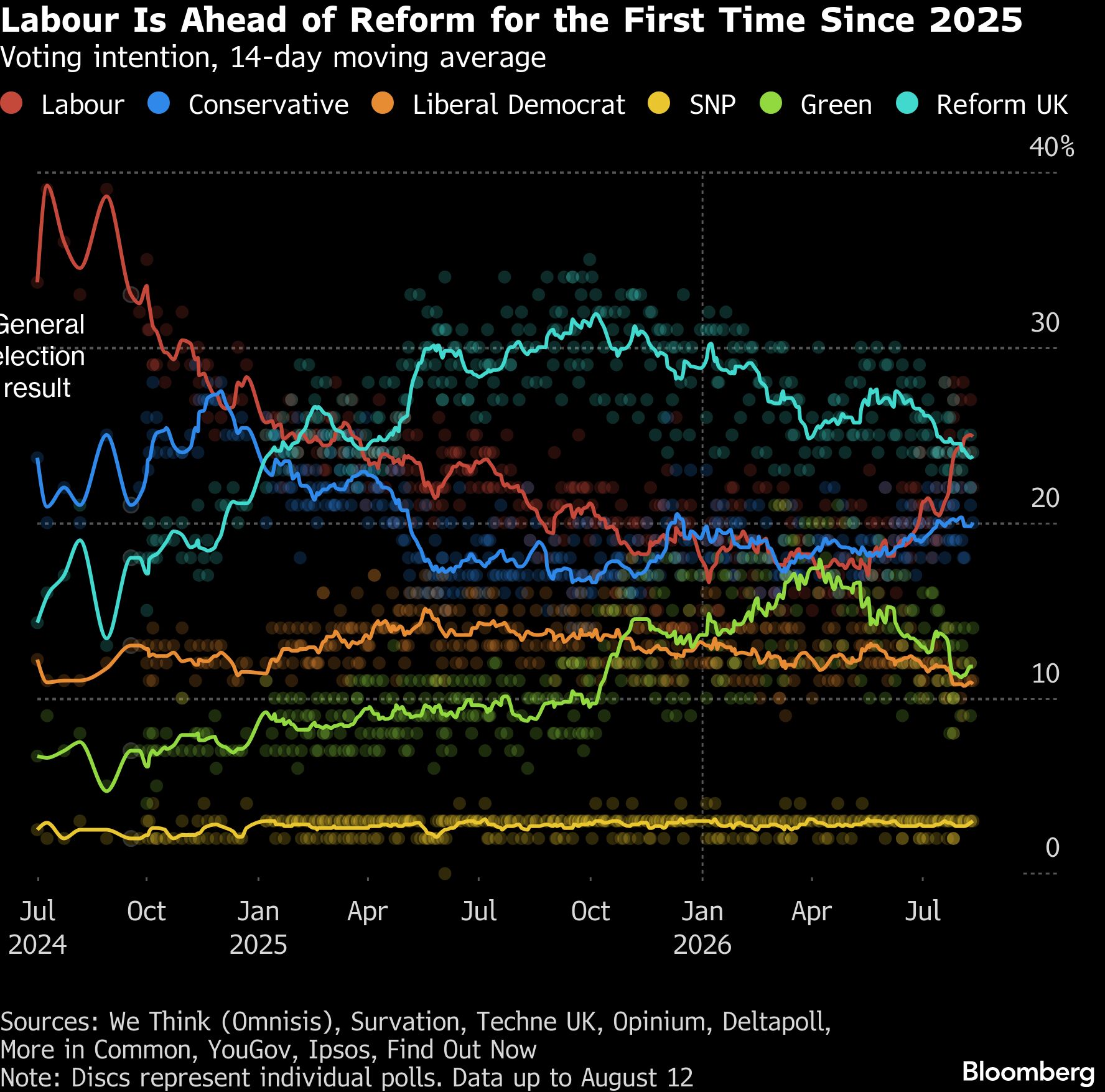
The atmosphere at the meeting was unified and buoyant, according to those present. And with good reason: polls suggest that the gamble Labour MPs took when they ousted Keir Starmer and installed Burnham is starting to pay off. For the first time since early 2025, the Labour Party has crept back into first place, narrowly overtaking Farage’s Reform UK.
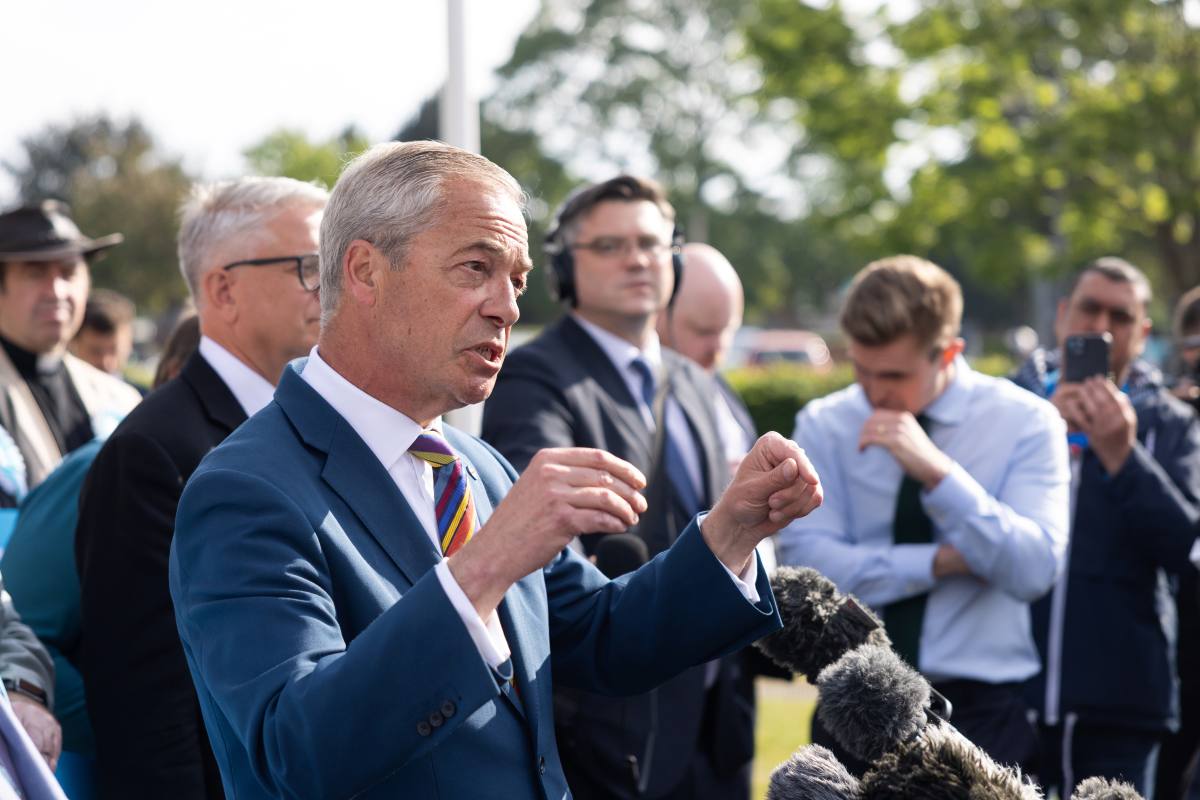
The change in the parties’ fortunes betrays an opposition that has yet to establish firm attack lines. Within both right-wing Reform and the left-wing Green Party there’s an acknowledgement that Burnham presents a new kind of opponent — in part due to an affable communications style that’s heavily dependent on social media.
One person close to Reform said Burnham seemed to be taking a more common-sense approach than his process-oriented predecessor, posing a worry for Farage, who turned himself into Starmer’s chief antagonist by projecting a man-of-the-people image. Still, Burnham’s early poll bump owes as much to the right wing’s disarray as to Labour’s strategy refresh.
This week, Farage showed how he can squander his own advantage, after he stood down and fought reelection for his Clacton seat.
While he comfortably won an election other major parties had boycotted, he ceded 26.7 percent of the vote to a novelty candidate dressed as a trash can, and there are Reform insiders who denounce the maneuver as a mistake.
Some senior members of the party are disappointed by how things have played out in recent months, saying Farage has made a series of out-of-character missteps as he attempts to rewrite the narrative around a parliamentary ethics probe into his finances. A spokesperson for Reform declined to comment.
Helped in no small part by the unprecedented scrutiny of Reform’s finances, Labour’s poll lead “represents a marked improvement from the final days of Starmer,” according to Chris Hopkins, political research director at Savanta.
But the new prime minister ascended to power in the early days of Parliament’s summer recess, and has been relatively untested so far.
“While Burnham is so far appearing shrewder, more wily, and more agile than his predecessor, it’s far too early to say with any certainty that will still be the case when more difficult decisions have to be taken,” Hopkins said.
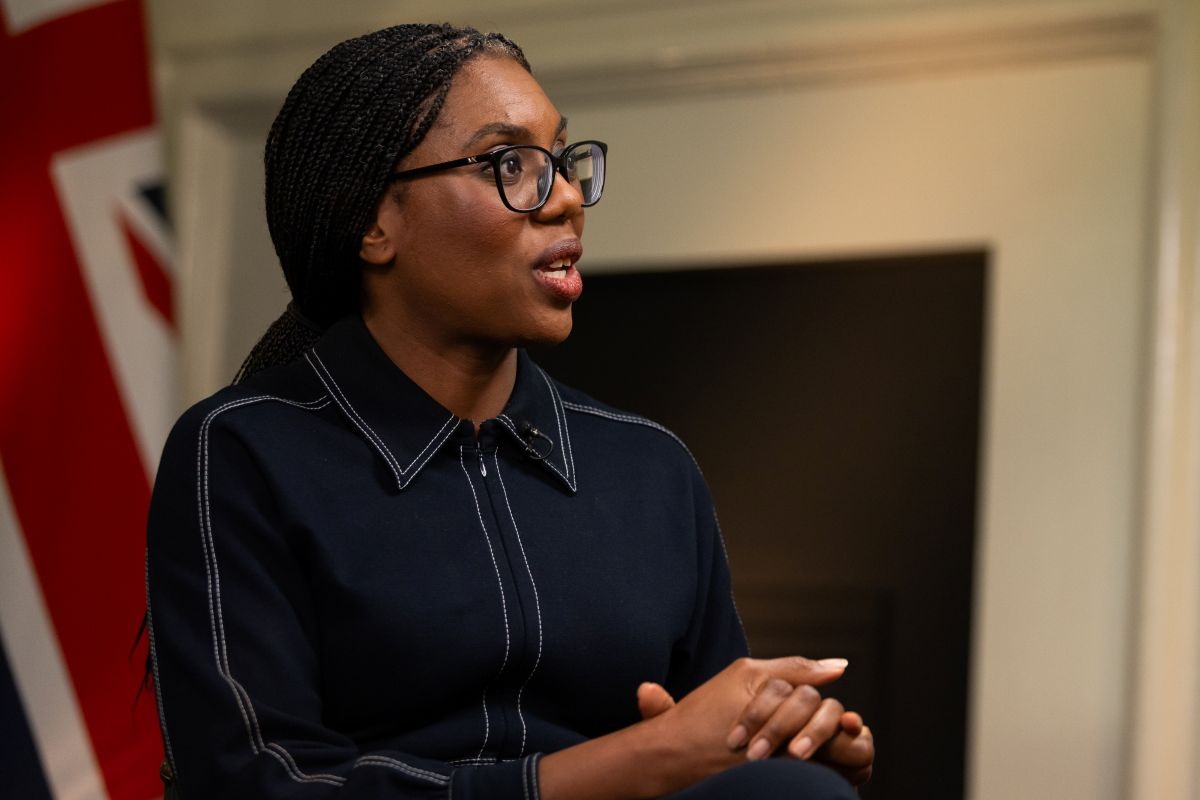
Conservative Party leader Kemi Badenoch has also struggled to find her footing against Burnham. Tory officials say their leader has been performing better of late, but her personal popularity has not done enough to markedly improve the party’s polling.
YouGov data published this week shows that, while Badenoch’s personal ratings among voters have improved substantially since October, opinion toward the party itself remains negative. Fewer than one in five Brits say they believe the Conservatives are ready for government.
Insiders complain Badenoch was personally responsible for a series of errors, like the decision to support a prospective Tory councilor convicted of racially harassing a Jewish former Labour MP. After he eventually withdrew his candidacy, Badenoch appointed him as an adviser instead. A spokesperson for the Conservative Party did not immediately respond to a request for comment.
Badenoch has ruffled feathers in the party by blocking moderate candidates. From the government’s perspective, that leaves more of the electorate for them to scoop up.
Labour insiders say one of the reasons Burnham was chosen as leader was his ability to speak to voters across the progressive spectrum of British politics, much like former Conservative Prime Minister Boris Johnson was able to dominate the center-right.
Conservatives see Burnham’s biggest weakness the fact that his key pledges around devolution and social care require a great deal of funding at a time when the economy isn’t growing as fast as it should.

The latest Treasury modeling, previously reported by Bloomberg, suggests the UK economy will barely grow next year in the event that the Strait of Hormuz stays badly disrupted until the end of 2026.
There is some optimism among Tories that Burnham’s attitude toward spending presents an opportunity for them to return to familiar ground and argue for a low tax approach.
Allies of the Conservative leader wager that Burnham’s early attempts to contrast with Starmer by projecting optimism and ambition will begin to stall when they hit reality — pointing to economic pain still to come.
