

China-Mongolia friendship takes center stage, underscoring stronger partnership
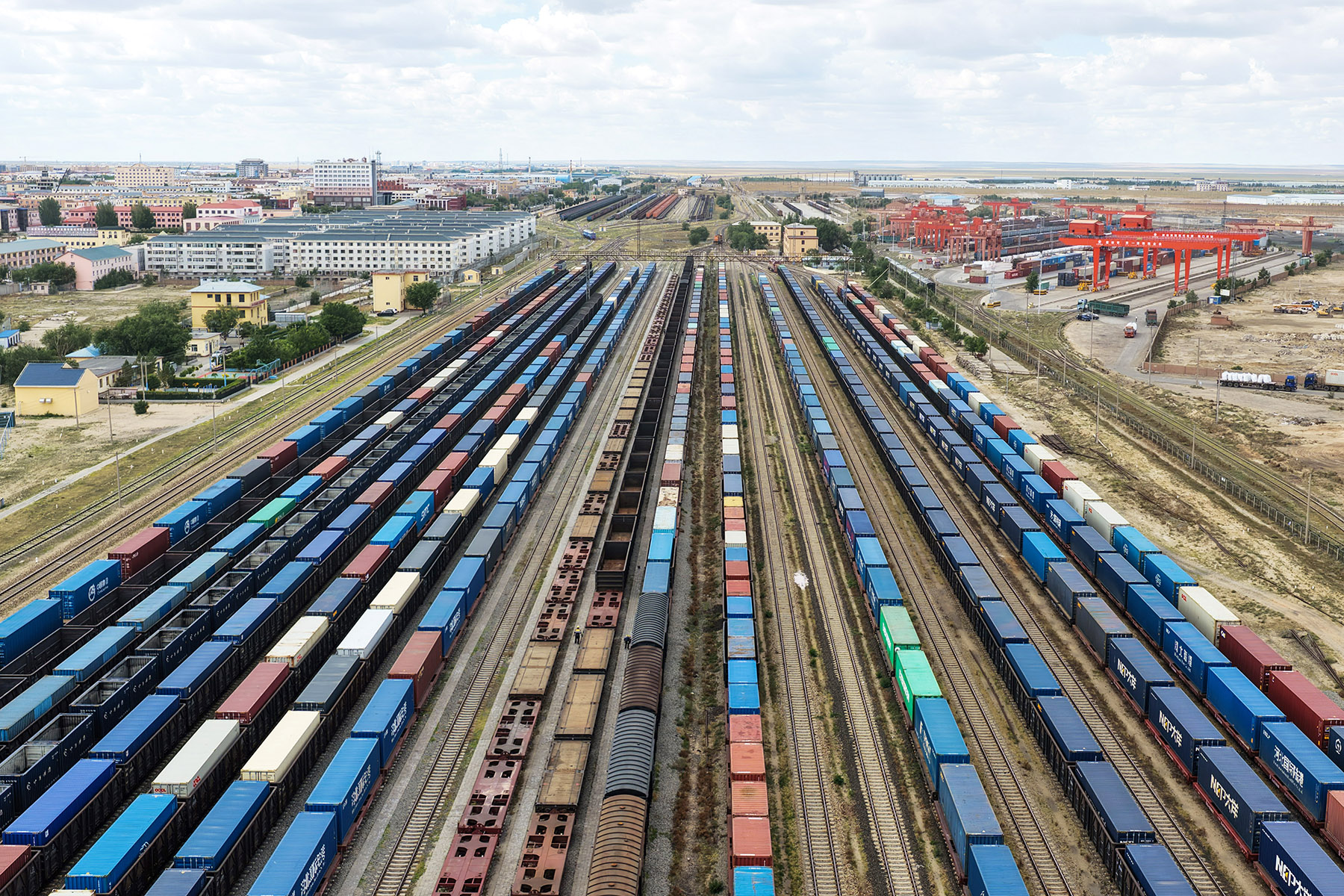
The city of Erenhot, located in the Inner Mongolia autonomous region, is often called China's "Northern Gate", as it is the critical entry point where the China-Mongolia railway first touches Chinese soil from the neighboring country.
In this bustling hub, the city center lies just 9 kilometers from the center of Zamyn-Uud, its Mongolian twin.
For many, this brief distance translates into a rapid crossing, often taking just about an hour, seamlessly blurring the boundaries between the two nations.
READ MORE: China-Mongolia border port handles milestone 20,000 China-Europe freight trains
For Badrakh, a 56-year-old tailor from Mongolia, these mere 9 km transcend a simple geographical divide.
For over two decades, Badrakh has crafted traditional Mongolian robes with scissors and needles. But years ago, he made a pivotal decision: to move his established shop from Mongolia to Erenhot.
The seeds of this cross-border move were planted in 2018, when his cousin, who had married and settled in Erenhot, brought him a special order: dozens of Mongolian dance costumes for a local middle school. This gave Badrakh his first glimpse of Erenhot's market potential and vibrant commercial energy.
By 2023, Badrakh had opened his shop, PuBa Tailor, in Erenhot, drawn by the city's convenient access to a wide array of fabrics and competitive prices.
Today, Badrakh's life is inextricably linked to both Erenhot and Zamyn-Uud. He said many of his Mongolian friends cross the border daily, engaged in purchasing, transportation, and trade.
"Erenhot and Zamyn-Uud are critical hubs for China-Mongolia trade. Without these two cities, large-scale goods transfer would be impossible," Badrakh said.
A millennium of connection
The vibrant commercial relationship between the two places stretches back much further.
"Cross-border exchanges between the two cities can be dated back to the Yuan Dynasty (1271-1368)," said Hong Hongxia, deputy director of the Foreign Affairs Office of the Erenhot Municipal Government.
During the Qing Dynasty (1644-1911), the Yilin Post Station was set up in what is now the Erenhot area. Merchants would stop there to rest, exchange goods, and catch up on the latest news.
"Back then, the Erenhot and Zamyn-Uud regions served as key neighboring stopovers along the Silk Road, the ancient Great Tea Route, and other major trade routes, fostering spontaneous local trade for over two hundred years that laid a natural groundwork for deep people-to-people connections," Hong said.
The modern bond is inseparable from the railway. In January 1956, the Beijing-Ulaanbaatar-Moscow international railway line went into full operation.

It catalyzed the founding of Erenhot as a town on the Chinese side of the border and the establishment of Zamyn-Uud as a village on the Mongolian side, with the latter becoming the first railway hub for entry into Mongolia.
In 1991, the double-track railways connecting China and Mongolia were linked up within Zamyn-Uud, strengthening the logistics lifeline of the two cities on the Gobi Desert, Hong said.
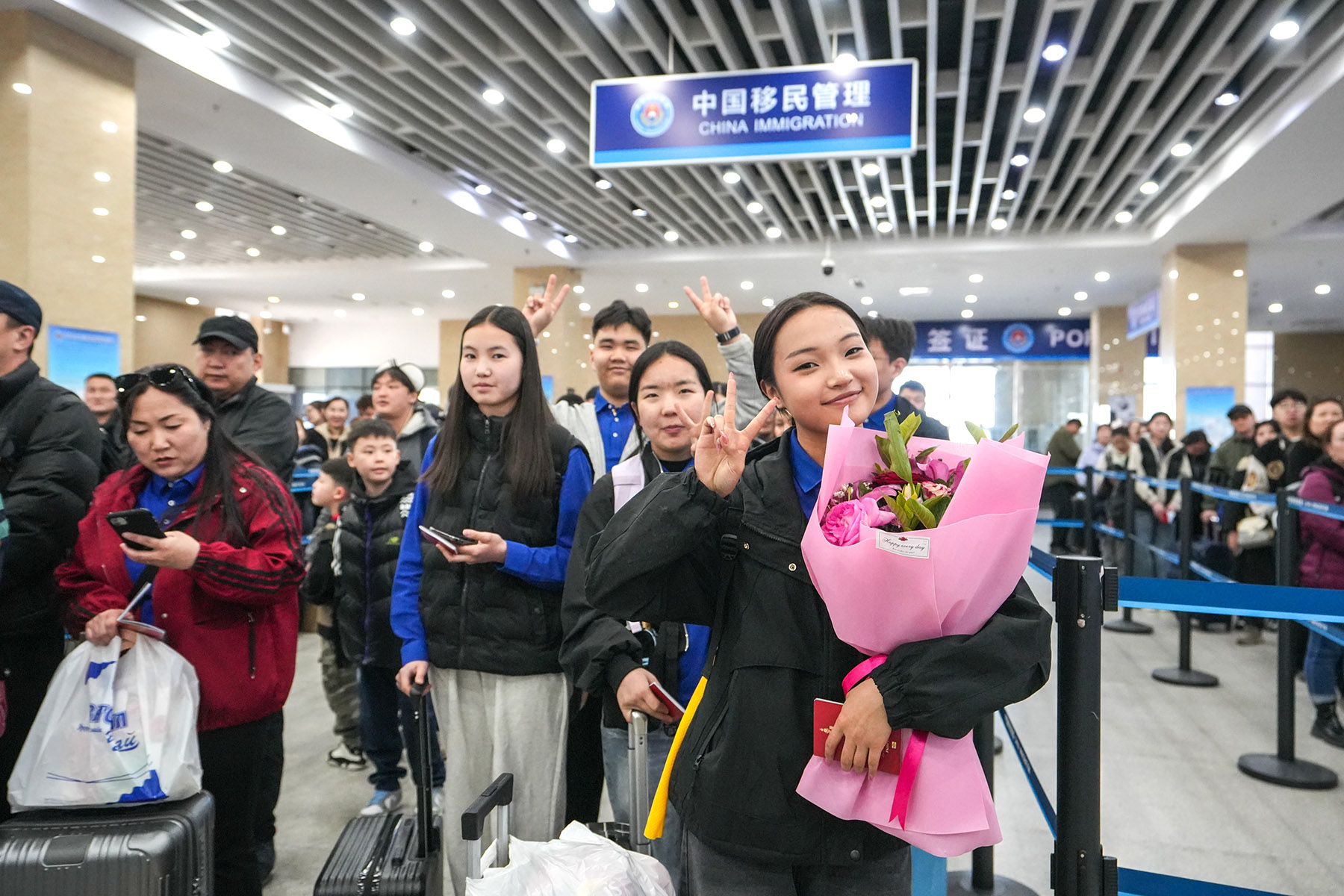
"In 1992, the highway port opened for two-way traffic, normalizing civilian trade, family visits, and tourism. The foundation for sister-city cooperation was firmly established even then."
In 2019, Erenhot and Zamyn-Uud officially signed a sister-city agreement, making them a unique pair of border-port sister cities. They are not just neighbors but a model of friendly cooperation between China and Mongolia, Hong emphasized.
Official data from Erenhot underscore this closeness: Erenhot port handles over 70 percent of personnel exchanges between China and Mongolia and more than 80 percent of China's exports of livelihood supplies to Mongolia. Last year alone, the port recorded nearly 2.82 million border crossings — almost 8,000 people every day.
Driving growth
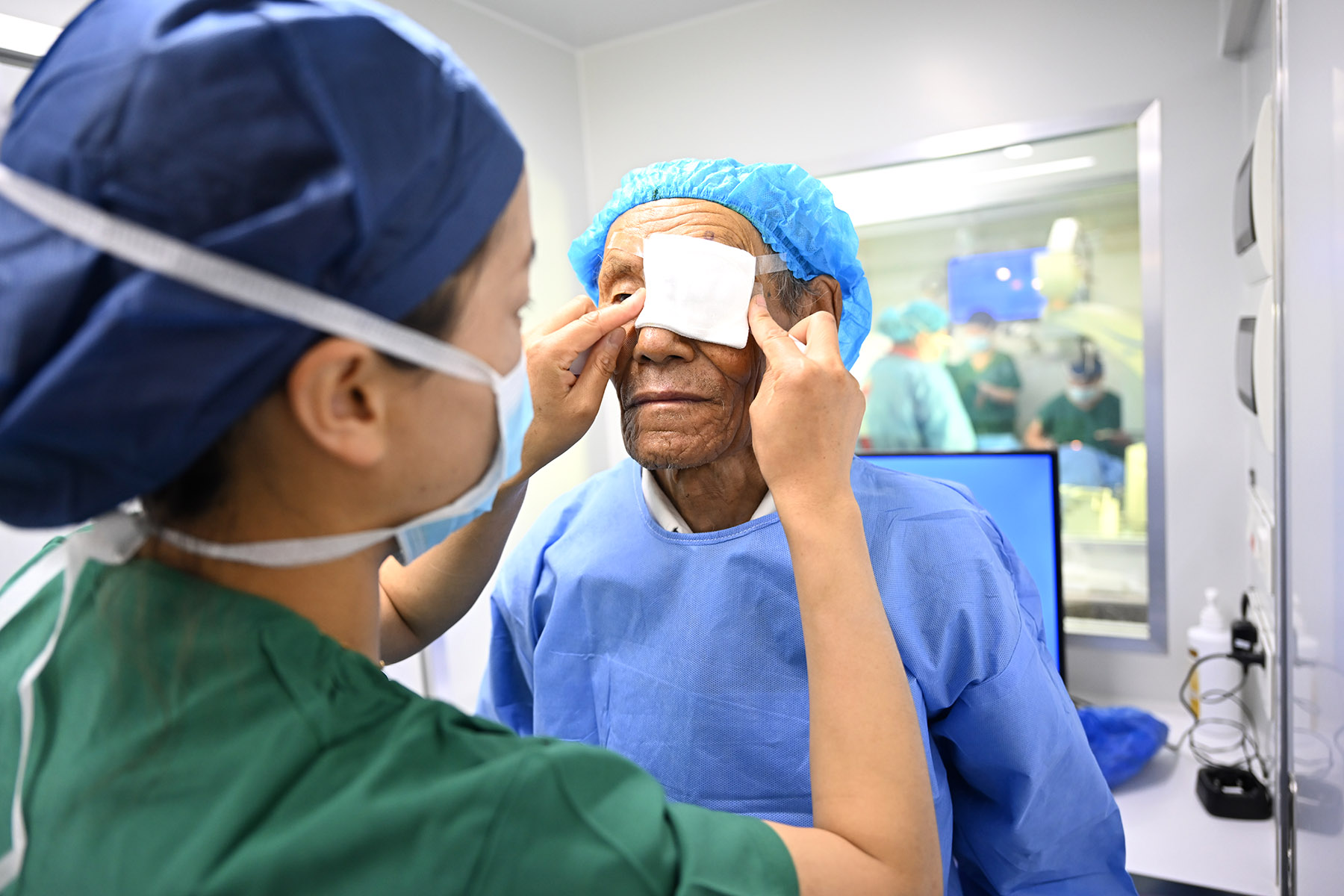
The logistics parks near the Erenhot highway port offer vivid testimony to these increasingly close trade ties. At the Erenhot Huitong International Logistics Park, there's a constant stream of trucks, while forklifts tirelessly load and unload cargo.
According to Aruuhan, the park's office director, most goods exported from Mongolia to China are first transported to Zamyn-Uud. They then enter China through the Erenhot port.
Built in 2011 and operational since 2012, the park has witnessed the evolution of China-Mongolia trade. "Since 2023, the park has seen a significant increase in import volumes, primarily mineral products and meat, reaching an annual total of around 1 million tons in recent years," Aruuhan said.
This increasingly frequent cross-border movement and smooth flow of goods underpin continuous efforts to upgrade China-Mongolia economic cooperation.
In March 2024, the establishment of China-Mongolia Erenhot-Zamyn-Uud Economic Cooperation Zone was approved. Spanning 18.03 square kilometers — 9.03 on the Chinese side and 9 on the Mongolian side — it is China's third cross-border economic cooperation zone with a neighboring country.
This April, the China (Inner Mongolia) Pilot Free Trade Zone Erenhot Area was established. The Chinese part of the earlier-approved economic cooperation zone was integrated into this new free trade zone, injecting significant new dynamism into Erenhot's opening-up.
Dou Xiaoping, deputy director of the Administration Committee of the China (Inner Mongolia) Pilot Free Trade Zone Erenhot Area, said the China-Mongolia Erenhot-Zamyn-Uud Economic Cooperation Zone was established to leverage the respective strengths of both countries.
"The Chinese side focuses on international logistics, import and export processing, and cross-border tourism, capitalizing on its market, technological, and capital advantages to accelerate the establishment of a modern cross-border industrial system. Meanwhile, the Mongolian side prioritizes bulk commodity logistics and international trade, leveraging its resources, geographical, and policy advantages," he said.
Strategically located on the border adjacent to the Erenhot and Zamyn-Uud ports, the cooperation zone will operate under special customs procedures once fully established.
The cooperation zone already hosts over 20 registered enterprises, covering high-tech fields like new energy and computing power, he said.
Civil ties
Beyond trade, Erenhot and Zamyn-Uud are also playing an increasingly important role in connecting China and Mongolia in areas crucial to people's livelihoods, such as education and healthcare.
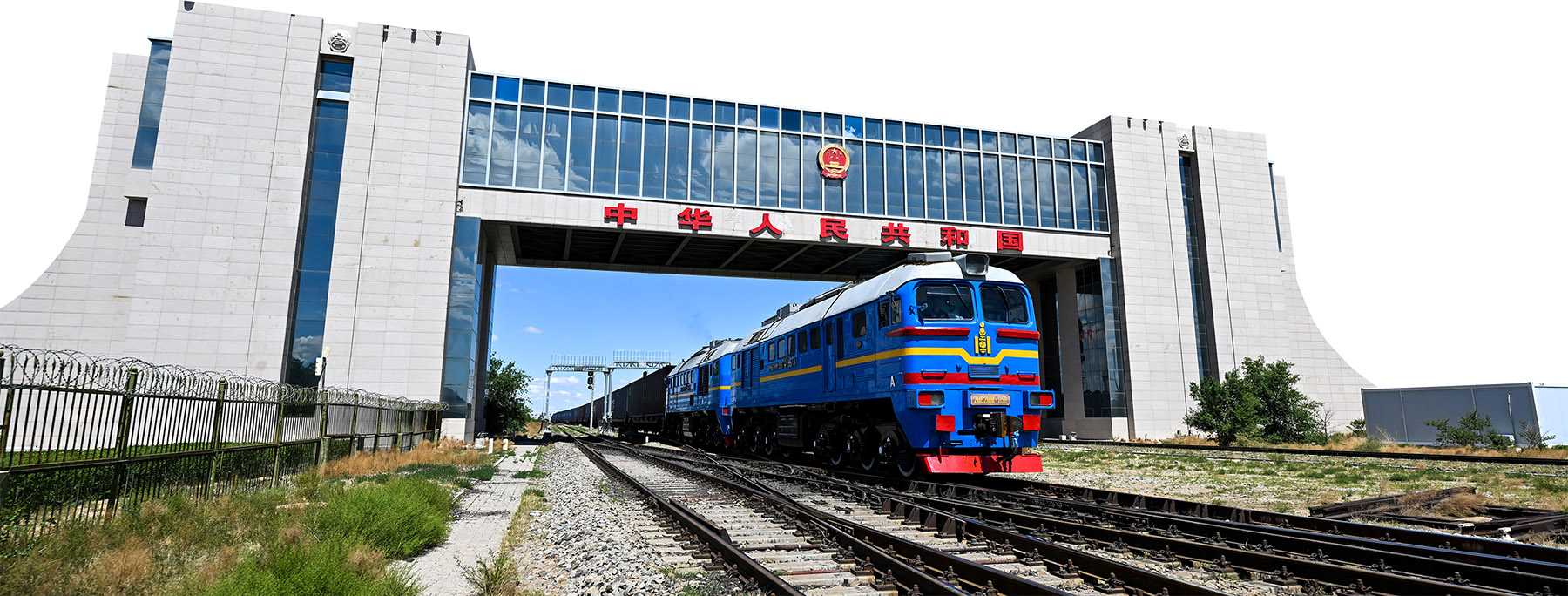
Li Jingmei, president of Erenhot People's Hospital, said the hospital established a cooperation relationship with Zamyn-Uud Hospital in 2014.
The two sides now have a regular mechanism for mutual visits and exchanges, with Mongolian medical staff coming to Erenhot for professional exchanges each year, she said.
"To better serve Mongolian patients who come here for treatment, the hospital has assigned two full-time medical staff fluent in Mongolian to provide reception and translation services," Li said. "In the past two years, the hospital has served over 3,000 Mongolian patients annually, continuously boosting Erenhot's cross-border medical outreach and influence."
Liang Zeshang, vice-president of the hospital, traveled to Mongolia last October for a voluntary medical outreach program. What struck him most was the local people's enthusiasm for traditional Chinese medicine.
"Many people are interested in traditional Chinese treatment methods. During the outreach, many Mongolians lined up daily to participate. Local medical staff also expressed great enthusiasm for techniques like acupuncture and medicinal tuina massage, and even expressed a desire to come to China to study."
In education, Erenhot also plays a crucial connecting role. Located close to Mongolia with seamless cross-border travel links, the city has become a popular destination for Mongolian students.
ALSO READ: China and Mongolia begin work on a new cross-border railway
According to Su Ying, deputy director of the Erenhot Municipal Education, Science, and Technology Bureau, Erenhot has been offering educational programs for Mongolian students since 1992.
Over the decades, the city has educated more than 6,800 Mongolian students, now providing comprehensive services across all academic stages — from kindergarten to high school.
For 17-year-old Michidmaa, who attended high school in Erenhot, studying in China has not only allowed her to master Chinese but also to deeply experience Chinese culture and societal vitality. "This has strengthened my desire to continue my studies in China," she said. "My interest in Chinese culture fuels my desire to learn more here and drives me to keep exploring."
According to Su, a total of 104 Mongolian high school students graduated from Erenhot this year. To date, 49 have secured admission to top-tier Chinese institutions, including Fudan University, Wuhan University, and Zhejiang University.
Contact the writers at yangran1@chinadaily.com.cn
