

The Hong Kong Special Administrative Region government is drafting the city’s first five-year plan under the guidance of the central government with a mission to formulate the city’s development goals and policies to tackle future challenges. In essence, the SAR’s five-year plan is an integral part of the nation’s Five-Year Plan (2026-30).
 Hong Kong has retained its capitalist system since its return to the motherland and is formulating its five-year plan under the “one country, two systems” framework. In the new era, Hong Kong’s past dogmas of “positive noninterventionism” and “small government, big market” increasingly fail to meet the city’s development needs, necessitating a proactive government to formulate its future development strategy and rely primarily on market forces and private enterprise to achieve its strategic goals under a simple, low-tax regime. Under the city’s upcoming five-year plan, the government will essentially play a leading role in development through appropriate strategies and policies. Long-term planning will not change the essence of Hong Kong’s capitalist system. Still, the government’s functions and approaches will continuously reform and innovate throughout the formulation and implementation of five-year plans, thereby developing an unconventional governance philosophy and model that suits the city’s development needs and exhibits its characteristics and advantages.
The making of the blueprint requires leaders and officials of the SAR government, as well as all sectors of society, to quickly gain strategic awareness, macro-level thinking, and a long-term vision. They must also fully understand global trends, national development strategies, and major policies to accurately chart the SAR’s future development and gain a deep understanding of how the city can leverage its strengths to contribute to the nation’s needs, while fully grasping the central government’s expectations and instructions for Hong Kong. The drafting of a five-year plan provides a valuable opportunity for learning and development, gaining knowledge, experience, and lessons. Most importantly, it enhances the strategic, macro-level, and long-term thinking of the government and all sectors of society, laying a solid foundation for future five-year plans.
Even though the incumbent SAR government has only about one year left in its term, since the first five-year plan is the crystallization of social consensus and has been endorsed by the central government, it is undoubtedly a matter of course for the next administration to implement the blueprint rigorously. In short, under the “one country, two systems” principle, the SAR, a capitalist society, is taking a big step toward long-term planning with Hong Kong characteristics
Given the lack of experience of the government and Hong Kong society in formulating a five-year plan, it is inappropriate to make unrealistic demands or unfair criticisms of it. Accordingly, the five-year plans of the central government, Guangdong province, Shenzhen, and Shanghai should not be used as benchmarks to measure and evaluate the SAR’s plan. Some people are demanding that Hong Kong’s five-year plan, like the mainland’s, set up quantitative indicators as standards for measuring its success or failure and for holding the SAR government accountable. However, given that Hong Kong is a highly open economy incessantly pummeled by unpredictable international economic, trade, and financial turmoil and geopolitical conflicts, and that the government cannot “control” market changes and the decisions and behavior of investors and businesses, it is extremely difficult to expect the SAR government to ensure or predict what changes will occur in Hong Kong’s economy and society five years from now, and what benefits those changes may bring or damage they may cause.
Another crucial point to understand is that the government has to complete its first five-year plan within an extremely short period. The central government and mainland provinces and municipalities typically have several years to prepare for five-year plans. In contrast, the SAR government has only a few months to draft its five-year plan. Nevertheless, in recent years, the SAR government has developed some long-term concepts and plans in various policy areas and implemented some development projects. If the five-year plan is to achieve significant concrete results by 2030, swift and tangible progress in the Northern Metropolitan development — a crucial component of the five-year plan — will be of paramount importance.
Some might criticize the SAR’s five-year plan as being too narrow in scope compared to the mainland’s, thus “failing” to provide a “comprehensive” plan for the city’s socioeconomic development. However, focusing on key areas rather than having the government intervene in all development sectors reflects Hong Kong’s characteristics as a capitalist society with limited revenue from taxation. Therefore, the five-year plan must precisely focus on those areas most germane to Hong Kong’s future development, and most likely to contribute to national development and accelerate the SAR’s integration into overall national development.
In recent years, the SAR government has deliberately focused on implementing the national 14th Five-Year Plan’s (2021-25) strategy regarding the development of Hong Kong’s eight international centers, particularly its role as an international financial center, to set up long-term policy tasks. Therefore, Hong Kong is not entirely lacking in experience in long-term planning. The development of the eight international centers was also a major component of the national 15th Five-Year Plan concerning Hong Kong along with other tasks. The tasks assigned to Hong Kong in the 15th Five-Year Plan reflect the central government’s view that these tasks can best leverage Hong Kong’s strengths and allow it to align with national development strategy.
Given the short time frame for developing the city’s first five-year plan, it’s difficult to conduct in-depth research on development strategies and policies. Hence, the five-year plan should not be overly detailed or rigid in its policies and projects. It should allow for considerable flexibility and adaptability, enabling timely revisions and the addition of new policies and projects, without binding the next SAR government too tightly. The central and SAR governments also need to periodically review the implementation of the five-year plan, identify problems and shortcomings, and ensure that the key goals of Hong Kong’s future development are achieved.
Some worry that with the current SAR government only in office for one more year, the primary responsibility for implementing the five-year plan falls on the next administration, thus raising concerns about the lack of continuity in its implementation. However, such concerns are largely unfounded. In recent years, Hong Kong has implemented the principle of “patriots administering Hong Kong”, making patriots a long-term governing force. While there may be differences in interests and viewpoints among various sectors and patriots, their general understanding of the direction for Hong Kong’s future development is largely consistent, and a consensus can be reached through consultation and coordination, which then provides a solid foundation for the government to formulate a five-year plan. Even though the incumbent SAR government has only about one year left in its term, since the first five-year plan is the crystallization of social consensus and has been endorsed by the central government, it is undoubtedly a matter of course for the next administration to implement the blueprint rigorously. In short, under the “one country, two systems” principle, the SAR, a capitalist society, is taking a big step toward long-term planning with Hong Kong characteristics.
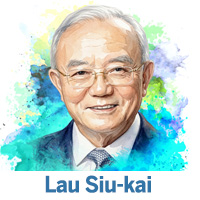
The author is professor emeritus of sociology at the Chinese University of Hong Kong and a consultant to the Chinese Association of Hong Kong and Macao Studies.
The views do not necessarily reflect those of China Daily.
