

Hong Kong’s equity market could see a modest recovery in the second half of this year, driven by hopes of easing interest rates, supportive market valuations, greater capital inflows, and an improved corporate earnings outlook.
The cautiously optimistic picture is painted by Indosuez Wealth Management — the wealth management arm of France-based Credit Agricole Group.
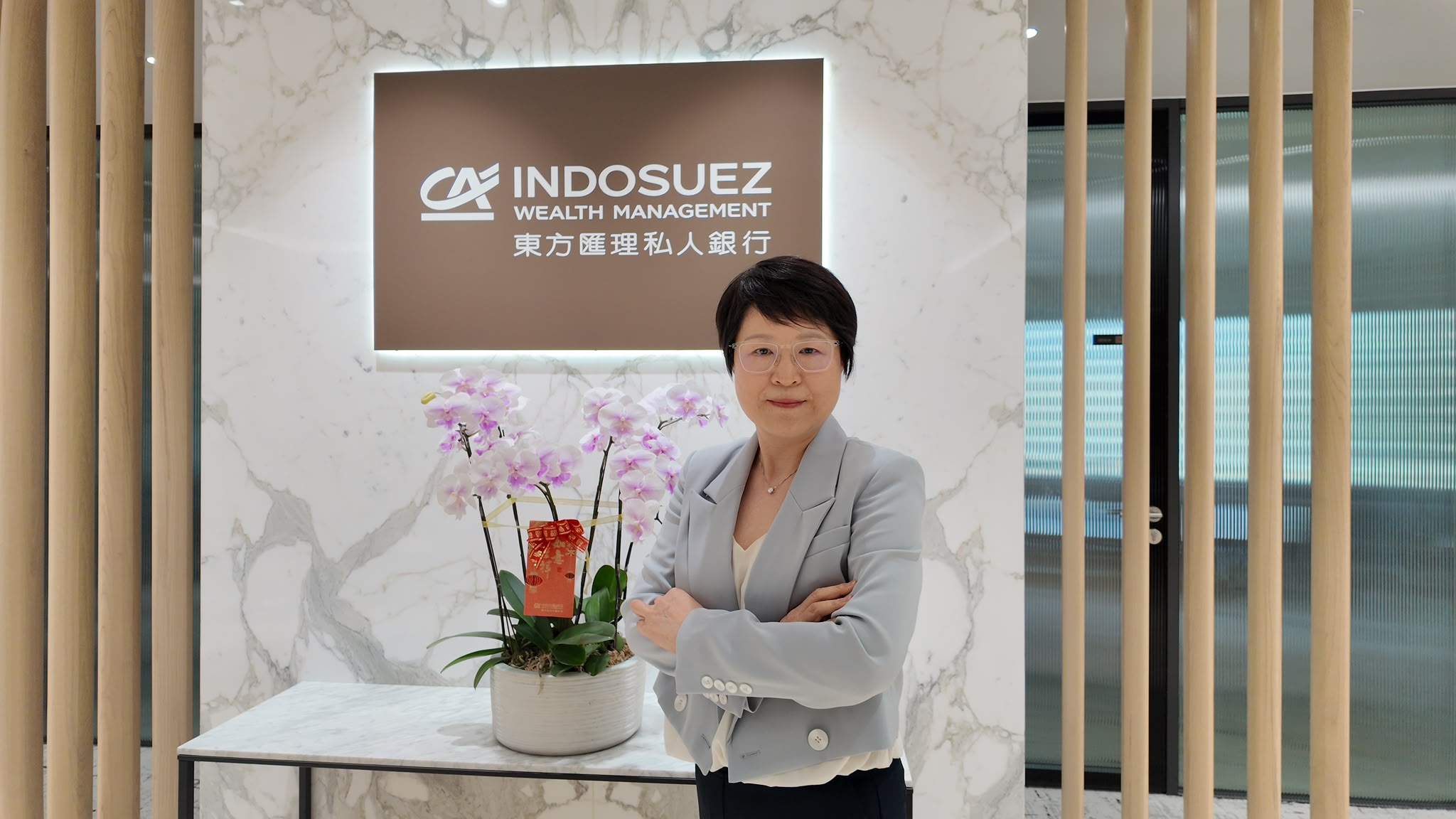
In an interview with China Daily, Winnie Chiu, Indosuez Wealth Management executive director and senior equity investment adviser of wealth solutions, said she believes the Hang Seng Index (HSI) has bottomed out this year.
As of Wednesday, the city’s benchmark stock gauge had risen just 0.7 percent from its close on Dec 31, a modest increase lagging behind the United States’ S&P 500 Index and Nasdaq, Japan’s Nikkei 225 Index, South Korea’s KOSPI Index, and the TWSE Capitalization Weighted Stock Index in China’s Taiwan region.
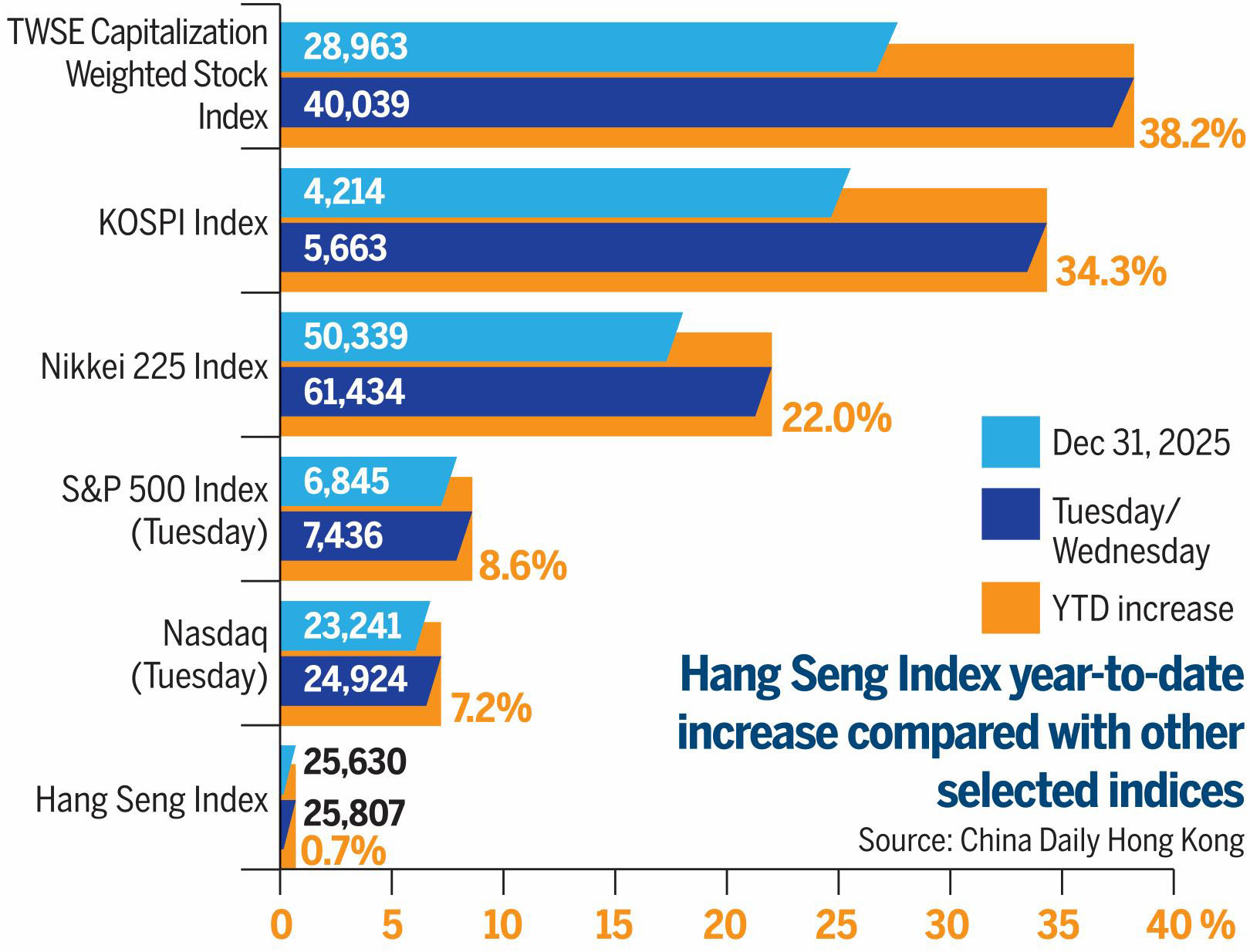
According to Chiu, the HSI’s relative underperformance is largely due to the index composition. “The HSI lacks artificial intelligence infrastructure shares, undermining its ability to attract capital as effectively as other indices in the region.”
She said that it will be challenging for Hong Kong stocks to catch up with their regional peers in the near term.
Based on the firm’s analysis, about 25 percent of the HSI’s total constituent stocks are in the consumer discretionary, internet and e-commerce sectors, while the remaining 75 percent comprise traditional financials, property developers, consumer staples and energy enterprises.
Although a significant market turnaround looks unlikely in the second half of 2026, Chiu said she believes a modest recovery remains possible.
“The Hong Kong stock market may benefit from positive factors, such as easing competition in the e-commerce sector, stable net interest margins for banks, and increased capital inflows resulting from a surge in large-scale initial public offerings,” she said.
ALSO READ: HK stocks get boost from Chinese EV sales boom amid geopolitical tensions
Any market improvement would hinge on earnings growth improvement, the US interest rate trend, and supportive policies on the Chinese mainland.
For a start, investors need to watch out for positive earnings reports by listed companies next month, Chiu said. She added that lower international oil prices since earlier this year could ease pressures and improve public listed companies’ profit margins by reducing the costs of transportation and raw materials.
Additionally, HSI’s price-to-earnings ratio is relatively low, while dividend yields are relatively high. Therefore, any positive change in market sentiment would give the market a boost.
“A US interest-rate cut or a decision to keep rates unchanged will be good for Hong Kong’s stock market as it will reduce or maintain the equity risk premium. When the risk premium decreases, it will lift investor confidence and drive market growth,” Chiu said.
The equity risk premium compensates investors for taking on the higher risk associated with equity investments compared to risk-free assets, such as government bonds. It represents the excess return that investing in the stock market provides over a risk-free rate.
Chiu cited the launch of Kimi, a family of advanced AI chatbots and large language models developed by Beijing-based Moonshot AI. “The launch reminds investors that China’s AI development is still robust despite US levies of export controls. This may make investors focus more on Chinese AI-related shares. As a result, it will help to cut the equity risk premium required for the Hong Kong stock market. Once the premium falls, it will spur the local market.”
Another factor to watch is whether the mainland government comes up with favorable policies, such as reducing property inventories, expanding the housing provident fund usage to accelerate destocking, and boosting consumer confidence, as well as economic growth momentum.
With Hong Kong’s equity market poised to post a modest recovery, Chiu advised investors to look for undervalued stocks with good fundamentals and improving corporate earnings. “Biotechnology, technology hardware and consumer services like platform companies would benefit from an improved earnings outlook.”
Given that the AI investment supercycle is far from over, Chiu said she expects Hong Kong-listed AI-related hardware companies, such as those involved in peripheral businesses in memory chips, data centers, optical fibers and laminates, to benefit from the AI investment boom.
READ MORE: HK IPO market expects to post strong momentum in H2
Regarding whether investors can absorb Hong Kong-listed tech shares, Chiu said it will depend on whether these companies’ profit margins have improved, whether they can monetize their AI tools, and whether they plan to spin off their subsidiaries.
In her view, Hong Kong-listed bank stocks also look interesting with high dividend yields as they will benefit from sector rotation.
Despite the recovery forecast, investors should absorb shares incrementally, noting that volatility is likely along the way, Chiu said.
Contact the writers at oswald@chinadailyhk.com
