

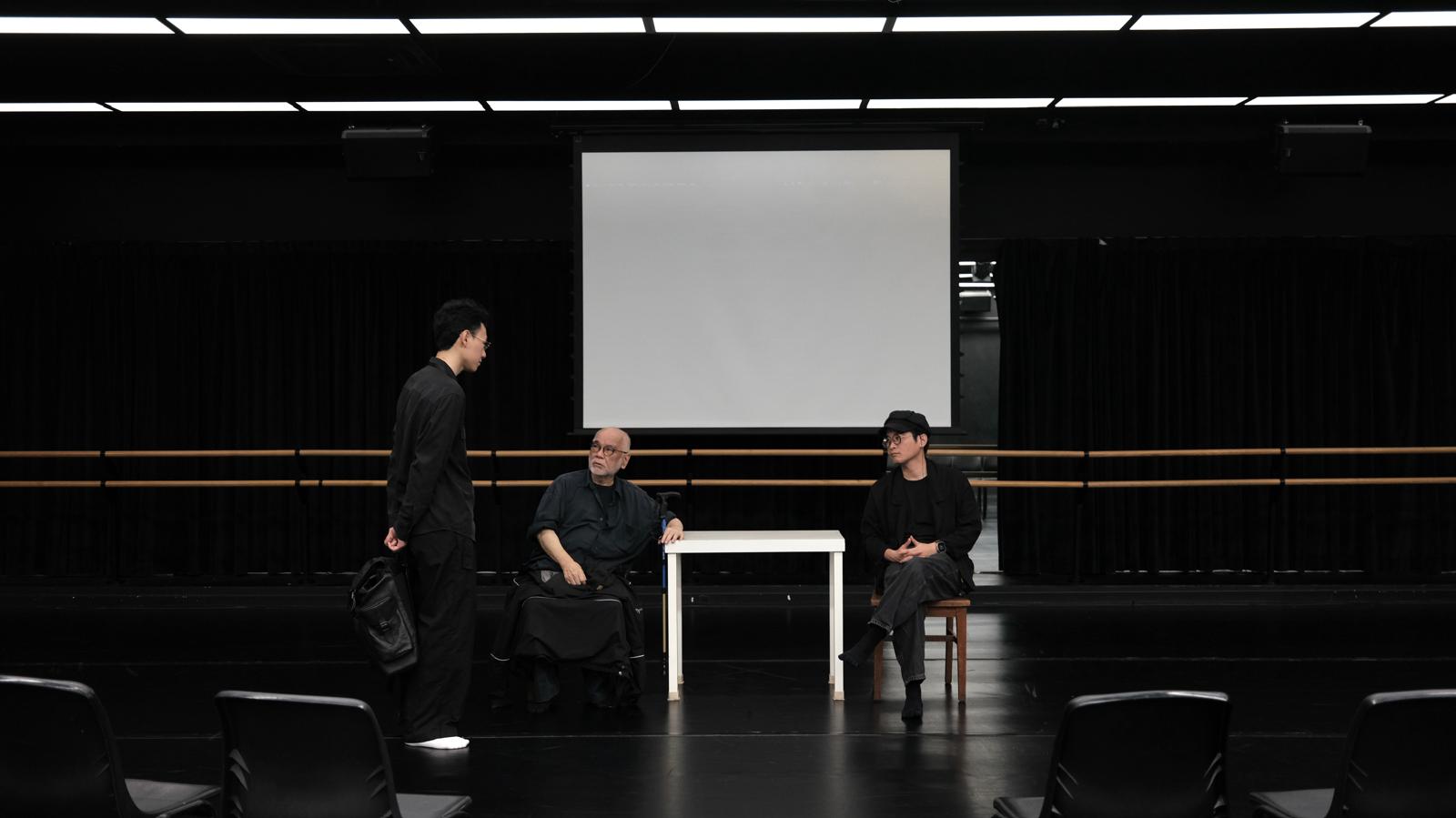
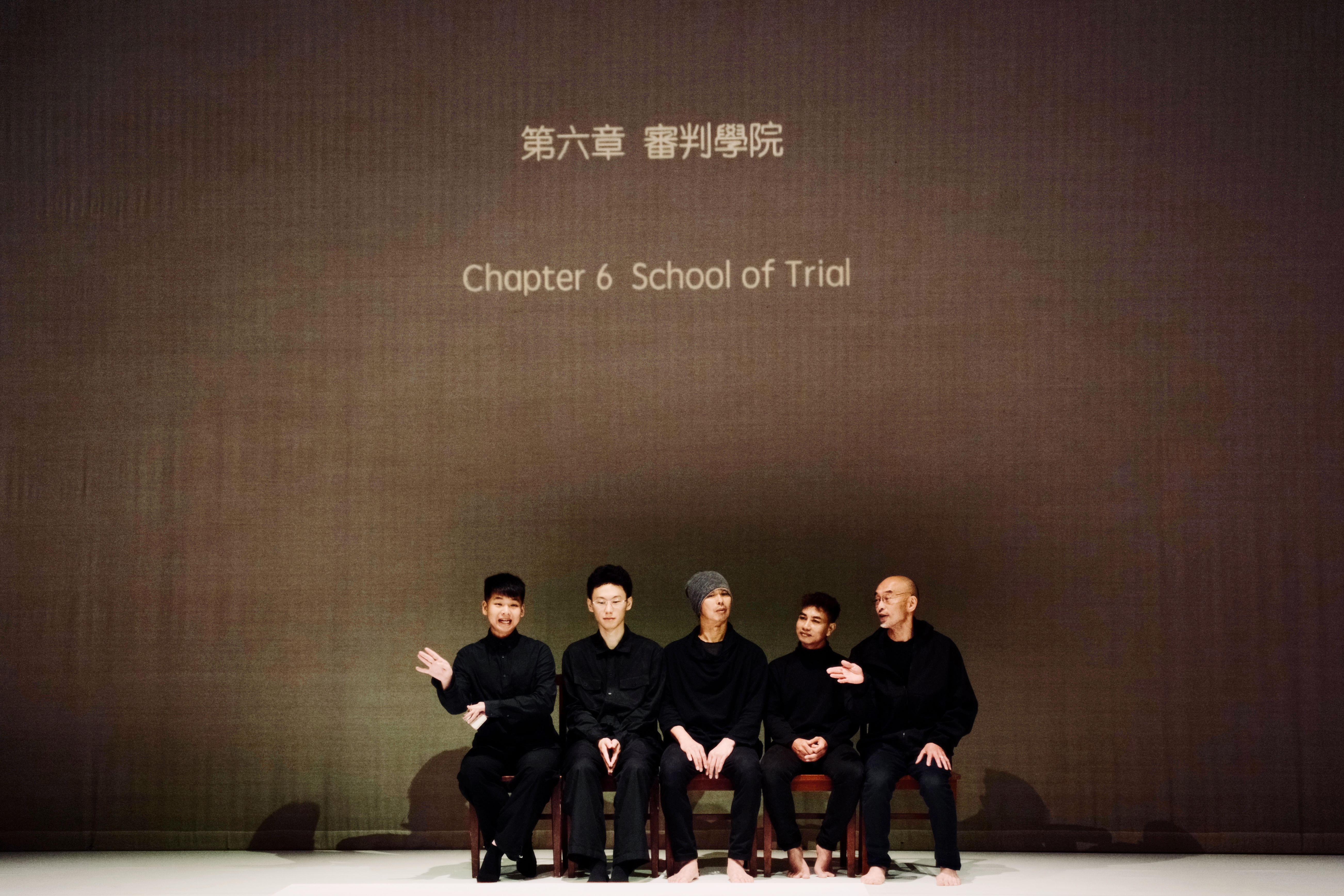
A pioneering cultural exchange event, “The Festival of Meeting of Gods”, concluded at the Hong Kong Institute of Contemporary Culture Lee Shau Kee School of Creativity’s multimedia theater this July, showcasing seven experimental theater productions by artists from Asia and Europe, representing a wide range of disciplines.
In an interview with China Daily, the festival's co-organizers — Danny Yung, artistic director laureate of Zuni Icosahedron, and Liu Xiaoyi, a Singaporean director and recipient of Asia Weekly's “Global Outstanding Young Leader” award — discussed the relationship between heritage and innovation while offering insights into the behind-the-scenes work of experimental theater to examine the quiet, universal mechanics of the stage.
Yung, who is also a recipient of the Award for Outstanding Contribution in Arts commended by the Hong Kong Arts Development Council, says that in the vast tapestry of performing arts, every lineage — from the Chinese Xiqu traditional operas and the Cambodian Khmer classical dance to the Japanese Kabuki theater — governs its own grammar of breath, pause, and posture, yet beneath these distinct codifications lies a universal frequency.
ALSO READ: Female trio breathes new life into Lady Macbeth
In his view, for the traditional opera master, besides the stylized performing skills, the artistry also lies in breathing life into the ancestral spirit — tracing the character’s evolution through the narrative ages, so they are not merely mimicked, but reborn on stage.
An artist’s unmasking
In traditional performance, every moment and movement of an actor on stage is predetermined. In contrast, experimental art seeks to transcend these constraints, offering a more liberated form of expression.
Talking about Yung's over 40 years dialogue with Xiqu — traditional Chinese opera — as an avant-garde artist, he believes that practitioners of Xiqu have moved beyond being onlookers to becoming active catalysts. Having witnessed firsthand how experimental theater breathes contemporary life into ancient forms, he insists that this evolution prompts a search for identity: Is one a custodian of an inherited lineage, a disciplined professional artist, or an independent creative force? Confronting these questions of self-determination is the essential threshold that creators must cross before embarking on their artistic journey.
Yung reminisced about his collaboration with esteemed traditional opera artist Ke Jun, who serves as the managing director of Jiangsu Province Arts Group Co Ltd and a deputy to the National People's Congress. Their experimental Kunqu — one of the oldest and most refined forms of traditional Chinese theatre — Flee by Night, was part of the cultural performance tour celebrating the 50th anniversary of diplomatic relations between China and Norway in 2004 at Oslo Concert Hall.
READ MORE: Sounds of silence
The 40-minute, two-part performance began with Ke Jun portraying Lin Chong, a character from the Chinese classic novel Water Margin. In the first half, Ke performed in traditional costume and the style of Kunqu. As he exited the stage to change into modern attire, a pre-recorded video was projected on stage, showing him systematically removing his opera facial makeup. Yung recalled the impact of that unmasking moment on an audience of over 1500 people. Ke later reflected that, by taking away external traditions and costumes, he was pushed to confront his true identity and purpose and achieved a spiritual alignment with the character’s struggle for survival.
“I do not direct the actors; I ask them questions,” Yung explains. “What happens if this gesture is slowed down? Why choose this path across the stage over its counterpart?” He encourages artists to liberate themselves from the need to anticipate audience reactions and instead become a creative authority in their crafts through self-reflection.
Beyond spectacle
In Liu’s view, artists must contemplate their relationship with art, recognizing that it should extend beyond mere entertainment.
He says when cultural and art exchanges remain superficial, they often default to a “tourism-style appreciation” — where art is treated merely as a commodity or a colorful decoration. Moving beyond the surface to establish direct, sustained dialogue with artists transforms these “exchanges from transaction to connection”.
An encounter with a veteran Korean dance master during an artistic assembly in Yokohama remains vivid in Yung’s memory. The Korean artist said, “Toss a silk scarf into the air and quietly observe its slow descent”. To Yung, this aphorism speaks to the essence of cultural exchange: a practice rooted in the quiet, receptive art of listening to the complex interiorities of other creators, rather than the mere exhibition of finished spectacles.
READ MORE: Sweet Bard, renew thy force
Yung notes that in the realm of creativity, critique is not merely evaluation — it is a vital, mirroring force. He urges that true artistic exchange must transcend polite diplomacy; it demands a reflective dialectic born from deeply witnessing one another’s work.
Redefining success
The commercial stage focuses on box office receipts, immediate audience satisfaction, and critical consensus. In contrast, Liu argues that the success of experimental theater is gauged by the boldness of creative risks, the intellectual and physical collaboration between creators and performers, and the extent to which a performance can challenge and transform audience members’ preconceptions, providing fresh insights into the human condition.
In Liu’s view, we are at a pivotal moment where artistic research and development intersect with the rapid evolution of technology, such as artificial intelligence. “Creativity is the driving force behind both fields. Artistic practice fosters the lateral thinking and critical inquiry necessary to push the boundaries of scientific and technological advancement,” he adds.
Contact the writer at irismuk@chinadailyhk.com
