

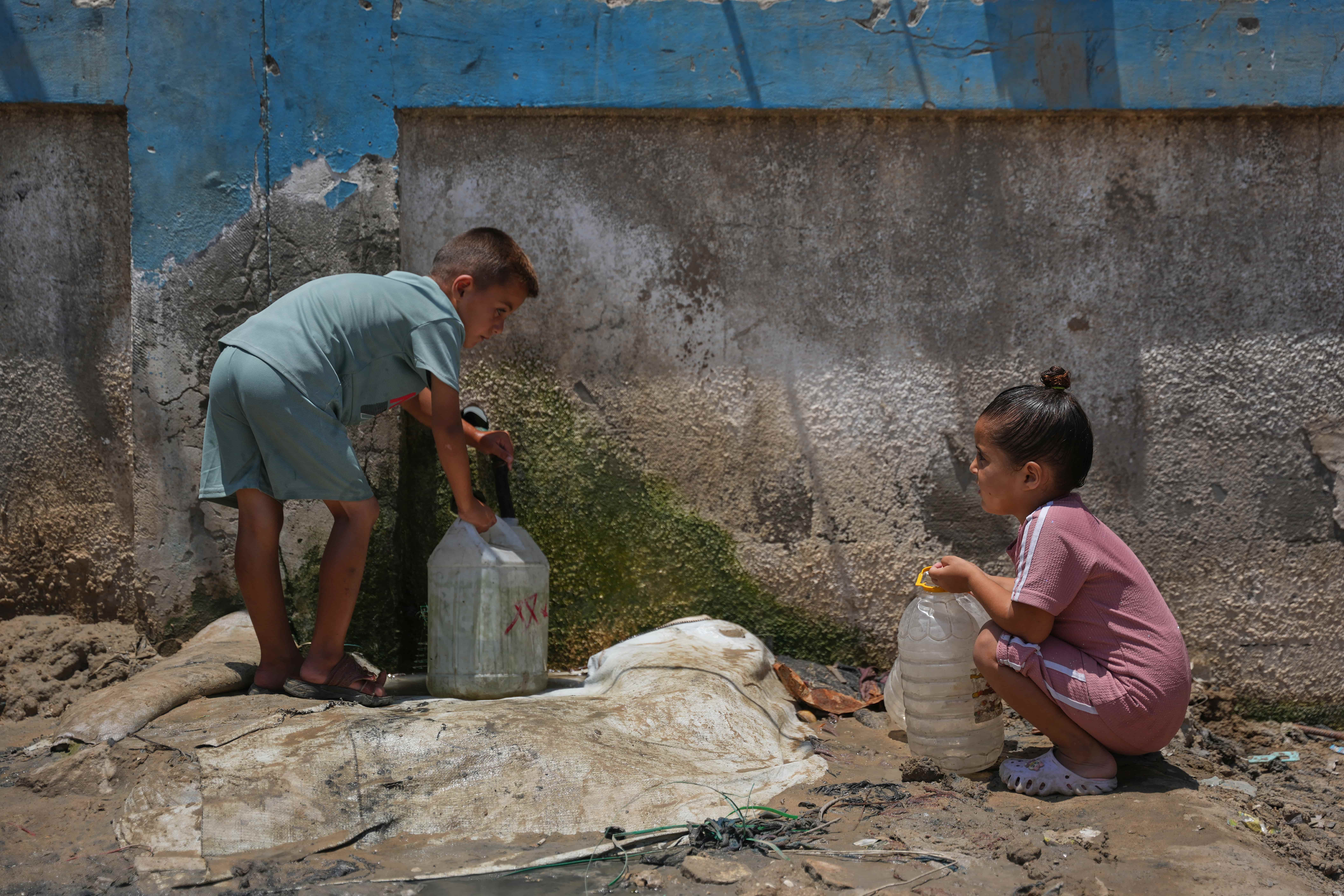
RAMALLAH/GAZA/UNITED NATIONS/BRUSSELS – Palestinian Minister of Social Development Samah Hamad warned on Monday of the complete collapse of the food and social safety net in the Gaza Strip due to Israel's tight restrictions on imports and exports.
In remarks to the official Voice of Palestine radio station, Hamad said the coastal enclave, home to more than two million people, faces the highest basic food prices in the region compared to neighboring countries.
She said relief kitchens have almost ceased operations for about a month as stocks of vegetables, chicken, and meat ran out, leaving prices prohibitively high for local families.
The minister said the most vulnerable groups, including the elderly, pregnant and lactating women, and children, are living in a state of genuine and prolonged famine that has now entered its third year since the outbreak of the Gaza war.
ALSO READ: Palestinians show cautious optimism as Hamas dissolves administrative body in Gaza
Separately, Gaza's agriculture authorities said in a statement the Israeli war has sharply cut crop output, severely undermining the strip's ability to feed its population.
'20-year-old killed'
A 20-year-old Palestinian, reportedly in search of work, was shot and killed on Monday while attempting to cross the Israeli barrier into East Jerusalem, UN humanitarians said.
The UN Office for the Coordination of Humanitarian Affairs (OCHA) said the victim was attempting to cross the barrier in the Bir Nabala area into East Jerusalem. The office did not identify the shooter or an affiliation.
"Palestinians must always be protected, and in law enforcement contexts, the use of lethal force must be a last resort," the office said.
In October 2023, Israeli authorities revoked or suspended most permits issued to Palestinians to access East Jerusalem and Israel for work and other purposes.
Israel began building the meandering barrier in 2002 in an attempt to stop a wave of Palestinian attacks.
READ MORE: Hamas accuses Israel of pushing Gaza ceasefire talks back to square one
The UN humanitarian community in the occupied Palestinian territory has documented the killing of 20 Palestinians and the injury of more than 290 others who were reportedly attempting to cross the barrier, as of June 6, OCHA said.
Regarding Gaza, the Food and Agriculture Organization (FAO) said it was last permitted to bring in animal feed on June 4.
Since early February, animal feed prices in the local market have doubled or tripled, depending on the type of feed, undermining recent successes by FAO in reducing livestock mortality and increasing the number of goats and sheep.
"To protect livestock and strengthen local food availability, humanitarians are calling for renewed access for animal feed imports and for the full and unrestricted entry of essential agricultural supplies by the private sector and aid community," OCHA said.
'$1b for Gaza recovery'
The European Union (EU) on Monday announced a nearly 900-million-euro (about $1 billion) international package to support the early recovery of Gaza, while reaffirming financial backing for the Palestinian Authority and its reform efforts.
Speaking after a meeting of the Palestinian Donor Group in Brussels, EU Commissioner for the Mediterranean Dubravka Suica said the newly launched Team Gaza initiative had secured a preliminary recovery package of nearly 900 million euros, including 257 million euros (about $292 million) proposed by the European Commission and the European Investment Bank.
READ MORE: Palestinian factions say submitted response to Gaza peace roadmap
The initiative, joined by several European countries, Japan, Switzerland, Canada, Australia, the World Bank and other partners, will focus on restoring essential services, rebuilding critical infrastructure and strengthening governance in Gaza.
Suica said the EU had also agreed with Israel to move forward with two early recovery projects on water supply and solid waste management, while stressing that effective implementation requires a ceasefire, safe humanitarian access, cooperation with Israel and the Palestinian Authority, and Hamas laying down its arms.
She called for the release of Palestinian tax revenues withheld by Israel, saying they are essential for the Palestinian Authority to continue paying salaries and delivering basic public services.
Palestinian Prime Minister Mohammad Mustafa welcomed the EU initiative and said the Palestinian government had made substantial progress on its reform agenda despite mounting political and financial pressures.
He urged greater international support for Gaza's recovery, while emphasizing that reconstruction would require improved security conditions, the withdrawal of Israeli forces from Gaza, and the reopening of border crossings.
