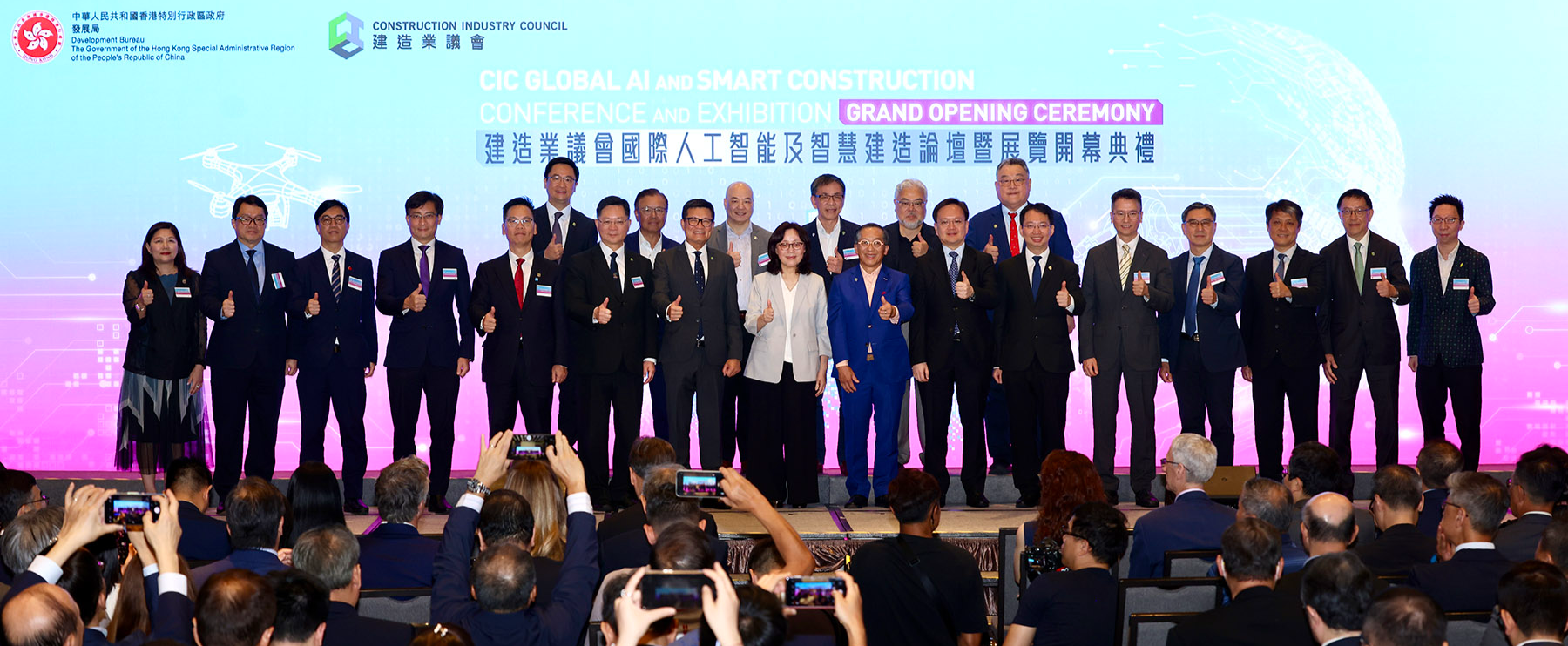
Hong Kong’s construction sector is stepping up its use of artificial intelligence and smart construction, aiming to improve efficiency and safety through technological innovation.
The mindset was highlighted at the Construction Industry Council (CIC) Global AI and Smart Construction Conference and Exhibition 2026 (GASCCE), held in Hong Kong on June 24-25.
The event attracted over 12,000 global leaders, technology pioneers, academics, government representatives, and industry practitioners, who conducted deep exchanges and talked about the possibilities of the future industry ecosystem onsite and online. Over 40 speakers from all over the world shared the latest developments in artificial intelligence, robotics, the low-altitude economy, and a wide spectrum of smart construction innovations.
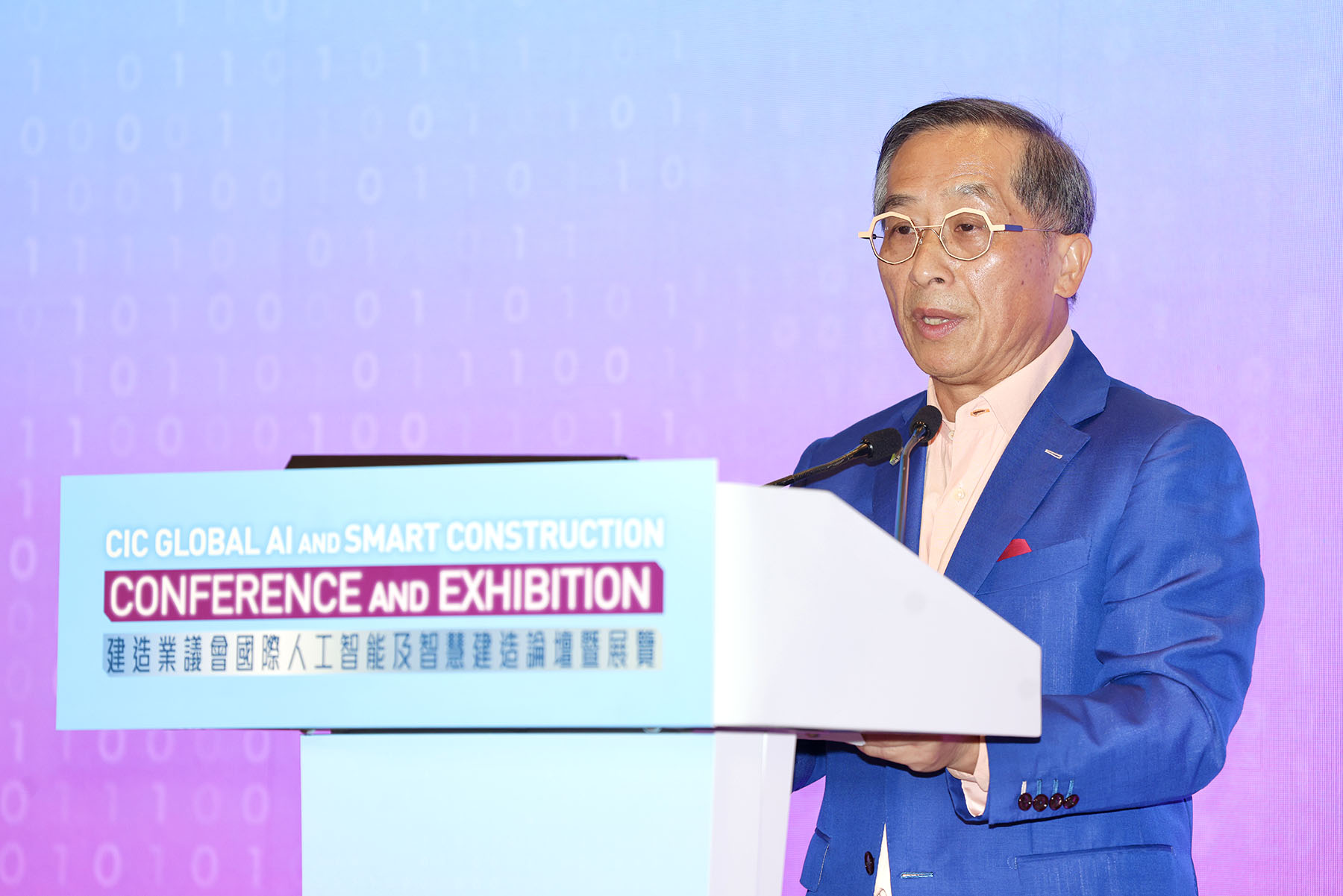
CIC Chairman Thomas Ho On-sing delivered a welcome speech at the opening ceremony.
“AI is no longer a choice — it’s a must for the construction industry to truly adopt,” Ho said.
The CIC branded 2026 the “Year of AI”, aiming to push AI solutions into real-world practice across the sector.
Ho stressed the importance of applying AI to the construction sector, and AI’s role of supporting small and medium-sized enterprises, subcontractors, and the front-line workforce in their ongoing journey of upgrading and transformation.
Ho mentioned that the CIC’s construction safety AI chatbot is now integrated into the CIC APP and is expected to benefit over 140,000 workers, enabling them to access over 3,000 construction safety documents directly on site.
The CIC will also launch the AI Marketplace by the end of the year — a one-stop platform for handy AI construction tools. With added support, including token subsidies, the tool aims to make it more practical and affordable for small and medium-sized enterprises and subcontractors to adopt AI, Ho said.
Looking ahead, Ho said he believes that Hong Kong’s Northern Metropolis can become a test bed and living showroom for various construction technologies, and offer vast opportunities to apply innovations at scale.
Ho noted that the Chinese mainland takes a lead in robotic development worldwide, and he hopes that the Hong Kong Special Administrative Region can join forces with the mainland, especially with other cities in the Guangdong-Hong Kong-Macao Greater Bay Area, to combine strengths and go global together, which also echoes the city’s unique positioning as a superconnector and super value-adder.
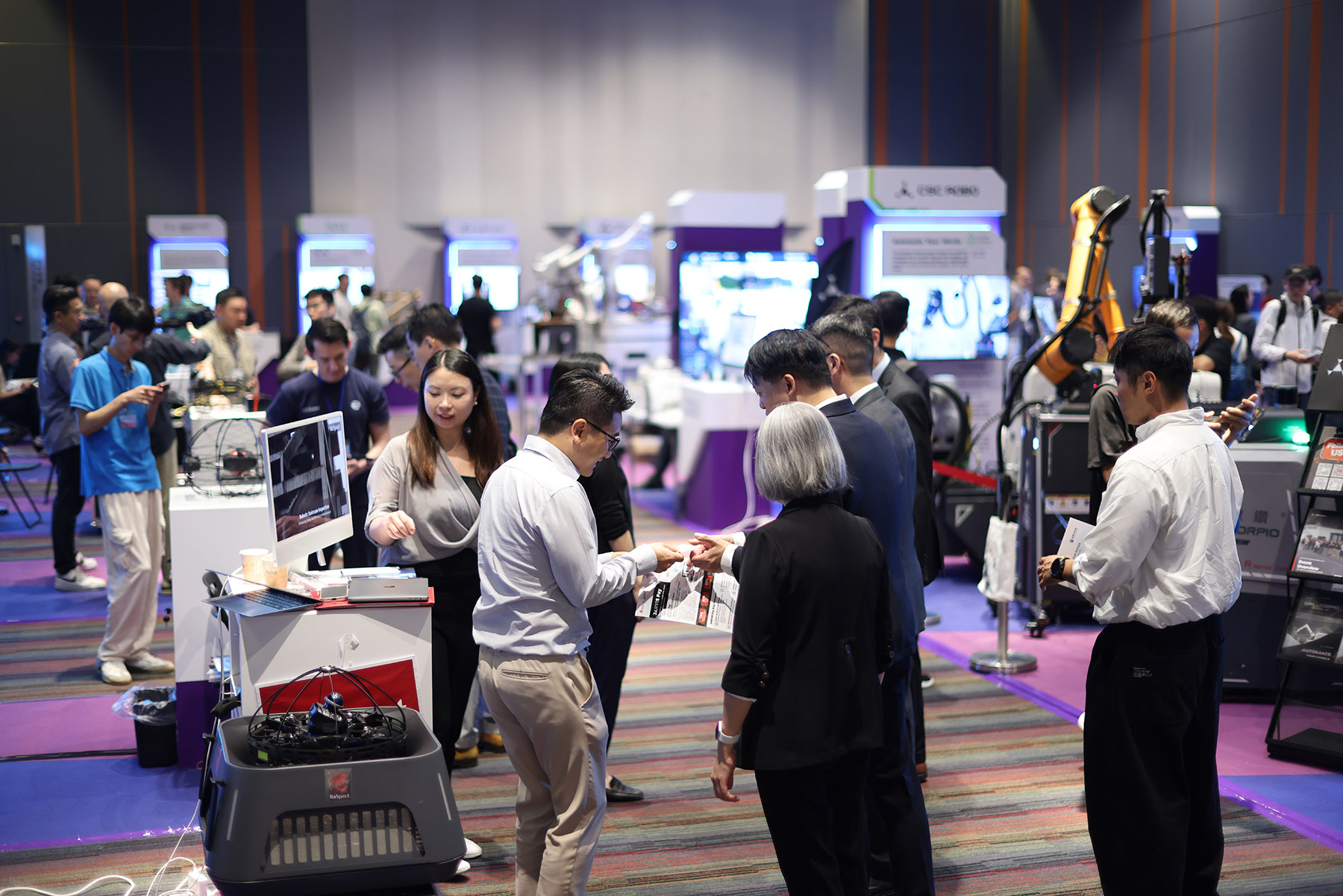
GASCCE also featured an exhibition area. Over 50 exhibitors from Hong Kong, the mainland, and overseas brought their latest technologies to showcase the possibilities of the industry.
The effect of the event, and the interaction among attendees, exceeded his expectations, Ho said.
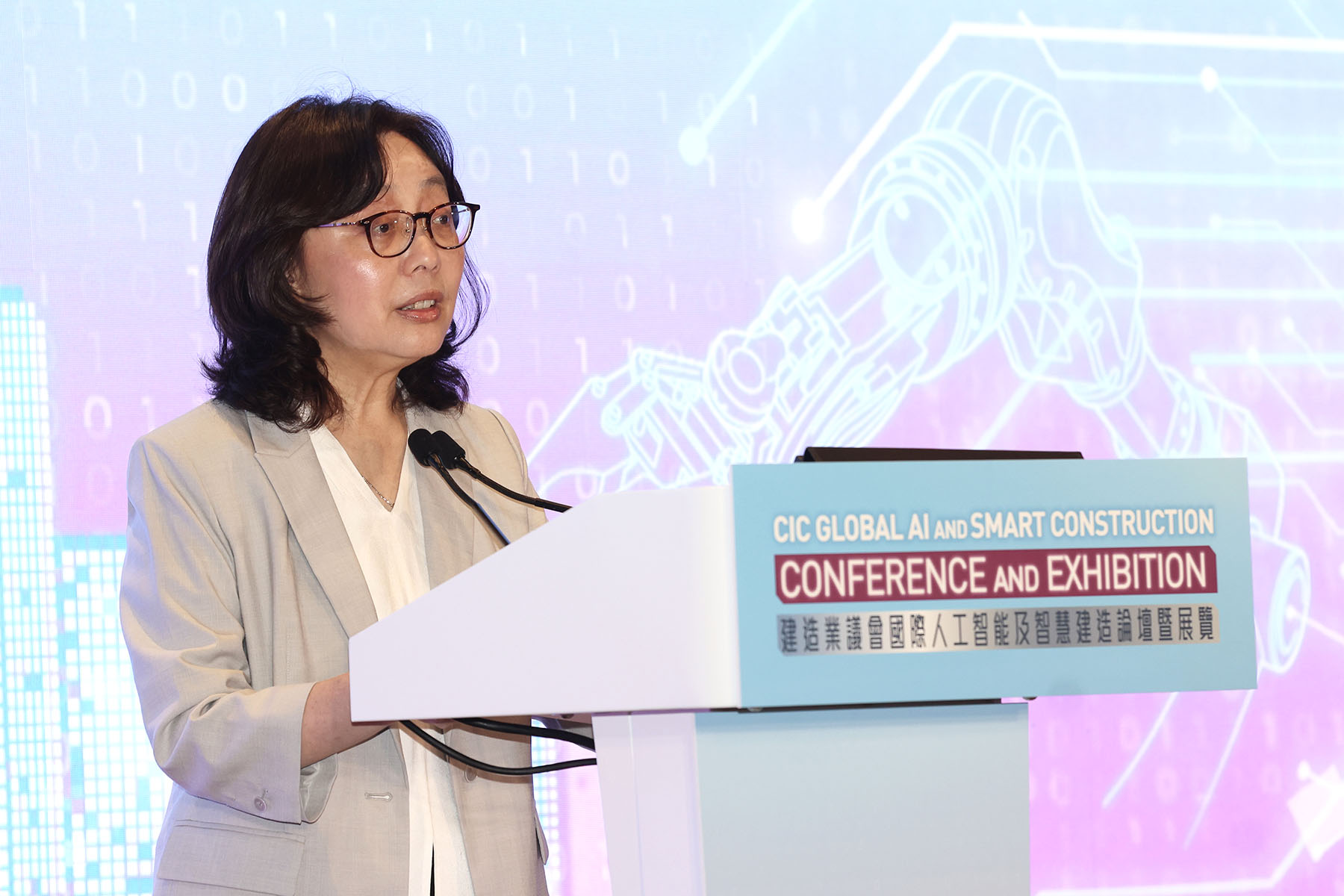
Echoing the importance of applying AI to the industry, Bernadette Linn Hon-ho, secretary for development of the Hong Kong SAR, said the nation’s 15th Five-Year Plan (2026-30) has outlined a clear development strategy, emphasizing that innovation is a critical cornerstone in fostering high-quality development and achieving modernization.
Linn also stressed that technology cannot replace human creativity. She noted that the government places great emphasis on mitigating safety risks and is leveraging AI to make the construction industry safer, smarter, and more efficient — thereby driving comprehensive progress across the sector.

Alfred Sit Wing-hang, chairperson of the CIC Committee on Smart Construction, pointed out the need to establish a structured pathway through which promising ideas can be translated into broader industry practice.
To that end, Sit proposed a disciplined framework for AI adoption in construction — one that focuses on identifying the right problems, validating solutions through evidence, and scaling what works. This approach, he said, will enable innovation to be effectively integrated into mainstream industry practice.
In her keynote speech, Doranda Doo, founding president of Guangdong Artificial Intelligence Industry Association, stressed how AI can be implemented in the construction industry, and what AI literacy should entail.
The AI expert said large AI models are being used in various disciplines, and the ultimate goal of technology is to solve practical problems.
Will Cavendish, global digital services leader of Arup, a global consultancy with extensive technical and advisory expertise, talked in his speech about the frontier of AI.
He said that although traditional AI is still proving highly impactful in augmenting human intelligence to help solve built environment challenges, the frontier of AI is developing at a rapid pace, especially in science-based AI, world models, and the development of agentic systems.
During the event, an awards ceremony was conducted for industry stakeholders, technology vendors, and academic institutions who won the inaugural CIC AI Award 2026.
The award was established to drive the adoption of AI-powered solutions that enhance productivity, safety, and sustainability.