

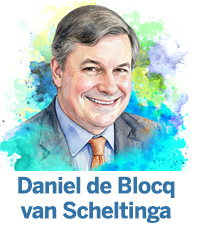
I clearly remember when I was 29 years old: I had completed my master’s degree, finished my military service as a reserve officer with the Royal Netherlands Navy, started my career in finance, and met my future wife. The world was full of opportunity and hope, and my aspirations and ambitions were limitless.
 The Hong Kong Special Administrative Region is now at that wonderful moment in life. Time flies, as it seems like only yesterday that the Union Jack was lowered in the pouring rain, befitting the end of an era, as the last British governor of Hong Kong, Chris Patten, sailed away for good. Since then, like any adventurous 29-year-old, Hong Kong has gone through many ups and downs, from the severe acute respiratory syndrome to the COVID-19 pandemic, from “Occupy Central” to the 2019-20 riots. And yet, like any vigorous, ambitious young adult, Hong Kong has managed to get back on its feet every time, brush off the dust, and confront new challenges head-on undaunted.
Indeed, the future for Hong Kong is bright. Very bright. One can almost feel it in the air, that self-assured sense that as a city, we are on the right path. Expats who left Hong Kong are returning, visitor numbers are rising, and Hong Kong has become a trendy, cool backdrop for international music videos, television shows, and social media influencers. The SAR government’s Top Talent Pass Scheme, which aims to attract talented, high-caliber professionals and top university graduates, appears to be a success, with over 150,000 applications received as of January. Fantastic top-notch events continue to attract vast numbers of international visitors, from Art Basel to the Hong Kong Sevens to the more specialized 2026 Asia-Pacific Regional IAU Meeting in May, which attracted the world’s top scientists.
What is it that makes this 29-year-old special administrative region so attractive? The most common answers to this question are absolutely true: first-class infrastructure; a robust and unique legal system (based on common law) while remaining a part of China — clearly the best of both worlds; and a lack of corruption (thanks to the exemplary work done over the past 52 years by the Independent Commission Against Corruption). However, much more is often overlooked or taken for granted
What is it that makes this 29-year-old special administrative region so attractive? The most common answers to this question are absolutely true: first-class infrastructure; a robust and unique legal system (based on common law) while remaining a part of China — clearly the best of both worlds; and a lack of corruption (thanks to the exemplary work done over the past 52 years by the Independent Commission Against Corruption). However, much more is often overlooked or taken for granted.
First, take the people of Hong Kong. Very hardworking, always ready to roll up their sleeves and tackle whatever has come their way. Willing to find practical solutions to problems themselves, and not even expecting or waiting for the government to assist. Unpretentious, loyal, and always ready to help one another when needed. And yes, sometimes rude, and sometimes vulgar in language and coarse in humor, but that’s part of the vigorous personality of a young adult. If you treat them right, in return you couldn’t have a better group of true comrades. The tough yet compassionate “Lion Rock” spirit sets the people of Hong Kong apart from all others.
Second, take the incredible natural beauty of Hong Kong. From the beaches of Tai Long Wan in Sai Kung to the stunning coastal views seen from the Dragon’s Back hike on Hong Kong Island, one is confronted with unexpected natural beauty throughout the landscape. The proximity of nature — allowing one to encounter wild boar and watch magnificent soaring falcons, yet visit the skyscrapers and shopping malls within an hour’s walk — is one of the alluring paradoxes of Hong Kong. Modern, impressive buildings such as the recently completed 190-meter-high The Henderson in Central — designed by Zaha Hadid Architects to look like a budding bauhinia — juxtapose with nearby hills and forests. Look around you and be reminded of the privilege of living in these rare surroundings.
Third, take the unique cosmopolitan character of Hong Kong. Walking through the streets, one hears Cantonese, Mandarin, English, Tagalog, and myriad other languages. Many residents have dual nationality, have traveled across the world, and are comfortable talking to or working with other nationals. History has given Hong Kong residents a unique mix of the best of East and West — the British administrative system and the orderly queuing for services, combined with the Chinese hardworking tradition; the combination of traditional English manners with Chinese technology; the combination of Chinese work ethic and easy acceptance of foreign co-workers. And so on and so forth.
Fourth, but certainly not last, take the unprecedented “one country, two systems” governance policy. Normally, one would not envision that Hong Kong’s capitalist business focus and common law legal system would remain intact after returning to the motherland. Water and oil don’t mix. A square peg does not fit into a round hole. And yet, the late paramount leader Deng Xiaoping’s brilliant and truly visionary mind devised this formula, which has stood the test of time for 29 years, making what once seemed a political conundrum now a natural fit. As a result, Hong Kong has indeed become the superconnector that former chief executive Leung Chun-ying always referred to, acting as a springboard for Chinese mainland enterprises to expand globally and a gateway for international investors to access the mainland market. And as part of the Guangdong-Hong Kong-Macao Greater Bay Area, Hong Kong is entering a new phase in which it plays a crucial, unique role, focusing on finance, international law and arbitration, and facilitating international logistics.
Happy birthday, Hong Kong. May your ambitions and promises all come to fruition.
The author has lived in Hong Kong for over 25 years, advising Chinese companies on international strategy, and was the first foreigner to be approved to run the finance company of a top-tier State-owned enterprise.
The views do not necessarily reflect those of China Daily.
