

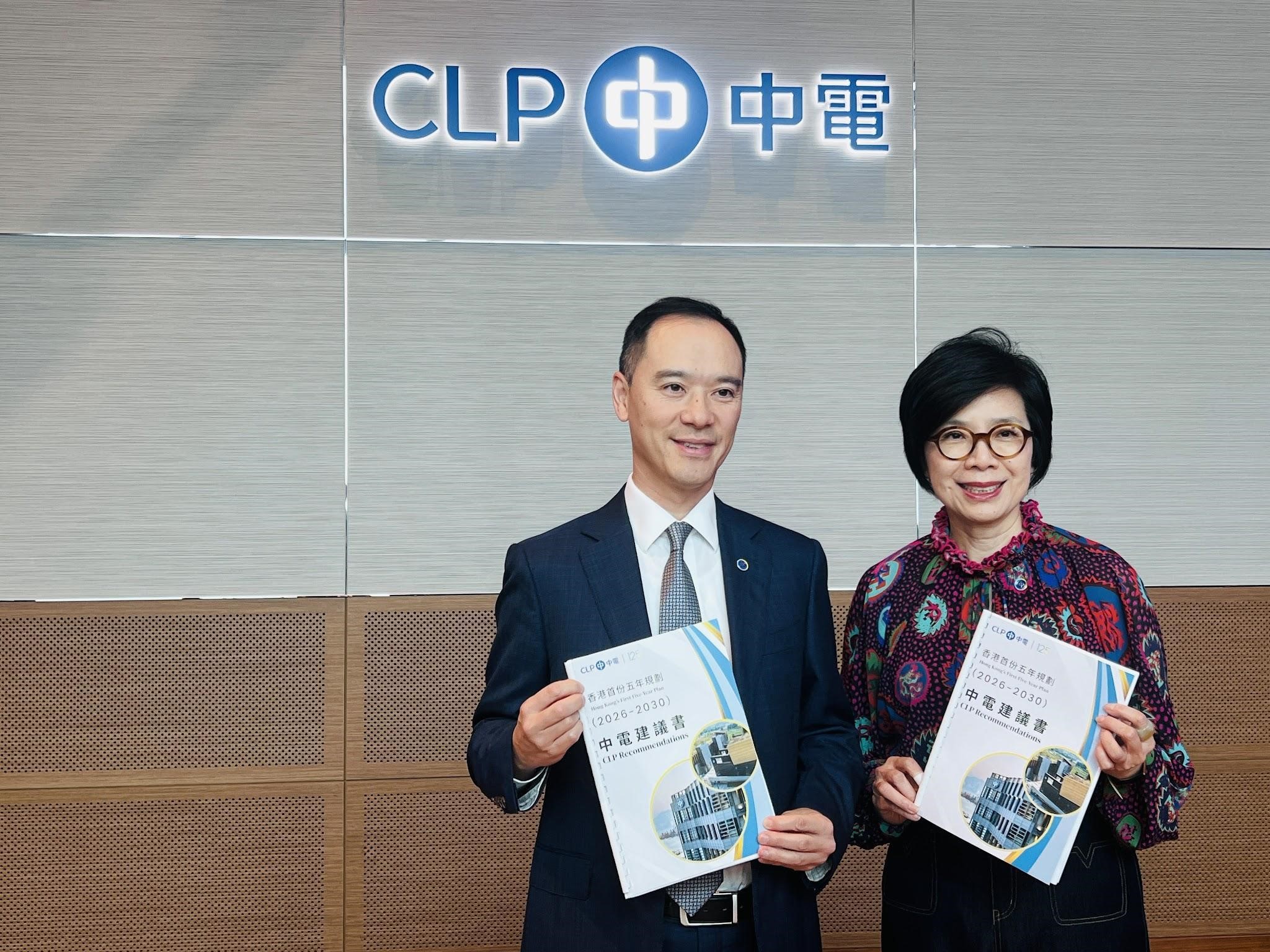
CLP Power Hong Kong said the city should place energy infrastructure at the center of the Northern Metropolis’ development to meet the substantial AI computing power requirements in the innovative cluster.
The advice was part of the power company’s comprehensive proposal submitted to the special administrative region government for the territory's first-ever five-year blueprint, CLP executives said in a group interview on Thursday afternoon.
Joseph Law Ka-chun, managing director of CLP Power Hong Kong, outlined the company's seven priority areas in the proposal, emphasizing that the city must elevate power planning to “strategic economic infrastructure” to align with the nation’s energy security objectives in an era of digital economy, carbon reduction, and computing power race.
To ensure smooth development of the fast-developing Northern Metropolis, the city’s newest innovation hub bordering Shenzhen, CLP proposed establishing a "computing-electricity synergy" mechanism to coordinate the planning of computing infrastructure with grid development, enhancing the overall resilience of the mega township’s computing systems.
The company also recommended that the authorities classify supercomputing centers and data centers as strategic digital infrastructure, streamlining site selection, power supply applications and cross-departmental approval processes.
To improve coordination, CLP called for the formation of a cross-utility coordination task force covering electricity, gas, telecommunications, water, and drainage services, alongside an authoritative arbitration unit to handle stakeholder feedback during public utility consultations.
ALSO READ: CLP Power launches AI-driven system to bolster resilience against extreme weather
“Power infrastructure is a long-term industry that requires construction and maintenance. We have already incorporated all possible future development needs into our 10-year planning,” Law said.
More than 20 substations are already operating in the Northern Metropolis, with more planned as the area develops.
Law said that they have prepared contingency power supply plans for innovation and technology industries, noting that the company is capable of supplying power to three to four more innovation parks similar to the Sandy Ridge data facility cluster over the next decade.
Law also highlighted the need to streamline application procedures for cable-laying projects as it involves approvals from multiple government departments, suggesting that a more coordinated approach would improve efficiency.
On clean energy, CLP recommended using nuclear power plants in Guangdong province as a long-term stable clean energy source for Hong Kong, ensuring energy security while supporting internationally recognized green transitions.
An example is Shenzhen’s Daya Bay Nuclear Power Plant, a joint venture between CLP Group and Guangdong Nuclear Investment Company Ltd. The plant has supplied Hong Kong zero-carbon nuclear power for three decades, accounting for one-third of the SAR’s electricity supply.
READ MORE: CLP Group CEO champions energy digitalization and decarbonization
To raise this share to 60 to 70 percent by 2035 or earlier, CLP aims to replicate the Daya Bay model by securing two additional nuclear units of a similar scale in Guangdong, providing the capacity needed to meet the city's clean energy targets.
The company also urged accelerated development of the zero-carbon power receiving station in Tseung Kwan O Area 132 to enhance Hong Kong's capacity to import clean energy through regional cooperation.
Furthermore, to strengthen energy security, CLP recommended prioritizing carbon capture, utilization and storage projects, supporting pilot transformations and feasibility studies in Hong Kong through collaboration with research institutions and energy enterprises.
The company also called for energy diversification, continuing to upgrade local generating units to extend their life cycle while retaining necessary backup generation flexibility.
Addressing extreme weather challenges, CLP proposed establishing a government-led cross-sector climate resilience task force to coordinate policies, public utilities, and industries in upgrading aging buildings and customer facilities, setting flood-proofing guidelines for customer substations and critical building equipment, raising lift safety standards with backup power supplies for older lifts, and strengthening data sharing across departments and academic institutions on flooding and storm information.
The proposal further covers transportation and building electrification, green and sustainable finance systems, and green talent development.
Contact the writer at stacyshi@chinadailyhk.com
