

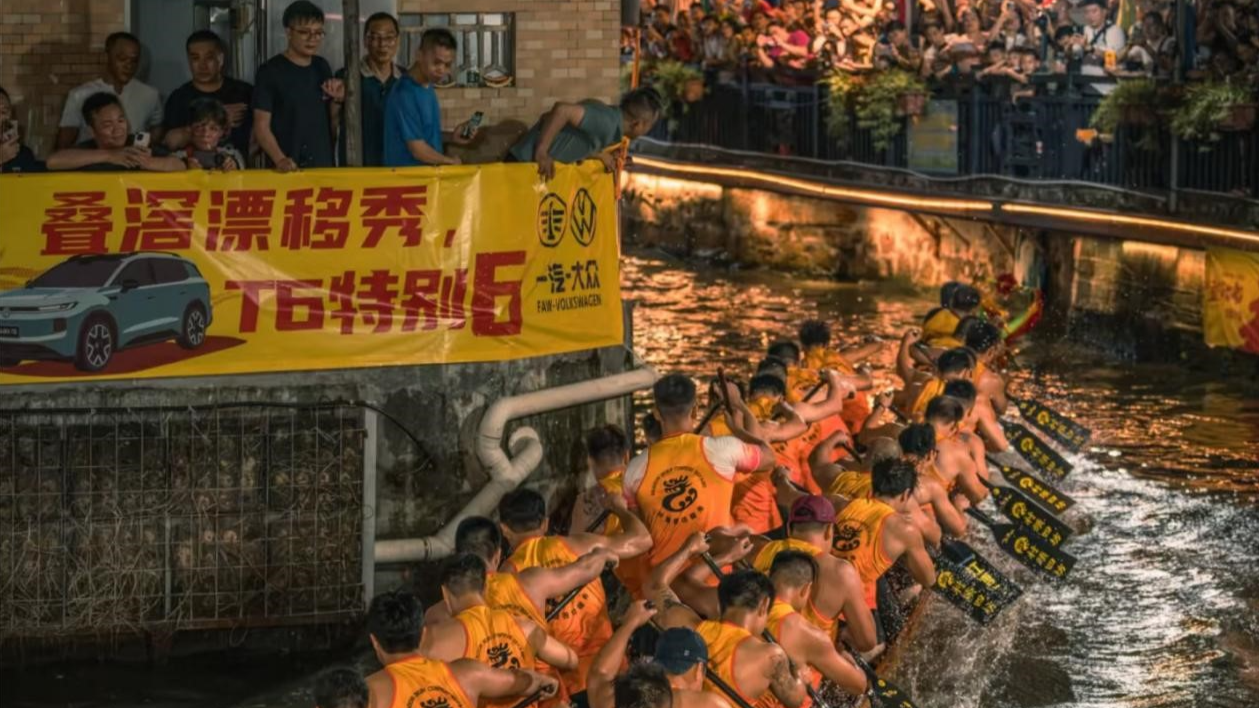
As the two-month-long Foshan Diejiao dragon boat drift races draw to a close, experts have pointed out that the secret behind the viral popularity of this rural folk event – dubbed China’s “F1 on Water” – lies in its unrivaled visual spectacle and the heartfelt emotional resonance it evokes.
Using modern promotional approaches like IP-style branding breathes new life into dormant traditions and helps reframe the way traditional stories are told, they said.
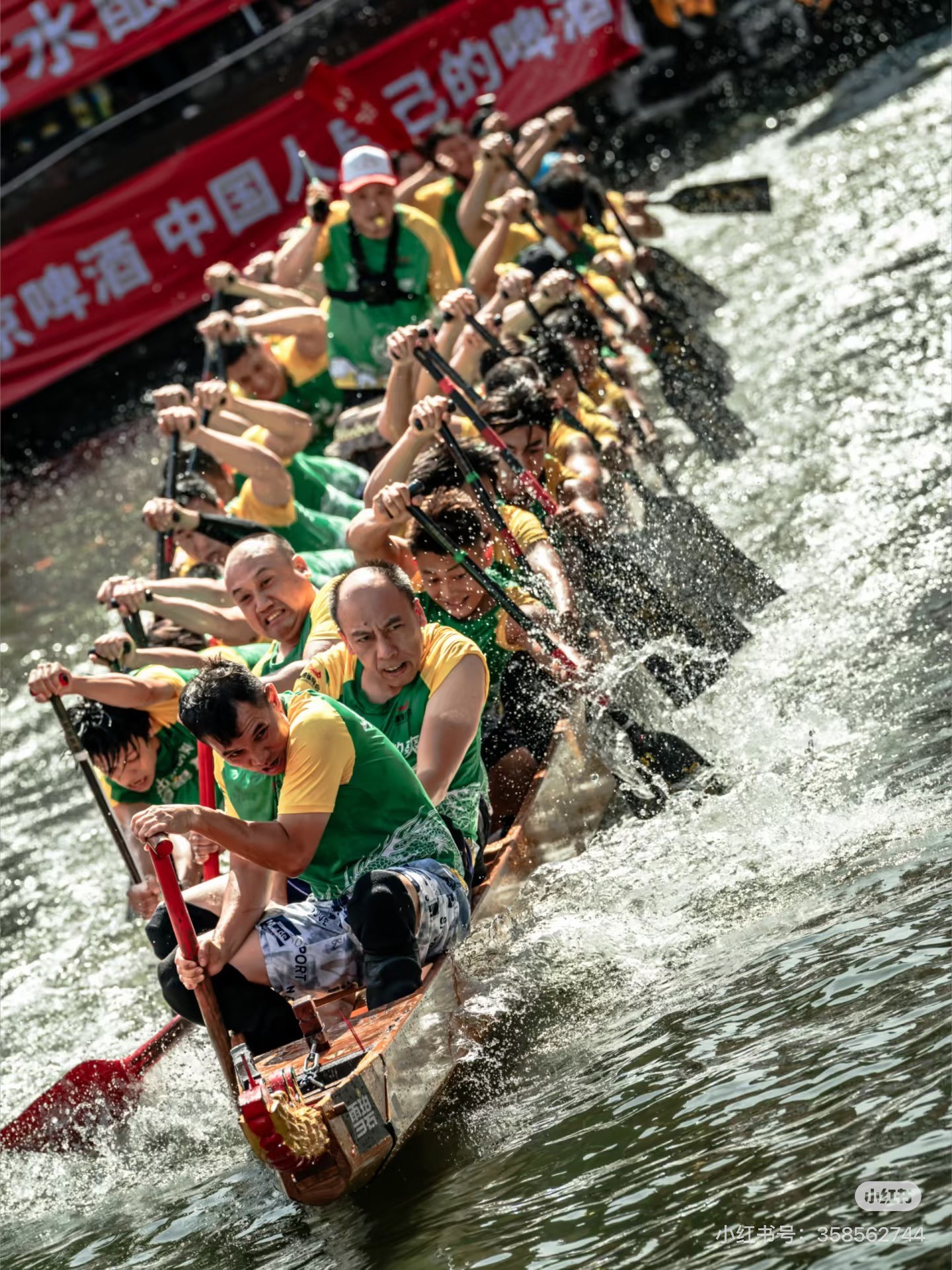
Featuring high-speed races and dramatic stunts in winding river channels as narrow as three meters, Diejiao dragon boat racing, which takes place in the middle of the small water town of Foshan, Guangdong province every year, has evolved from a rural festive tradition into a cultural and tourism hotspot with nationwide appeal.
With an expanded schedule, this year’s competition runs from early May to the end of June. For the first time, it also introduced an international elite challenge, with teams from New Zealand, Australia, France, and beyond taking part.
ALSO READ: New life injected into China's Dragon Boat traditions
The event attracted more than 250,000 visitors during the Dragon Boat Festival, with about 20,000 staying overnight. Online views of related topics reached 8.59 billion.
Citing the growing influence of the event, Huang Zimin, a freelance photographer who has traveled to Diejiao every year since 2023 to shoot the races, said that this year’s competition generated far more buzz than previously.
The main races were all scheduled in the afternoons during the festival holiday, and villagers began staking out their spots the night before. Some tourists traveled from the country’s northeast and southwest – where dragon boat races are rare – to see Diejiao’s unique drift racing firsthand.
Huang said that Diejiao’s dragon boat drift racing is one-of-a-kind and boasts breathtaking visual beauty. The S-bend final requires rowers to navigate six sharp turns in succession on a 600-meter course, while the L-bend race features two challenging 90-degree turns.
Unlike dragon boat races in big cities – which are often attended by company teams or racing enthusiasts – rural racers are largely villagers who compete for family honor, so related cultural traditions are preserved more completely.
The Dongshengdong team, last year’s C-bend race champions, capsized this year. When the whole crew walked the boat to the finish, it showcased their strong unity and clan faith – and moved some spectators to tears, Huang said.
Li Jun, a professor at the School of Tourism Management of South China Normal University, said that the competition’s impact has gone beyond the scope of traditional folk activities, reflecting current society’s urgent demand for cultural products with a striking visual impact and a deep emotional connection.
Built on an unusual competitive format and with an irreplaceable geographic setting, Diejiao’s dragon boat drift racing establishes distinctive core competitiveness. Meanwhile, by precisely capturing contemporary audiences’ aesthetic preferences, it translates deep cultural genes – such as clan cohesion and fighting spirit – into an experience that is tangible and resonates with people, he said.
“It deeply integrates physical limits, cultural roots, and the principles of communication, while achieving successful conversion from online traffic to offline consumption,” Li added.
According to Li, folk customs could serve as a cultural conduit for the Guangdong-Hong Kong-Macao Greater Bay Area to develop new productive forces. Through thoughtful institutional design, community stakeholders can share in the benefits, thereby creating a positive feedback loop between the preservation of cultural heritage and rural revitalization, urban renewal, and youth employment.
READ MORE: Dragon boat races thrill visitors, boost local economy
Song Ding, a senior researcher of the China Development Institute who focuses on tourism and consumption, links the unprecedented popularity of Diejiao’s dragon boat races to national-level support for cultural and tourism spending.
Song noted that the Greater Bay Area has a deep reservoir of traditional folk and cultural heritage and called for the establishment of a dedicated force to organize and protect the resources. He said he hopes that these folk events can be further integrated into the economic value chain, generating greater influence across the Greater Bay Area throughout the year.
In addition, he emphasized that these events should keep pace with the latest developments – such as leveraging AI technologies to drive cultural innovation. “This way, we can create new forms of historical and cultural heritage rooted in our present time”, he said.
Contact the writer at bingcun@chinadailyhk.com
