

Some 15 trillion yuan in investment expected during 15th Five-Year Plan
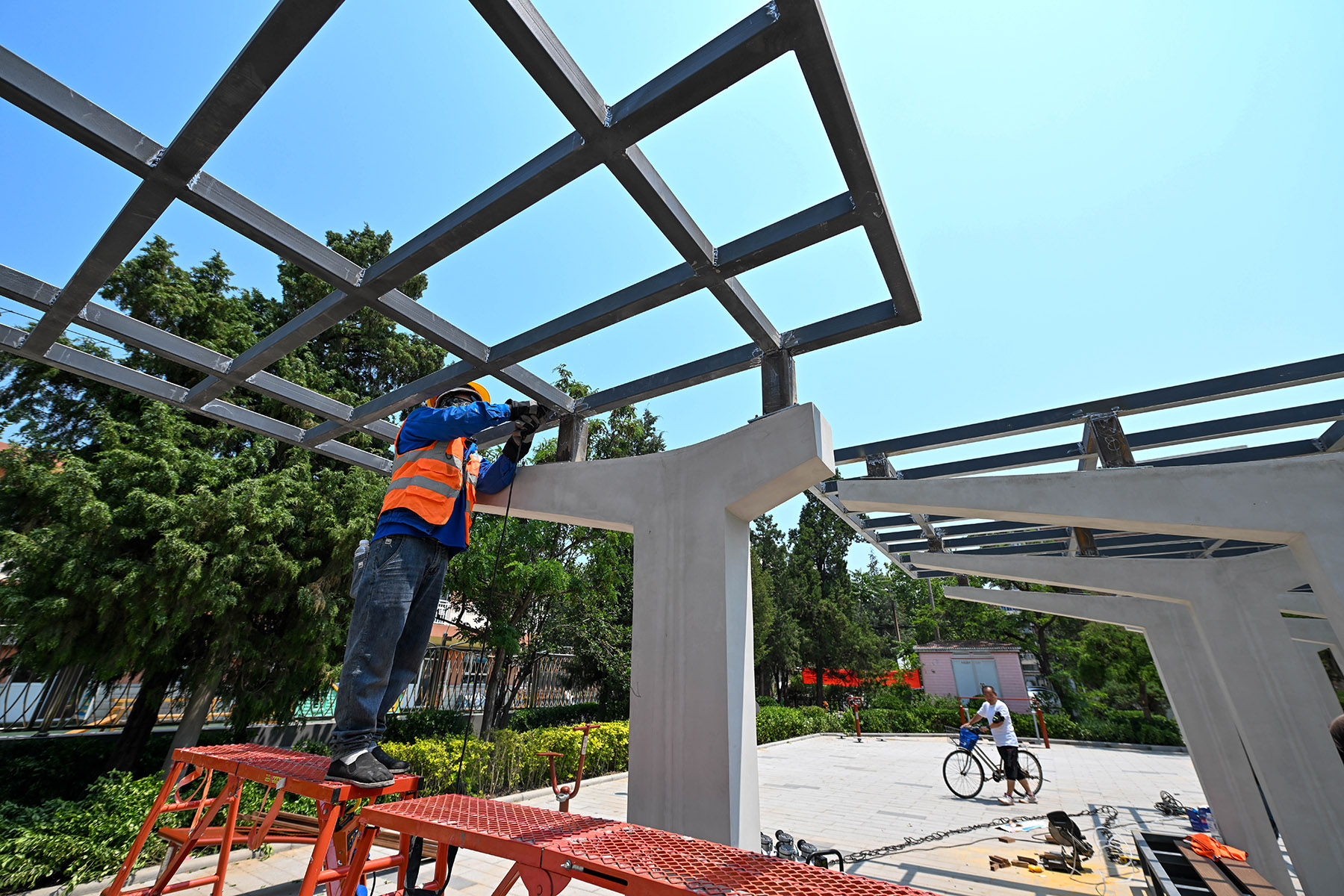
China has unveiled its first national-level urban renewal plan, with market watchers expecting about 15 trillion yuan ($2.1 trillion) in investment during the 15th Five-Year Plan period (2026-30), as the government seeks to modernize aging infrastructure, upgrade residential areas and boost domestic demand, experts said.
The plan, released in May by the State Council — the nation's Cabinet — is the first national-level guideline for urban renewal and the first sector-specific plan to be implemented following the release of the broader five-year blueprint.
It outlines quantitative targets, including the renovation of 500,000 dilapidated urban residential units, 115,000 aging residential communities, 1,500 outdated industrial districts and factory zones, 4,000 urban villages and 365,000 kilometers of underground pipeline upgrades by 2030.
In this context, China is expected to invest at least 15 trillion yuan in urban renewal projects during the 15th Five-Year Plan period, averaging 3 trillion yuan annually, said a research note by Huachuang Securities.
READ MORE: Fiscal funds, bank loans both seen helping finance urban renewal drive
That would be slightly higher than the 2.6 trillion yuan and 2.9 trillion yuan invested in 2023 and 2024, respectively, said the Ministry of Housing and Urban-Rural Development. The ministry said that in each of those years, about 60,000 urban renewal projects were completed nationwide.
Zheng Degao, vice-president of the China Academy of Urban Planning and Design, said that the targets were set based on "physical examinations" of cities and surveys of residents' needs.
For example, the renovation of aging residential communities will focus on those built 20 years or more ago, with flexible scope determined through special assessments, Zheng said.
A key challenge in urban renewal has been financing, and to this end, the plan identifies three sources of funding: fiscal funds, financial institutions and private capital.
Tang Daizhong, deputy director of the Department of Construction Management and Real Estate at Tongji University, said each funding source bears different risks, responsibilities and return expectations, and they must work in tandem.
Fiscal funds serve as a safety net, Tang said, adding: "Public money plays a foundational and guarantee role, but it can also act as equity to attract financial capital from banks and policy lenders."
He said that in a typical project, fiscal funds might cover 20 percent of the investment, with financial institutions providing the remaining 80 percent, leveraging public money to multiply total spending.
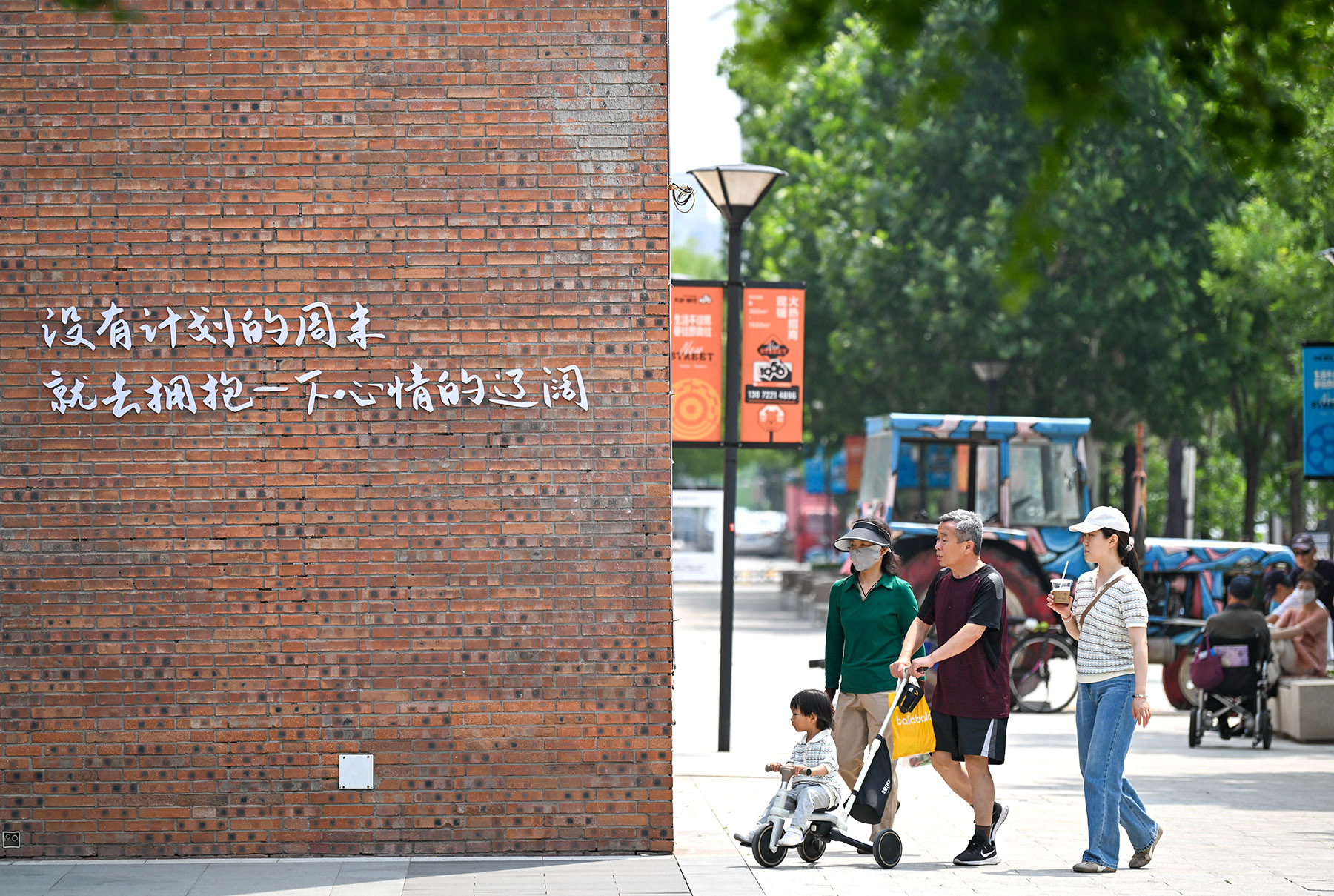
Financial capital also helps solve timing mismatches. Urban renewal projects often have long payback periods, while investors seek quicker returns.
"Long-term financial funds can extend repayment schedules so that future cash flows can cover the investment," Tang said, adding that private sector participation is best suited for operations.
"Some comprehensive developers and operators can use their funds to run projects and rely on future operating profits to cover initial investments," he added.
The central government has selected 15 cities to receive central fiscal support for urban renewal projects in 2026, marking the third consecutive year of a dedicated funding program that has already channeled more than 20 billion yuan to 20 cities, including Shanghai and Beijing.
Beyond direct fiscal transfers, the State Council has also permitted local governments to issue special-purpose bonds to finance eligible urban renewal projects.
The China Index Academy said special-purpose bond issuances for urban renewal work across the country exceeded 350 billion yuan in 2025, a modest 2 percent increase from the previous year, accounting for 7.6 percent of total new special-purpose bonds.
That said, the nature of special-purpose bonds — requiring projects to generate enough revenue to repay principal and interest — means they cannot be used indiscriminately for public welfare initiatives like aging community renovations and underground pipeline upgrades, which produce little or no direct cash flow, experts cautioned.
"Special bonds should play more of an equity role, not a blanket bailout," said Dong Yu, executive vice-president of Tsinghua University's China Institute for Development Planning. "When a project can achieve cash flow balance with special-purpose bonds covering about 20 percent of the investment, it can proceed."
For purely public welfare projects that generate no revenue, Dong suggested drawing the project boundary wider to include some revenue-producing components.
"Planners can make the area larger, incorporating parts that can yield quality cash flow. Once you form a larger asset package, the whole thing becomes able to finance."
This bundling approach has been used in some large-scale redevelopment zones, where residential renovation is paired with commercial space, parking or community services that generate ongoing income.
ALSO READ: A blueprint for urban renewal
Attracting private capital requires more than just profit potential, experts said, stressing the importance of contract enforcement and clear exit mechanisms.
"Legal protections for contracts are crucial to eliminate uncertainty and risk during private capital entry and development," said Zhao Yanjing, a professor specializing in urban economics at Xiamen University, adding that equally important is having financial tools for exit.
China has been expanding its real estate investment trust market, and urban renewal plans explicitly encourage the use of REITs and asset-backed securities for eligible projects. These instruments allow private investors to liquidate their stakes after projects become operational, reducing lock-in risks.
Contact the writers at wangkeju@chinadaily.com.cn
