

Interactive musical events in Beijing's public spaces help young people navigate stress of daily life through shared joy, sense of community
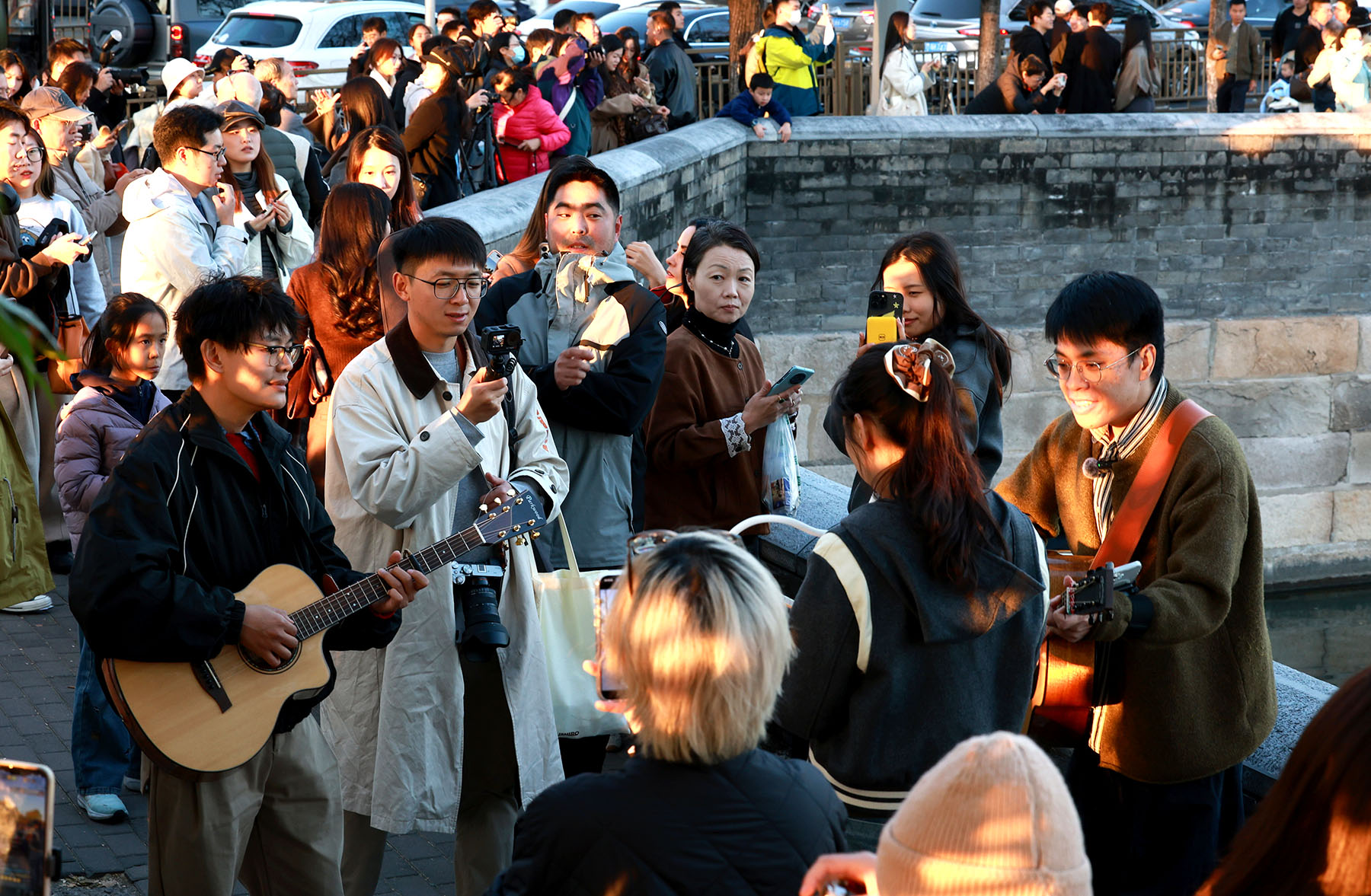
On a summer weekend, as the afternoon sun spills its mellowed golden glow on the public square at Solana, a popular commercial complex in downtown Beijing, the cackle of conversations fills the open space, punctuated by the occasional woof of a dog or the distant whistle of an urban wanderer.
And then, a small amplifier crackles, a guitar chord cuts through the air and the voice of a young woman rises tentatively, weaving its way through the chatter of the crowd.
Within minutes, the mall's scattered visitors come together, joggers pause mid-stride, elderly couples lean on walking sticks, children run in wide circles and parents push strollers closer — all gathering spontaneously around the music.
By the third song, the space is transformed. People clap, sway, sing and even step onto the makeshift stage, embracing the music as if the square were hosting an impromptu city festival.
Li Wei, 27, a tech startup employee, was on a lunch date with friends one Saturday at Solana when he heard the familiar strum of a guitar and an unfamiliar voice singing pop icon Faye Wong's song with unrestrained joy.
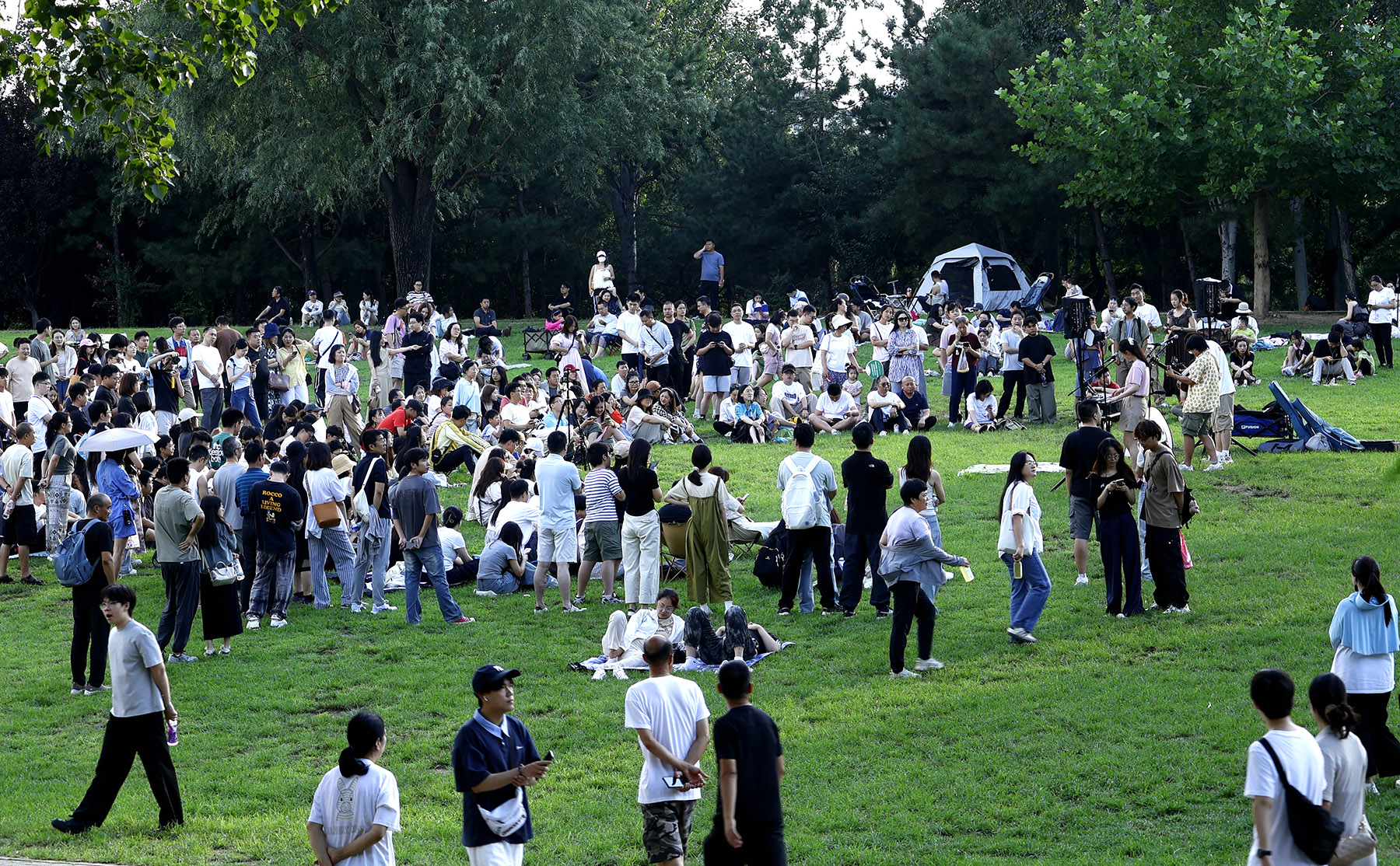
Curious, he and his friends followed the music and found themselves in the middle of a crowd of cheering strangers. Soon enough, they were all clapping and swaying to the beats. When the open-mic moment arrived, his friends nudged Li forward. For the next few minutes, he sang with people he'd met for the first time, his voice shaky but his enthusiasm unwavering.
"It felt like the city had suddenly come alive after years. For three hours, I wasn't just an office worker; I was part of something bigger. I left feeling lighter, connected and, strangely, at home in Beijing," said Li, who originally hails from Jinan, Shandong province.
This scene of young people gathering in parks, public squares, riversides or courtyards to sing and connect is now commonplace in the Chinese capital. The citywide phenomenon blends creative and spontaneous performances with a strong sense of community.
From impromptu open-mic events in tucked-away art districts to intimate gatherings in secluded courtyards, these musical meetups reveal a generation navigating the stress of urban life and building connections in their own vibrant, expressive ways.
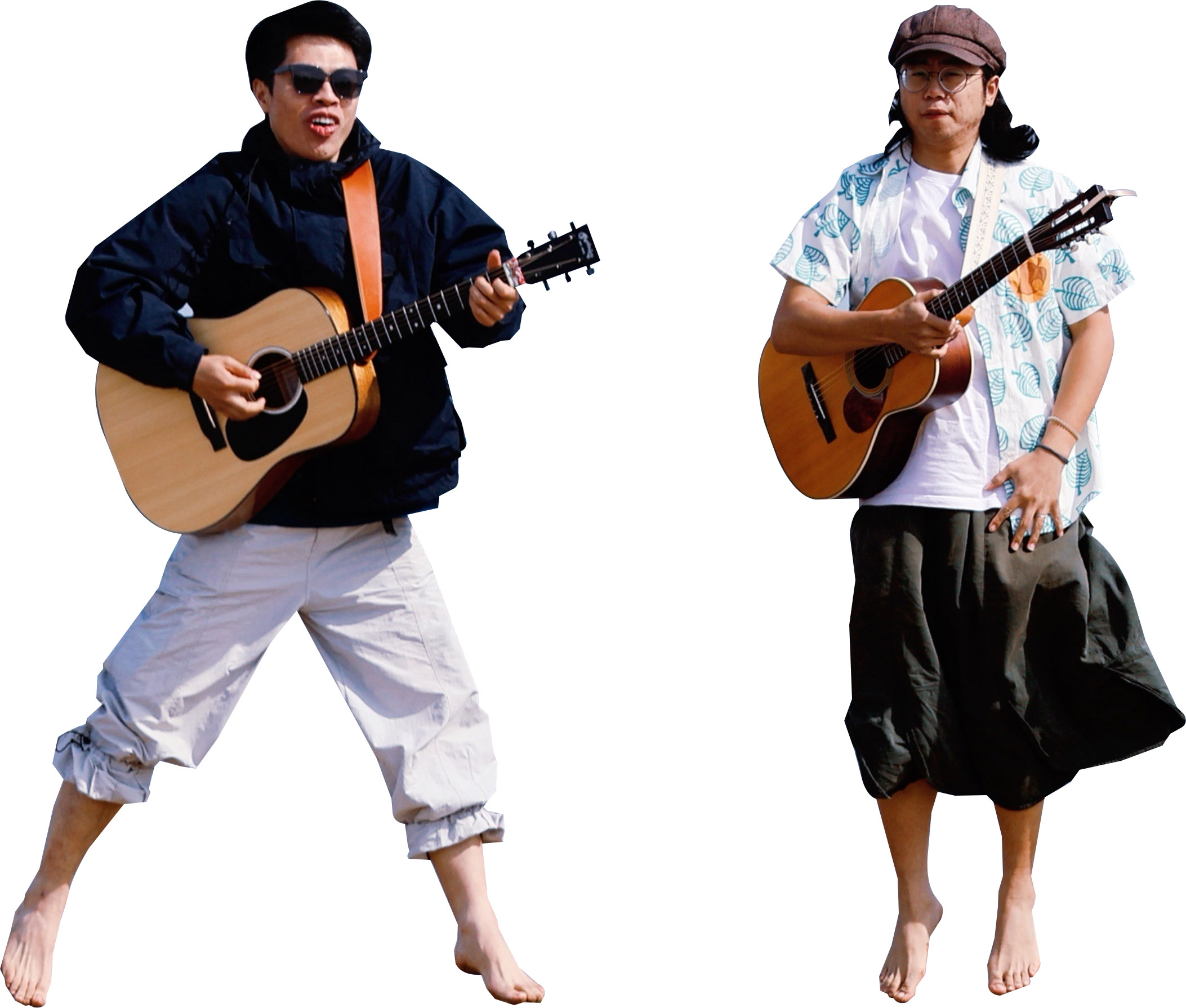
For Road Show Plan, a Beijing-based band that turns ordinary city spaces into stages and boasts over 300,000 followers across social media platforms, it all began in 2021 amid the COVID-19 pandemic.
Tan Wu, a self-taught guitarist from Hubei province with a degree in Chinese literature, who belted out songs — including originals — at fancy bars and bistros, found himself confined to a residential neighborhood in Beijing. His friend, Zhang Xiaotan, who worked with music platforms and at live-house venues, faced the same frustration as the entire city went under lockdown.
"We both love music, and desperately needed an outlet," Tan recalled. "At first, it was just us, singing outside our residential community, playing for each other and a few friends," said the 30-year-old.
Their friend, a trained keyboardist from Shanxi province, who goes by her stage name Liang Zai, soon joined them. The trio put together musical shows to cheer friends, neighbors and anybody who stopped to listen.
"The first time a passerby stopped and sang with us, we felt a surge of excitement," recalled 31-year-old Liang Zai. "It felt like we were creating something bigger."
By 2022, the group had brought the balm of music to parks and public spaces, inviting visitors to perform with them.
"We realized that people love the spotlight. We let them grab the microphone, feel the stage and experience what it is like to lead a song," Tan said. "And that's when the idea of organizing interactive outdoor performances started to take shape."
The three friends never expected their casual, passion-driven musical gatherings to grow into full-fledged cultural events. But in April 2023, their three-hour performance at Chaoyang Park drew more than 1,000 people, after handmade posters, playfully illustrated with sunny skies and jolly clouds, were circulated online.
"I was tuning my instrument, when the crowd started swelling. Shy and reserved by nature, I kept my gaze fixed on the keyboard as my fingers glided across it. When I looked up again, there were more people than I had ever seen together at one place," recalled Liang Zai.
Zhang, 27, said they had no well-rehearsed song list. "Folk, pop, rock — we sang whatever we felt like. People just kept coming. They sat, stood, sang or danced along the riverside. For three hours, we all became part of the same story."
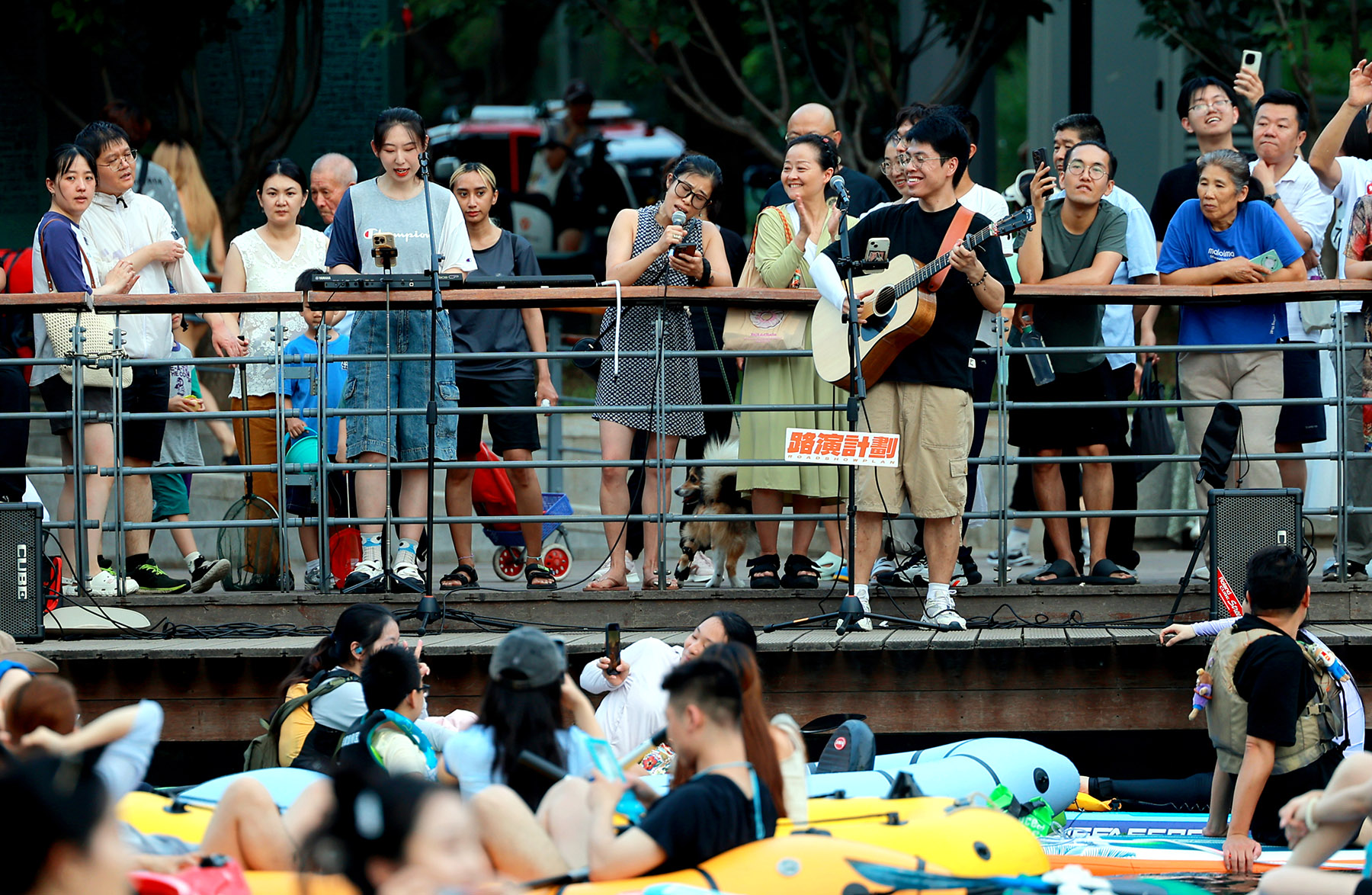
Today, their approach is more professional, but still adequately spontaneous. Tan manages online promotion and poster design, besides playing the guitar; Liang Zai handles community engagement, as well as plays the keyboard; and Zhang manages live sound while also writing originals for the band.
Locations vary widely — from parks and riverside boulevards to art districts and amphitheaters in the lap of nature. Open-mic participants are randomly chosen from among those who raise their hands. For everyone involved, these events offer a rewarding experience.
On Jan 5 last year, the trio staged an original show at a semi-outdoor venue in Beijing, performing nearly 30 of their songs in succession.
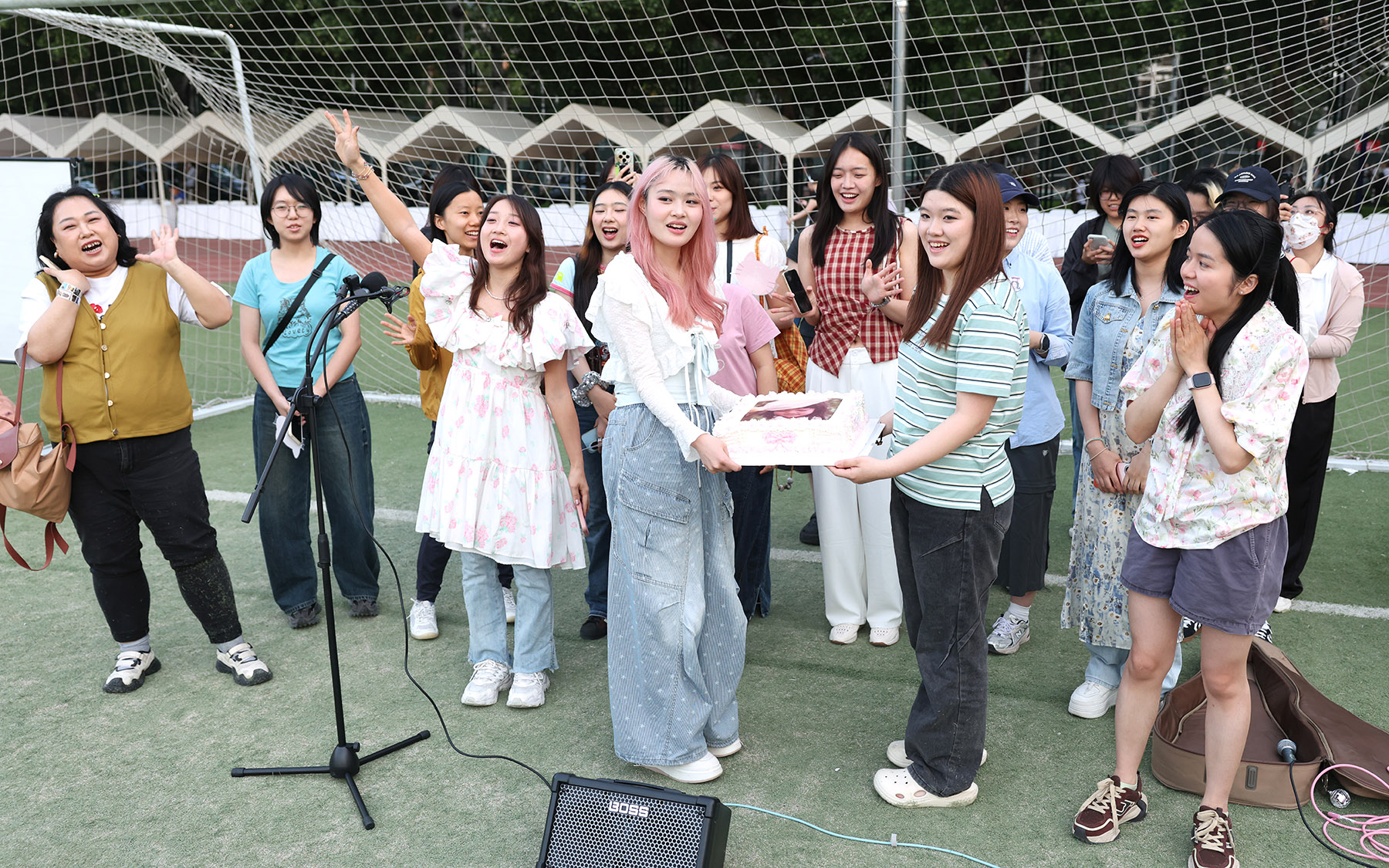
"It was my birthday, and I was deeply moved by the enthusiastic participation," recalled Zhang.
"Our friend Peter Pan, who was once only a member of the audience, became our official photographer that day. He also surprised us with a banner, a cake and celebratory sparklers. We always cherish the people we meet during performances. It felt less like a concert and more like a reunion of old friends — a truly perfect night," he added.
Liang Zai, who also works at a bank, said there was a time when work pressure was really intense and their musical gatherings served as her emotional outlet. "The weekend shows brought immense joy. It felt like I could breathe again," she said.
Today, the shows are an inseparable part of her life, she said. "I am learning to balance work and life. I carry my laptop everywhere. I work, and then take breaks to perform," she added.
Tan noted that music is like a reset button. "City life is stressful. Everyone's busy working, running errands, or just striving hard to survive. On weekends, people need time and space to breathe. When it comes to our shows, everyone belongs. The shows are free, casual and good for the city. People leave smiling and feeling lighter — feeling human again," he said.
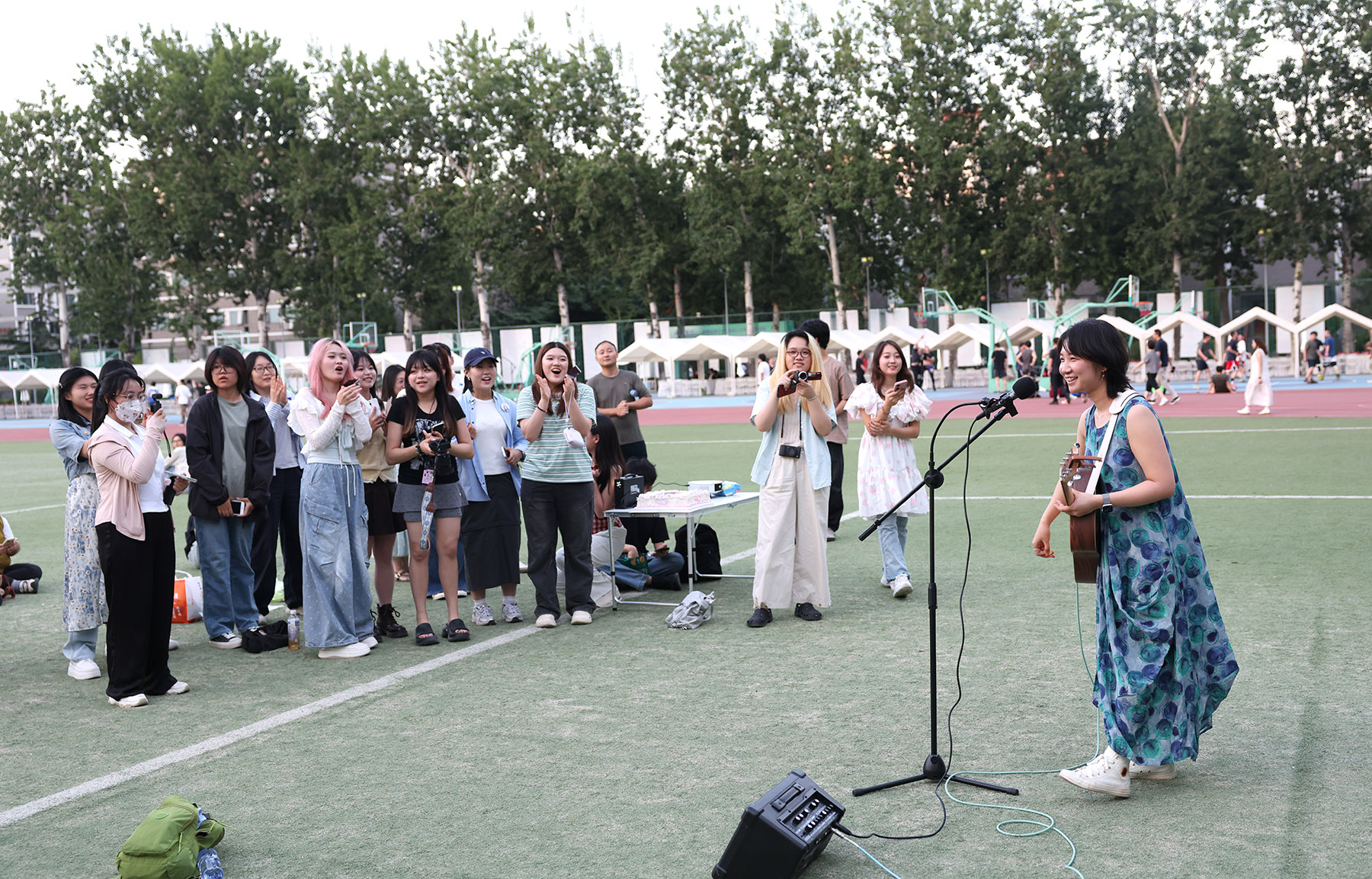
Interactive musical gatherings in Beijing reflect a broader cultural trend, as young people often seek meaningful connections beyond social media.
"We're creating collective memory in real time. Our audiences tell us they've never seen the city like this — alive and accommodating," Tan said.
"Looking ahead, there's so much to be excited about. More brands and cross-industry collaborations are on the horizon. The goal of performing in 100 corners of Beijing is within reach, and the next milestone will be 200. Beyond that, I hope to take our shows to other cities, to feel the energy of young people there and to soak in the unique vibe of each urban space," he added.
Yan Baolin, a choral singing conductor and a professor at Zhejiang Conservatory of Music, noted that singing is different from playing a musical instrument, as it channels emotions directly through voice.
"The positive impact of a beautiful vocal performance on the heart and mind of a listener is unmatched," Yan said. "For young choral singing participants, the collective effort is powerful. It lets them experience the strength of working together, and the emotional resonance that emerges during collaboration provides a natural outlet for stress."
Studies show that sound waves produced during choral practice can have measurable positive effects on the body, making choral singing a kind of lasting, profound "spiritual massage", he said.
In contrast, most other forms of music require years of training and technical foundation. Playing an instrument demands long-term study and practice, which often starts during childhood, making it hard for just anybody to join a band or an orchestra.
Choral singing, however, is more accessible, as every participant brings their own instrument, which is their voice, Yan said, adding that its appeal lies in its combination of artistic satisfaction, social connection and emotional release.
Young people today are drawn to singing, or interaction through music, because of the joy of shared experience, the sense of community and the emotional refreshment it provides.
A 29-year-old woman, who lives and works in Beijing and uses the stage name Xiao Yang, noted that music is a means to bond with people, regardless of age, gender and profession. "We meet, we play, we sing along and, suddenly, strangers become friends."
Unlike Road Show Plan, Xiao Yang embodies a quieter, more intimate side of Beijing's music scene. She composes her own songs, inspired by everyday life, and has over 10 originals in her repertoire.
Inspired by versatile music icons, including Taylor Swift, she started playing the piano when she was 6 years old, and later learned to play the flute and the guitar.
During the pandemic, Xiao Yang performed small covers, recorded at home and gradually built a 300-person online community. Her in-person gatherings remain small — never more than 100 participants. "I don't think in terms of audiences or performers. It is a shared space. Everyone takes turns to sing and play, or they just listen," she said.
Xiao Yang's events take place in hidden courtyards, secluded park corners and quiet cafes. The music tends to be less mainstream, and songs of Taiwan singer-songwriter Cheer Chan dominate the playlist.
She also features original songs. "Music is a way to be yourself. It is social, but also introspective. Even if people aren't singing, they're connecting through the music," she said.
Xiao Yang's own music is deeply personal. Her originals include a song about her lost cat. "Performing my own songs feels different than singing with others," she said. "But both are special — one is self-expression, the other is shared joy."

Her event venues range from quiet corners in the Olympic Forest Park, where small groups gather with guitars and soft voices, to organized stages for open-mic sessions. "Back in 2022 and 2023, there weren't as many groups as there are now. This year, it feels like everywhere you look, someone is singing, playing, or performing. It's incredible!"
Even with a demanding job, Xiao Yang makes time for these performances. "I come for music, friendship and freedom. Every time I sing, alone or with others, it reminds me why all this is worth it," she said.
Chen Yingzi, 22, a university student, prefers quiet spaces. One spring afternoon this year, she attended a small gathering in a hutong, where fewer than a dozen people sat on mismatched chairs and cushions. The organizers introduced an acoustic guitar and encouraged participation.
Chen hesitated for a bit, but then picked up her ukulele, strummed a simple melody and sang an original about her hometown. The applause that followed drowned her fears.
"I didn't expect to feel so connected to people I'd just met," she said. "It wasn't about performing well; it was about sharing a part of myself. I left with new friends, renewed confidence, and a reminder that music can make even the smallest spaces feel like home."
Chen now regularly participates in such gatherings. "Most young people live in an online world. But one can make real friends at these events." She has already met high school students and older peers from across the city, and the vibe, she stressed, has been invigorating.
Contact the writers at chennan@chinadaily.com.cn
