

Work revisits history of Chinese civilians who risked lives to rescue downed airmen
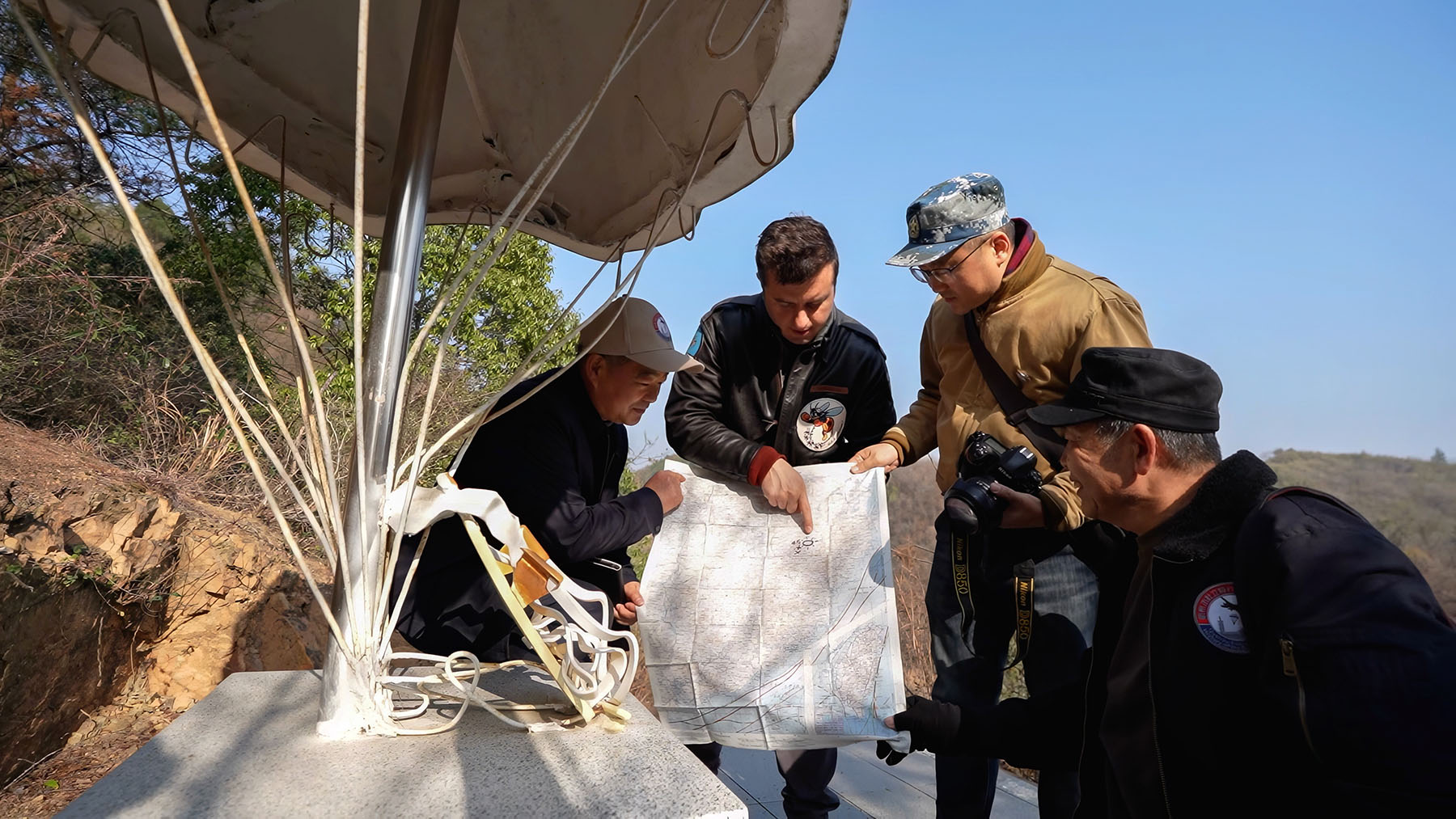
Inside an abandoned building in a town in Jiangxi province, George Retelas felt something before anyone told him what had happened there.
His hosts guided him inside and told him: two US airmen had sheltered here in 1942, cared for by local villagers until someone who spoke some English could be found to help them escape. When Japanese soldiers swept through, they executed 14 people on the spot and burned the building to the ground.
"The chilling part is they didn't tell me what had happened until I was already inside," Retelas said. "As soon as I walked into that space, I could feel it."
That moment has marked Retelas' journey through a chapter of World War II history that many in the US have never heard about.
It is a story of a wartime alliance of ordinary Chinese civilians who risked and often lost everything to protect strangers from the US who fell from the sky. And it is a story that Retelas, a filmmaker from Silicon Valley, has spent years working to bring to light.
While in college, Retelas discovered a journal and photographs tucked inside a camera bag he had inherited from his grandfather who had served as a US Navy mechanic at Alameda Naval Air Station in California.
One night in early 1942, his grandfather had been rousted from his bed and ordered to help load 220-kilogram bombs onto a mysterious aircraft carrier loaded with Army planes. He did not learn until later that the ship was the USS Hornet, and the bombers were the Doolittle squadron bound for Tokyo.
That discovery sent Retelas down a path of research, then filmmaking, then travel — first across the United States to track down the men who had served alongside his grandfather in Navy Air Group 11, then, eventually, across the Pacific.
"Growing up in Silicon Valley, where everyone's thinking about the future, what's the next big thing, I found myself wanting to go back to the past," Retelas said. "Because I feel like I don't know how to answer the questions of the future until I learn more about where I came from."
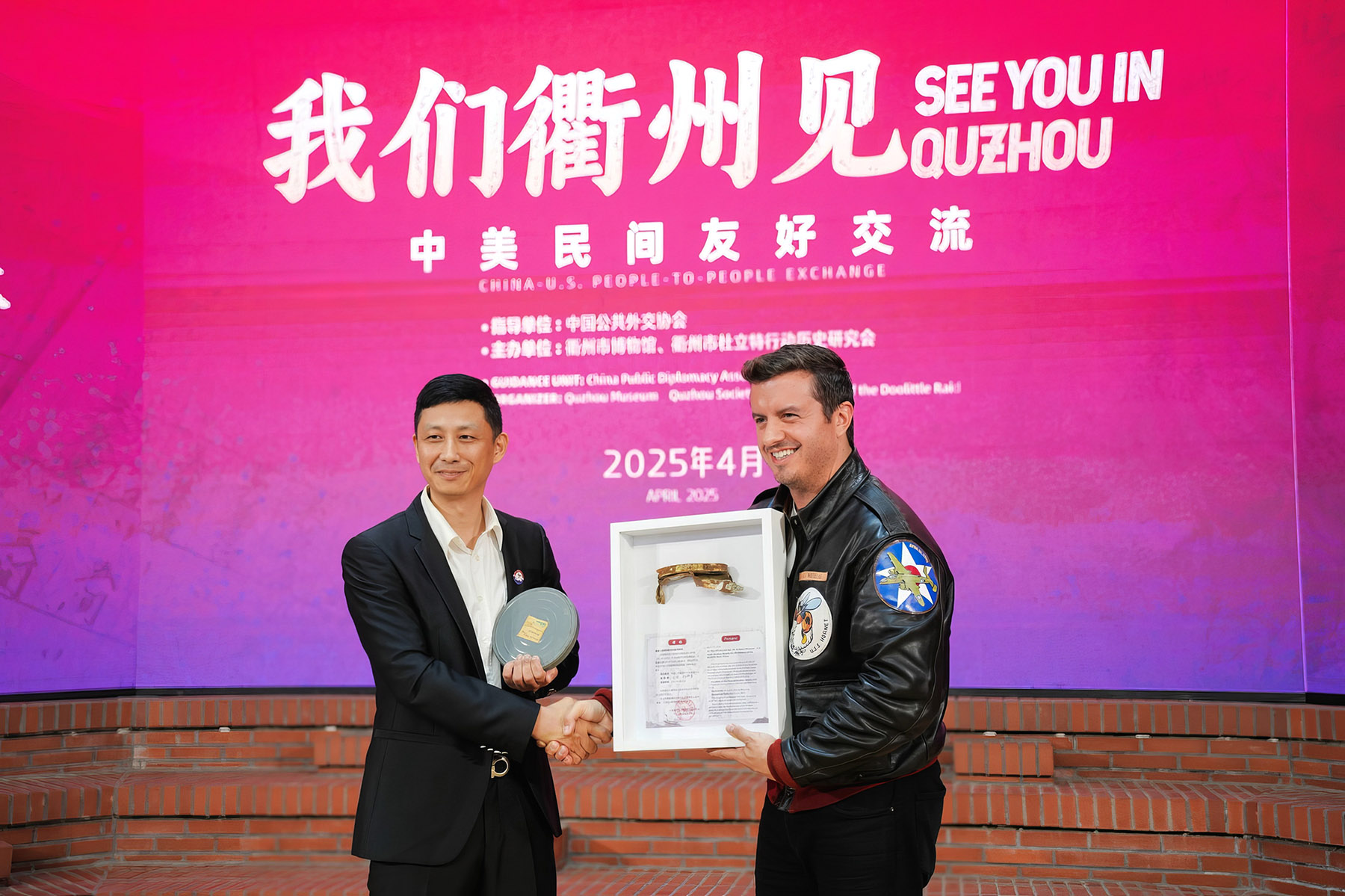
He directed his first documentary, Eleven, in 2014, built around the journal he had found. His second, Sundown to Eleven, followed Richard "Dick" Miralles, the last surviving member of Air Group 11, in his mission to honor his fallen comrades. Miralles passed away on Nov 13 last year, at age 101. In keeping with his dying request, Retelas released the film for free on You-Tube on Pearl Harbor Day, Dec 7.
But even as he completed that work, Retelas was being pulled across the Pacific, and toward a viewpoint he realized he did not yet grasp.
"I wanted to understand the other side, instead of just getting the American perspective of the Pacific War," he said. "Now, I want to know who it affected on the other side of the world."
In April 1942, just four months after Japan attacked Pearl Harbor, US President Franklin Roosevelt ordered a retaliatory strike on the Japanese home islands.
The attack, involving 80 men in 16 Army B-25 bombers, was planned and led by Lieutenant Colonel James Doolittle.
The mission was nearly suicidal in its ambition: Because the aircraft carrier USS Hornet was not close enough to Japan for the bombers to make the return trip, they would bomb Tokyo and other Japanese cities, then pray they made it safely to allied China before they ran out of fuel.
Eighty men bailed out or crash-landed across the provinces of Zhejiang, Jiangxi, Fujian and Anhui. Chinese farmers, villagers and townspeople took them into their homes, fed them and helped them escape until 64 of the 80 made it to safety.
Japanese forces, enraged that the local population had sheltered US forces, swept through the region. An estimated 250,000 Chinese civilians were killed in Zhejiang-Jiangxi campaign in retaliation by Japan for the Doolittle Raid, according to multiple sources.
In the United States, the Doolittle Raid is remembered as a daring act of national defiance. The role of China, and the sacrifice made by ordinary Chinese people, are often overlooked.
"For American students and young people, it's not really well known," Retelas said of the Pacific War broadly.
Exchange of artifacts
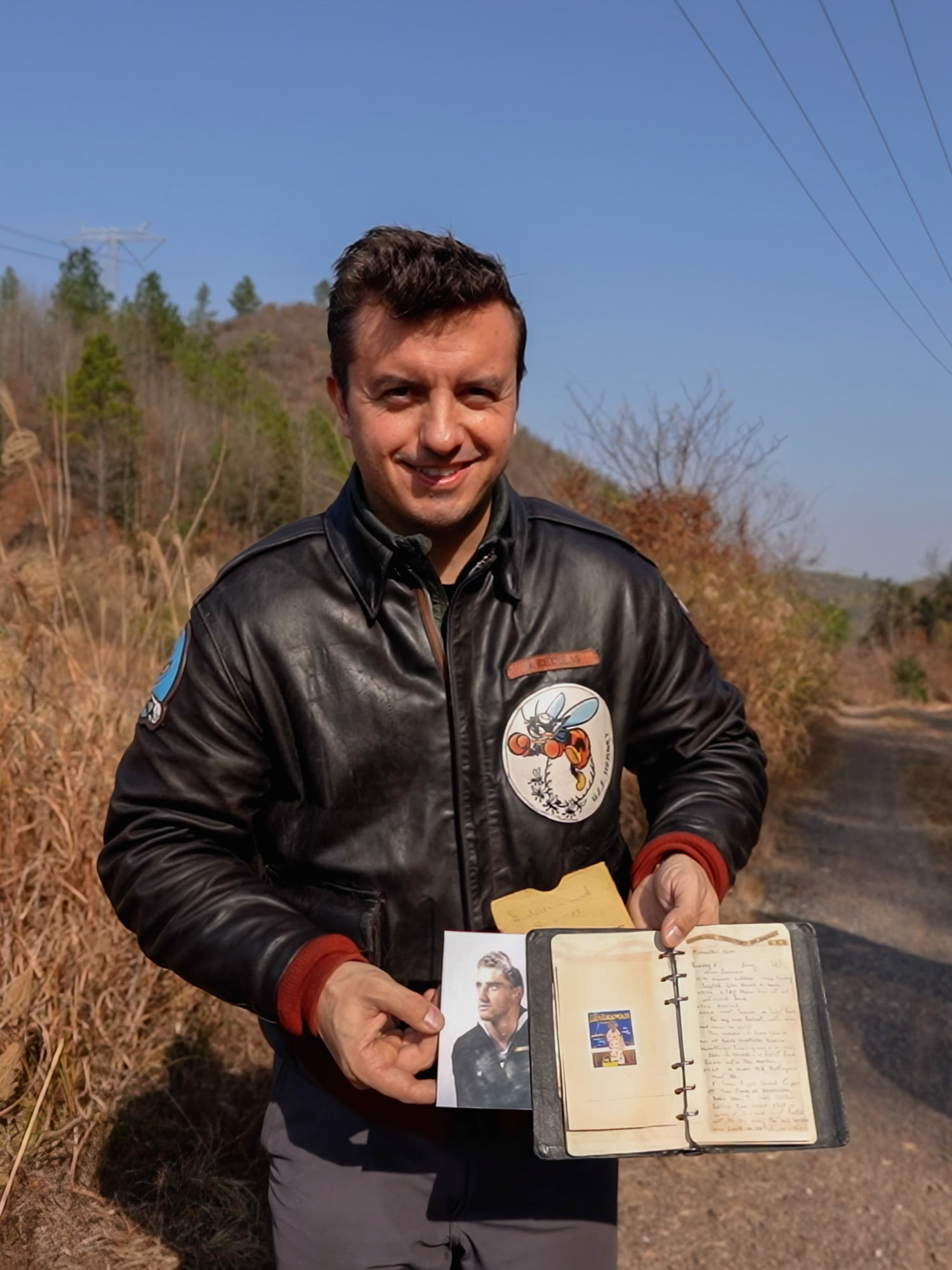
In April 2025, Retelas traveled to Quzhou, a city in Zhejiang province, as part of a cultural exchange between the USS Hornet Museum in Alameda, California, where he has volunteered for years.
The Doolittle Raid Memorial Hall in Quzhou traded an eight-inch piece of steel torn from a B-25 bomber with the Hornet Museum. In return, the museum sent an original reel of 16-millimeter film showing the Doolittle Raiders training for their mission. Retelas, who proposed the exchange, carried the film to China and brought the steel fragment home.
"This exchange was about much more than artifacts," he said. "It was about honoring a shared history and building relationships that continue to matter today."
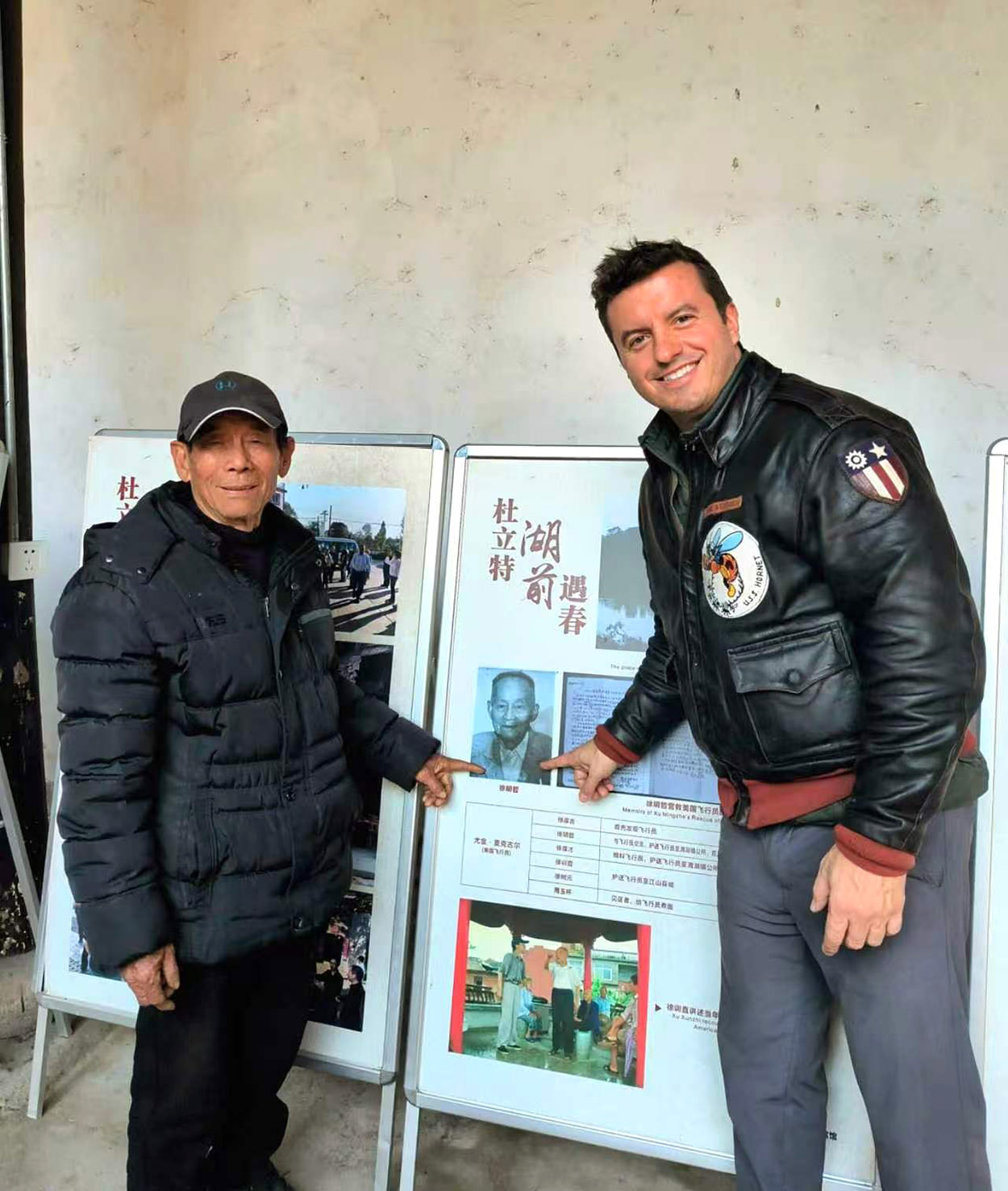
While in Quzhou, Retelas met and interviewed several elderly Chinese men who were children when their families sheltered US airmen.
Retelas returned to China in December. By then, the people he had met in Quzhou were no longer strangers.
He visited sites in Jiangxi province where US airmen had parachuted down more than 80 years ago, now marked with small memorial markers put together by a group of Chinese volunteers who have spent years scouring the countryside for B-25 wreckage and honoring the spots where the flyers touched down.
"There was a group of volunteers that, over the last few years, have made it their personal quest to go and find fragments of the airplanes and help put together little memorial sites," Retelas said. "They are an amazing group of men and I consider them all great friends now."
The markers moved him in ways he had not anticipated. In France, he knew, there were sites where US pilots bailed out and French villagers came to their rescue, places marked in English, visited by tourists, and written into the popular memory of the war. The Chinese sites felt different: quieter, less known, more quietly tended.
"For me, it was very touching to see Americans from 80 years ago being remembered, and seeing these markers in English," he said.
"The volunteers who put those sites together — you could see the passion in their eyes. It was like looking at someone who cares as much as I do, but from across the ocean. We went to dinner every night, kept ordering more beer, kept talking. I've never felt closer to so many people who live so far away from me."
To the silver screen
Out of both trips came the outlines of a film. Retelas is now in the early stages of development of The Torch Dragon, a coming-of-age war drama that imagines the Doolittle Raid from the perspective of the people on the ground.
The film tells the story of four village children who discover a wounded US pilot who parachuted into their lives in war-torn China in 1942. They believe him to be the mythical Torch Dragon, a protector sent to shield them from invading Japanese forces. Retelas has completed a first draft and plans to return to China later this year to meet with studios interested in backing the project.
It is his first feature-length live-action film, and was inspired by his initial visit to China.
"That first cultural exchange in China involving the Doolittle Raid was very meaningful for me, because knowing my grandfather helped with that mission and where it led — it's like opening a door to another part of history," he said.
He is also assembling footage from his December trip into a You-Tube documentary for a US audience. The film draws on the interviews he conducted with descendants of the Chinese families who sheltered the airmen.
Cultural ties
Retelas serves as director of media marketing at Menlo College in Silicon Valley, and the work he has done in China has rippled back to his campus life.
Menlo's international student body includes a large number of students from China — the second most represented international country on campus, with students from abroad making up nearly a quarter of enrollment.
On his first China trip, he brought along Menlo College student Mathias Durfee, a marketing major who participated through an internship with the USS Hornet Museum and documented the visit through photography and video.
"Being part of this cultural exchange was an incredible experience," Durfee said. "It allowed me to apply what I've learned at Menlo in a real-world, international setting while documenting history that still resonates today."
During his December trip, Retelas connected with Chinese students at Menlo College who were home for the holidays. Zhou Yanxi, an AI and analytics major, was among them. "I am extremely grateful there are people at Menlo College, like Mr Retelas, who take the initiative to learn about my home country and its culture," Zhou said.
Retelas said such exchanges have helped inform his engagement with the students. "I love working with young people and mentoring them, but the Chinese students particularly always tend to be a little bit more reserved and kind of shy," he said."But once they knew I went to China, they're so warm and opening up."
He is also mentoring a group of high school students who are writing a book about the Doolittle Raid."I am very excited to help the young people of the US and China know about this story," he said.
Contact the writers at liazhu@chinadailyusa.com
