

The Guangdong-Hong Kong-Macao Greater Bay Area can leverage Macao Special Administrative Region’s unique strengths to promote China’s digital cultural exports through cross-border young people co-creation and institutional innovation, experts said at a forum.
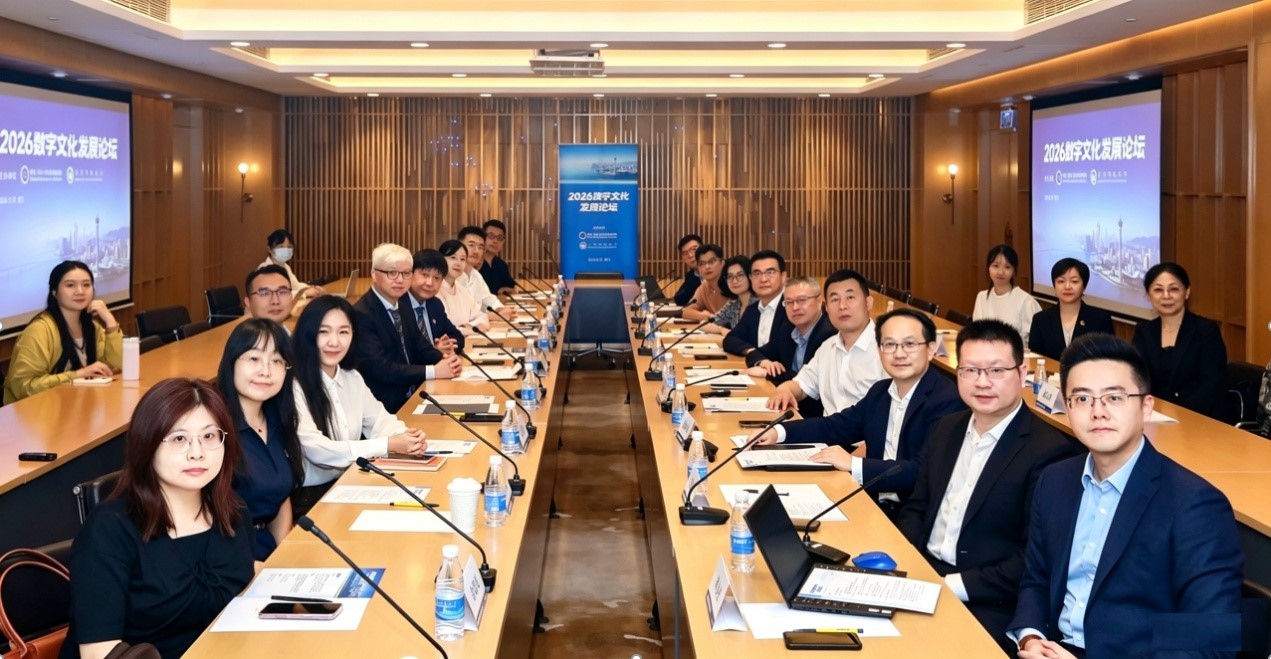
Co-organized by the China Development Institute and the Macau University of Science and Technology, the 2026 Digital Cultural Development Forum, which was held in Macao last week, gathered experts and industry leaders from Beijing, Shenzhen, Guangzhou, Hong Kong and Macao to discuss how to promote high-quality development of digital culture under the 15th Five-Year Plan (2026-30).
Cao Zhongxiong, assistant president of China Development Institute, said Macao, which boasts over 400 years of cultural integration and heritage, is well positioned to build into an innovation hub for the export of Portuguese-language digital content by leveraging its deep understanding of Portuguese-speaking countries.
He suggested establishing a China-Portuguese digital content incubator to facilitate cross-border content dissemination and optimize cultural localization, and turn Macao into a “dream factory” for all young cultural creators who speak Portuguese.
Xiao Geng, professor of practice of School of Public Policy at The Chinese University of Hong Kong, Shenzhen, emphasized the role of overseas young people in China’s digital cultural export.
“Overseas younger generations should be the core focus of China’s digital cultural going-global strategy, as they are potential co-creators and key producers of cross-border cultural content,” he said.
Xiao said that the Guangdong-Hong Kong-Macao Greater Bay Area can leverage the spatial advantages of Guangdong-Macao In-Depth Cooperation Zone in Hengqin to create an innovative “dual headquarters” mode.
Under the framework, cultural enterprises from Hong Kong, Macao and overseas can set up secondary headquarters in Hengqin, while remaining regulated by their original registration jurisdictions. Hengqin, in return, will provide infrastructure support and talent resources for their development.
This institutional innovation will lower market entry barriers, attract cultural resources from the Asia-Pacific region and across the globe, and drive a shift in China’s cultural outreach from product export to cultural co-creation, he said.
Zhang Jing, associate dean of national institute for cultural heritage and development at Sun Yat-sen University, said libraries, museums and art galleries serve as “key supplementary forces” for cultural exports, which are well positioned to connect young people at home and abroad and facilitate cross-cultural co-creation.
The scholar expressed hope that public cultural intellectual properties could be shared and digital creation camps be launched to engage Chinese and foreign young people as active creators rather than passive audiences.
Chen Ziyu contributed to this story.
Contact the writer at sally@chinadailyhk.com
