

Transformation driven not by traditional corporate hiring, but by millions of young users experimenting with flexible, task-based employment models
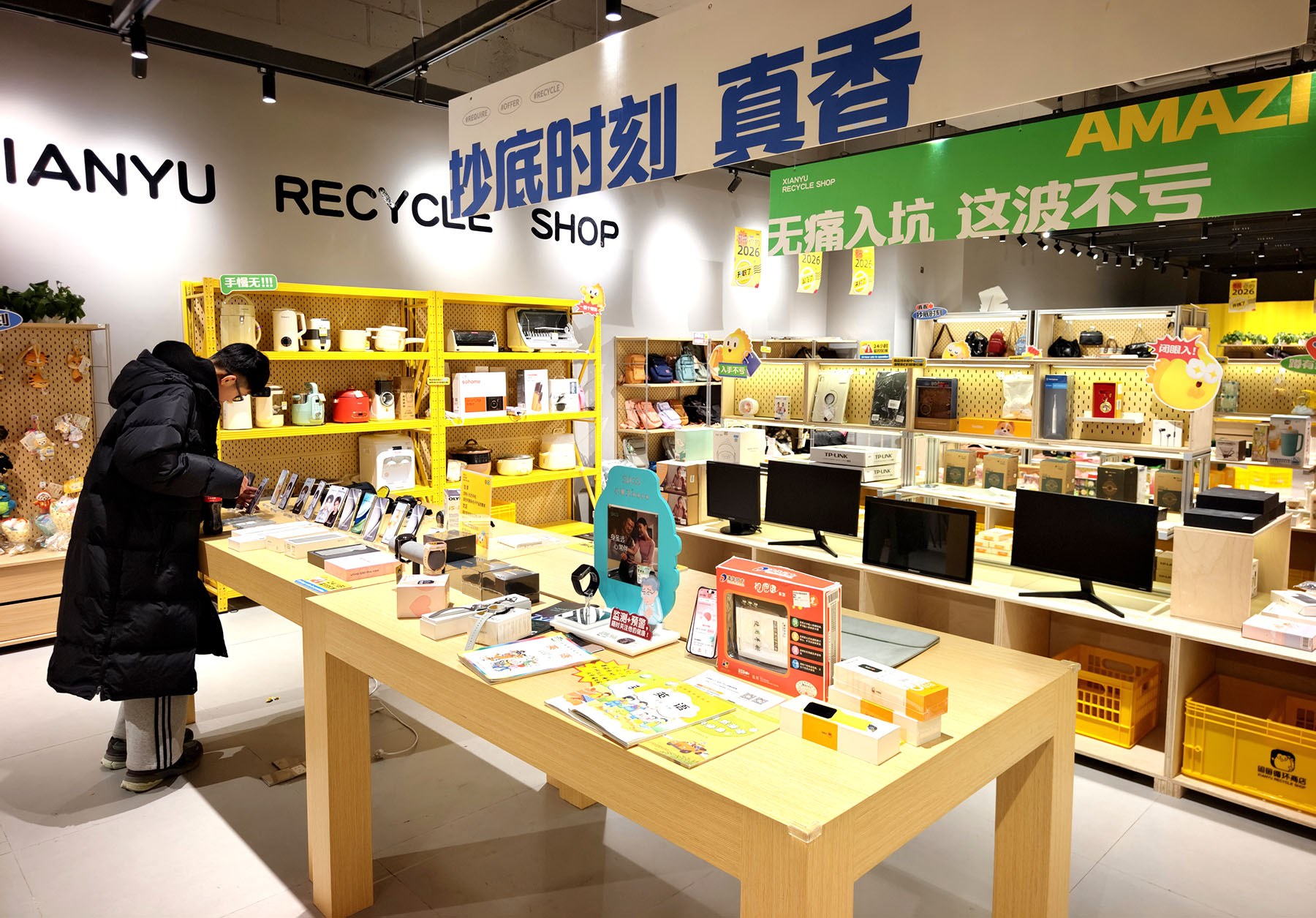
The country's youth are rewriting the rules of work — turning hobbies, side gigs and digital platforms into viable careers, and in the process are reshaping the labor market from the ground up.
A decade ago, a chance encounter quietly set Lane Lu on that path. Newly married and looking for extra income, the resident of Wenzhou, Zhejiang province, stumbled across repair-service listings on Xianyu, the country's leading secondhand marketplace.
Lu posted a listing on an impulse. What followed surprised him.
"I never expected so many people would reach out," he recalled. "Not just from my city, but from all over the country — there was even someone from South Korea."
READ MORE: 'AI milk tea' a taste of new smart economy
The barriers were minimal — no deposits, no storefront, just a smartphone and a willingness to try. Lu, who had always enjoyed tinkering with gadgets, took what felt like a small, almost naive step into a niche that would ultimately generate more than 200,000 yuan ($29,270) a year.
Today, Lu splits his time between two worlds. By day, he works as a consultant at an elderly health service institution. By night — and often into the wee hours — he repairs home appliances, troubleshoots electronics and installs electric vehicle charging equipment.
The turning point came in 2019. His own Philips electric toothbrush, worth more than 1,000 yuan, broke down. Instead of replacing it, he took it apart — and realized the fix was straightforward. That moment reframed his approach. He formally listed small-appliance repair as a service on Xianyu.
"Everything broken at home comes to me," he said. "During busy days it's normal for me to work until 2 am."
For Lu, the work is about more than income. He sees it as a quiet countercurrent to disposable consumption — extending the life of devices that might otherwise be discarded. A water flosser that costs just a few dozen yuan to repair, he noted, can be made to last for years.
"Every time I repair something, the sense of accomplishment is incredibly real."
The side business has also reshaped how his family views his career. His parents, who once favored the stability of a traditional job, have come around. "My dad thinks it's great. He says I've finally found a way to show my value," Lu said.
Lu's trajectory is increasingly mirroring a broader structural shift, as digital platforms blur the boundaries between hobby, freelance work and entrepreneurship — and redraw the contours of the modern labor market.
A recent report by the China New Employment Research Center examining emerging career trends said the country's youth are moving away from the pursuit of stable, long-term jobs toward a more fluid model of "multiple roles and identities". Instead of a single career trajectory, younger workers are assembling portfolios of income streams — part freelancer, part creator, part entrepreneur.

This shift is occurring against the backdrop of the rapidly expanding platform economy, which has absorbed more than 200 million flexible workers in recent years, according to official data. Platforms such as Xianyu are increasingly functioning as innovation ecosystems. They incubate new forms of employment and serve as a testing ground for emerging technologies and business models, said the report.
As spending patterns move from pure material acquisition toward experiences and personal growth, new categories of digital services have emerged. The report identifies three fast-growing segments on Xianyu — personal development, emotional companionship and skill monetization. Orders across these categories are expanding at annual rates exceeding 100 percent.
The so-called "emotional economy" is among the fastest-growing. Orders for emotional companionship services — including consultation, praise sessions and personality analysis — rose more than 107 percent last year. Sellers are increasingly positioning themselves as therapists, coaches or advisers, monetizing empathy and communication skills in ways that would have been difficult to scale in traditional offline settings.
At the same time, skill-based services are proliferating. In 2025, nearly 19.6 million sellers offered services ranging from photography and design to tutoring and home renovation on Xianyu. Generation Z accounted for about 41 percent of those sellers, while millennials contribute roughly a third — underscoring the platform's central role in youth employment, said the report.
Income levels remain modest on average, with active side-hustle participants earning around 4,317 yuan annually. Yet the aggregate impact is significant, particularly as a supplementary income source. More importantly, the data suggest that these activities are not merely casual experiments. A survey of over 1,200 platform users shows that more than 40 percent derive at least 30 percent of their monthly income from side gigs, while roughly 30 percent spend upward of 30 hours a week on platform-related work — effectively treating it as a second job.
The implications for China's labor market are substantial. Nearly 80 percent of surveyed users say they plan to develop their platform-based activities into long-term ventures, according to the survey.
Platforms such as Xianyu are also emerging as alternative training grounds, where users refine skills, test business ideas and build customer networks before committing to larger-scale ventures. The report recommends that universities and policymakers recognize this shift by incorporating verified side-hustle experience into academic credits or professional evaluations, effectively legitimizing digital labor as a formal component of career development.
The scale of participation is striking. According to platform data, more than 8 million female users on Xianyu now earn over 10,000 yuan per month. On average, female users posted 16 listings each last year, with strong activity in categories such as collectibles, rental services, artificial intelligence tools and home renovation.
ALSO READ: Whetting buying sentiment prioritized
Women, in particular, are playing a major role in shaping the platform's evolution. Many are leveraging interest-based communities to identify niche markets and build loyal customer bases. Some focus on reselling collectibles, while others provide specialized services ranging from AI customization to interior design.
The growing services highlight a broader redefinition of value creation in the country's digital economy. Skills that were once considered peripheral — emotional intelligence, community-building and niche expertise — are becoming monetizable assets.
Whether through selling discounted movie tickets, organizing group purchases or launching entirely new service categories, users are steadily pushing the boundaries of what digital marketplaces can offer.
Linda Liu, a frequent user of Xianyu, bought a sought-after concert ticket at a premium on the platform in March."When the ticket arrived, it turned out to be a great seat, and the seller even packaged it with a thoughtful kit," she said. "It felt like we valued the same thing. It was definitely worth it."
Contact the writers at wangzhuoqiong@chinadaily.com.cn
