

Araghchi meets with Russia’s Putin after visits to Pakistan and Oman
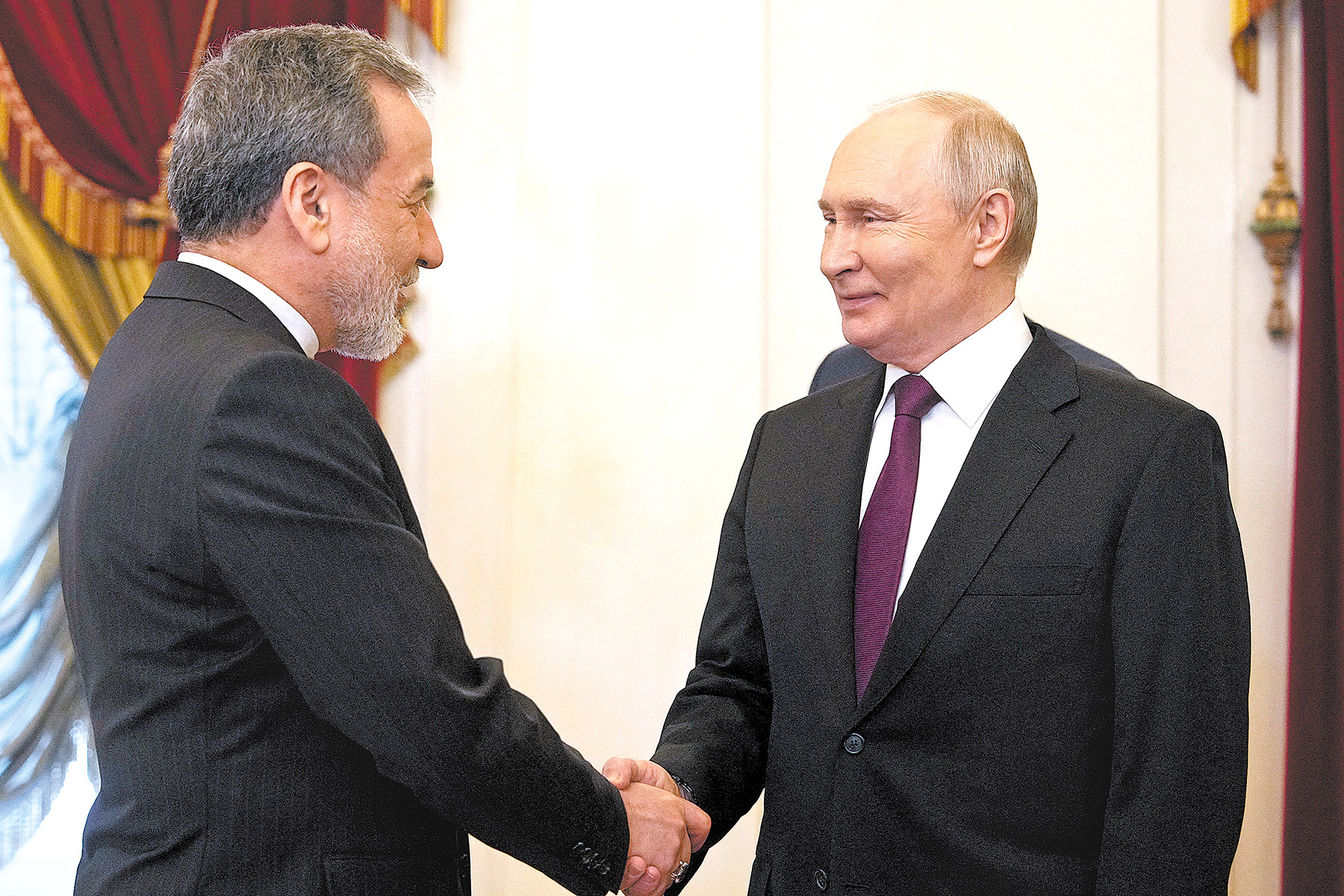
Amid an apparent stalemate in negotiations with the United States, Iran has stepped up diplomatic efforts by reprioritizing closer consultations with its neighbors and allies.
Iranian Foreign Minister Abbas Araghchi met Russian President Vladimir Putin in St. Petersburg on April 27, Russia’s state-run RIA news agency reported.
Putin said Russia hopes the Iranian people would overcome the “difficult period” and that peace would prevail.
He added that Russia would do everything in the interests of Iran and other countries in the region.
Araghchi said earlier that the trip — which followed visits to Pakistan and Oman — was intended to resume close consultations between Tehran and Moscow on regional and international developments and to strengthen
bilateral ties, Iran’s Mehr News Agency reported.
The Russia visit would provide a timely opportunity to review developments in the conflict and coordinate positions, he said, adding that such coordination was particularly important.
Previous talks had made some progress but failed to achieve their aims, he added, blaming Washington’s excessive demands and misguided approaches.
Araghchi had said that Iran’s focus includes ways to ensure a safe passage through the Strait of Hormuz to benefit “all dear neighbors and the world”, emphasizing that “our neighbors are our priority”.
Oman’s Foreign Minister Sayyid Badr bin Hamad Al Busaidi said in a post on X on April 26 that he had a “good discussion” on the Strait of Hormuz with Araghchi.
“As littoral states, we recognize our shared responsibility to the international community and the urgent humanitarian need to free the seafarers held for far too long,” Al Busaidi said.
“Much diplomacy is required and practical solutions to ensure lasting freedom of navigation,” he said.
In a phone call on April 26, Araghchi spoke with his French counterpart, Jean-Noel Barrot, to discuss the latest on the ceasefire and regional developments.
Barrot emphasized France’s support for Iran’s continued diplomatic approach and expressed hope that, through talks, peace could be established in the region.
On the same day, Araghchi also spoke with Saudi Arabia’s Foreign Minister Faisal bin Farhan Al Saud. They discussed regional developments and efforts to de-escalate tensions, according to the Saudi Foreign Ministry.
Meanwhile, US news website Axios reported that Tehran had given Washington a new proposal to reopen the Strait of Hormuz.
US President Donald Trump had earlier canceled the trip of special envoys Jared Kushner and Steve Witkoff to Islamabad, telling Fox News that the 18-hour flight and the expense were excessive for what he described as an insufficient Iranian offer.
If Iran wants to talk, “they can come to us, or they can call us”, he said, while reiterating that Iran “cannot have a nuclear weapon, otherwise there’s no reason to meet”.
Mohammad Bagher Ghalibaf, the speaker of the Iranian Parliament, said in a post on X on April 26 that the US has exhausted much of its leverage in an economic confrontation with Iran, saying that Tehran still holds significant “cards” to play.
Abdel Aziz Abu Hamad Aluwaisheg, assistant secretary-general for political and negotiation affairs of the Gulf Cooperation Council, said in a post on X on April 27
that the Strait of Hormuz must not remain a “hostage to negotiations between the United States and Iran”.
Agencies and Xinhua contributed to this story.
Contact the writers at jan@chinadailyapac.com
