

In Laos, a 500-kV lifeline rises above a landscape still haunted by bombs
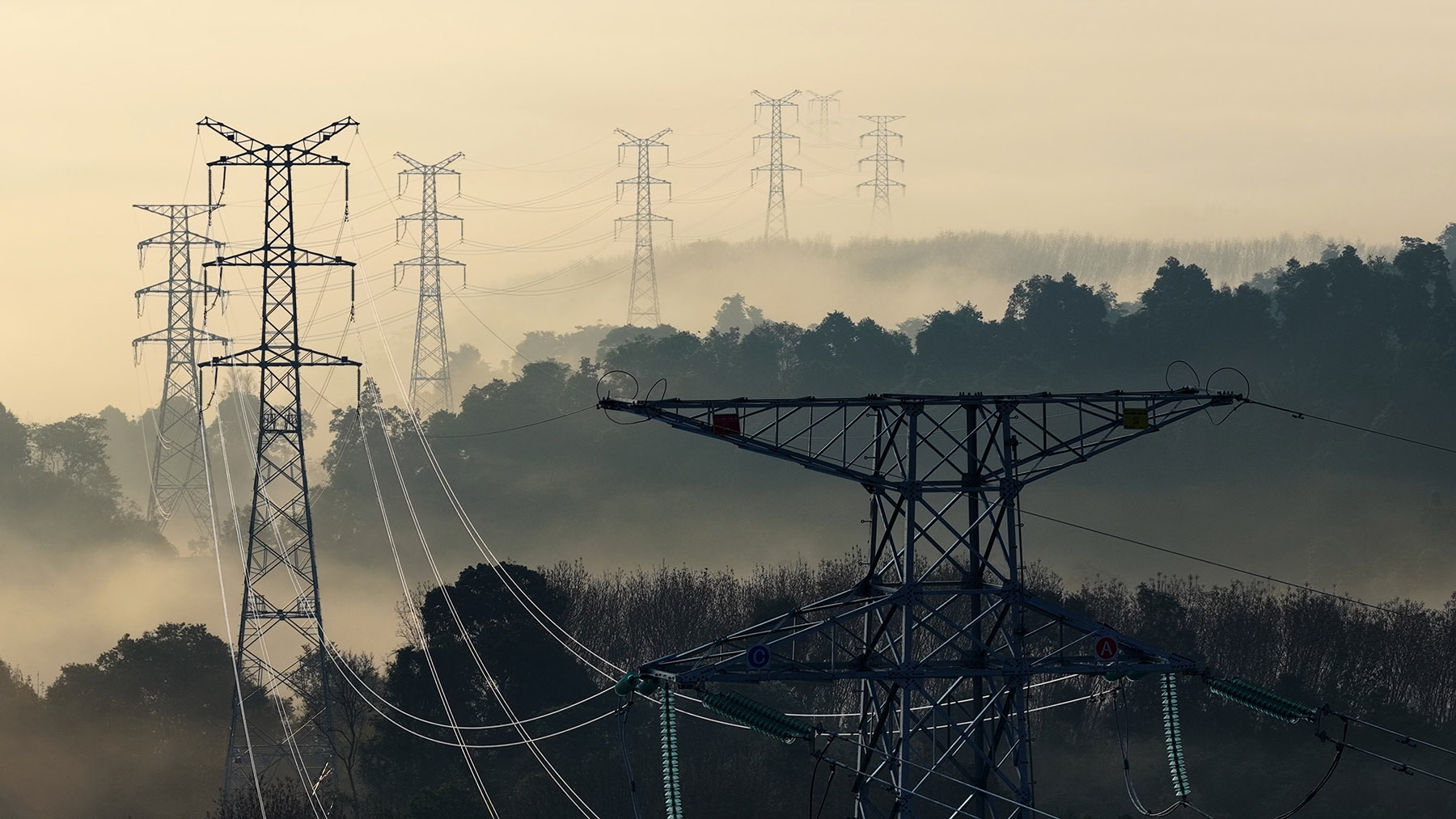
Along a mountain ridge in northern Laos' Oudomxay Province, a 20-story tower rises. Then another. Linked in a line, they carry power stretching to the north.
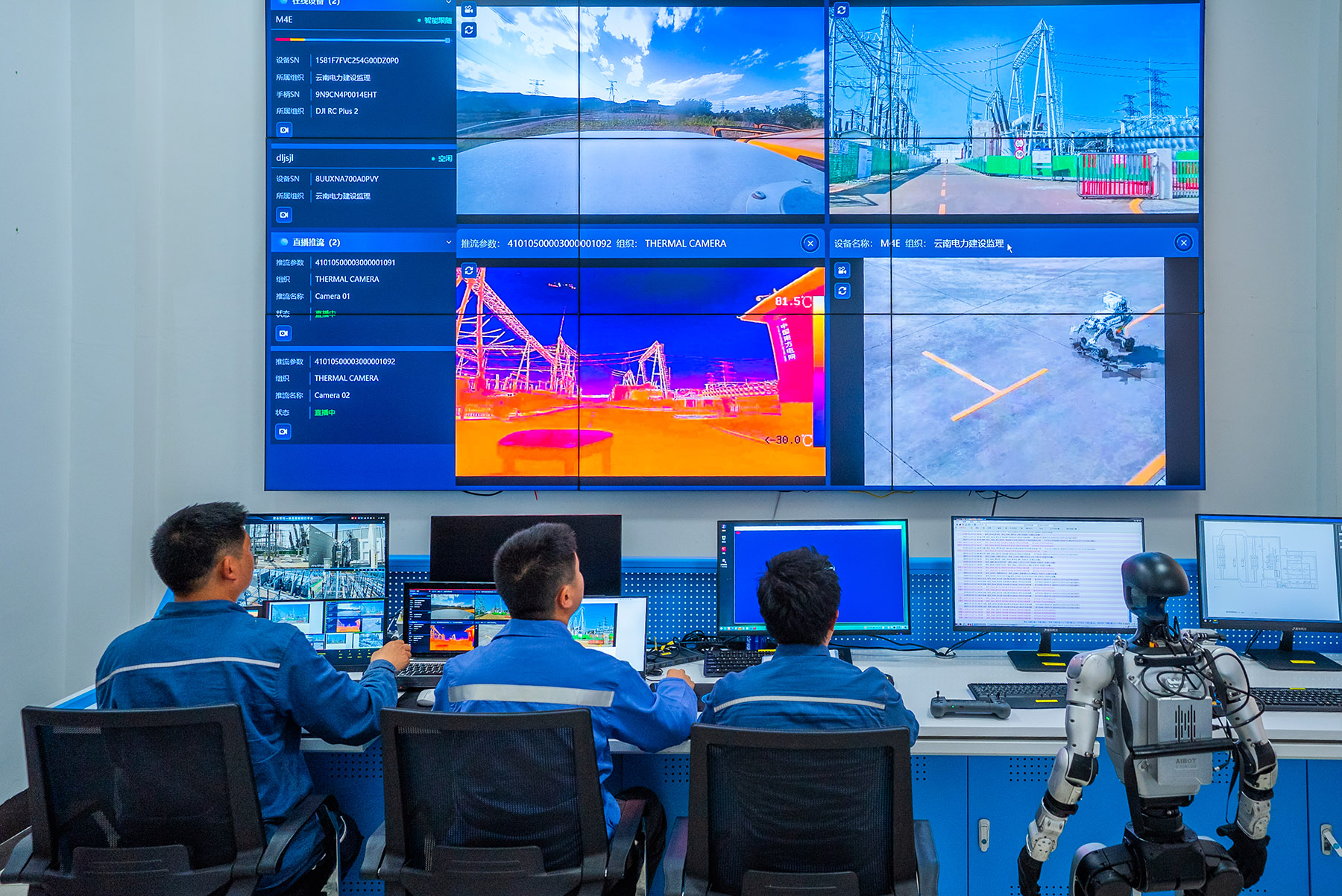
Above the 60 — to 70-meter towers, the whir of rotors cuts through the air. Along this cross-border transmission route, drones equipped with artificial intelligence have become a routine presence. They can identify as many as 15 types of defects, including early signs of forest fires.
"Before, inspecting a line took a full day. Now, with drones, it takes just two hours," said Khamphong Phonekeo, head of a drone inspection team at Electricite du Laos Transmission Company, or EDL-T." It saves time and labor, and it can detect risks that are difficult to spot from the ground."
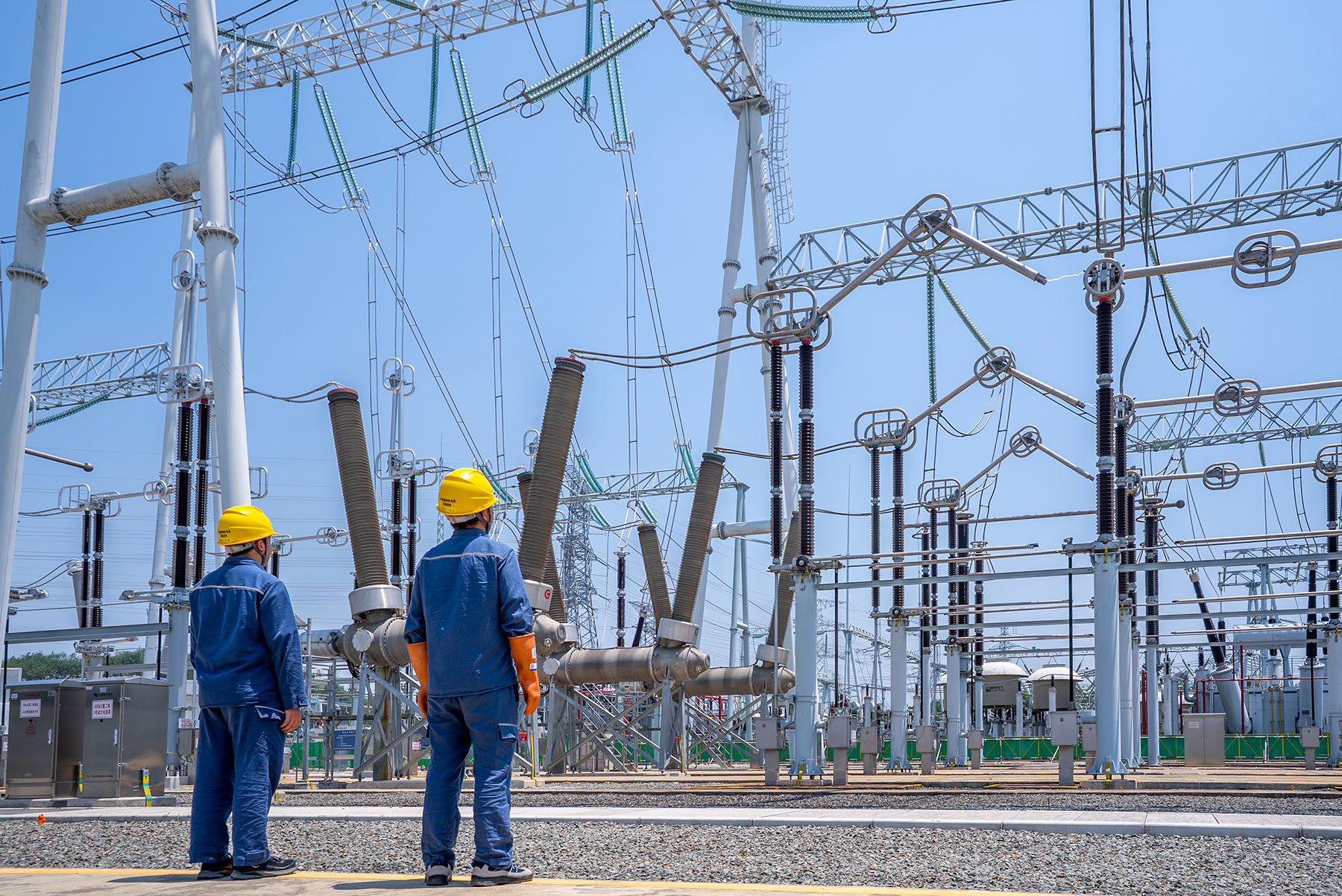
This is a typical scene from the China-Laos 500-kilovolt interconnection project, which began operations on Monday. Linking power networks in northern Laos' Oudomxay and Luang Namtha provinces with Xishuangbanna in Southwest China's Yunnan province, the project consists of 145 kilometers of transmission lines in China and 32.5 kilometers in Laos. It is the largest and highest-voltage cross-border alternating current (AC) interconnection project jointly built by the two countries to date.
READ MORE: China-Laos mega power project put into operation
According to EDL-T, the project increases the bidirectional power exchange capacity from 50 megawatts to 1,500 megawatts, enabling the delivery of about 3 billion kilowatt-hours of clean electricity annually — equivalent to reducing roughly 2.5 million metric tons of carbon dioxide emissions.
Xie Min, deputy general manager of EDL-T, said technologies, including drones, have been involved throughout the project, from early surveying to ongoing maintenance. During construction, more than 30 drones and two helicopters formed aerial work teams, minimizing ecological disruption on the ground.
In Laos, the standard clearing radius around each tower base is 70 meters. With advanced technology, however, construction teams were able to limit the width of vegetation clearing corridors to just 22 meters, ultimately reducing tree cutting by 83.4 percent.
In areas frequented by Asian elephants, developers relied on an ecosystem of monitoring tools, including drones, infrared cameras and an elephant early-warning app, to track herds in real time, ensuring that construction and wildlife movements did not interfere with one another, he said.
Revisiting history
This is not the first time advanced technologies have appeared in the skies above Lao people.
According to the International Committee of the Red Cross, beginning in 1964, during the Vietnam War, the United States dropped more than 2 million tons of ordnance on Laos. By April 1973, Laos had become one of the most heavily bombed countries per capita in history.
Roughly 30 percent of the bombs failed to detonate on impact, remaining buried beneath the soil. According to official statistics, more than 20,000 people in Laos have been killed by unexploded ordnance since the war ended, and over 30,000 have been disabled. To date, less than 1 percent of contaminated land in Laos has been fully cleared. At the current pace, it will take at least another 100 years to remove all unexploded ordnance, according to international organizations.
The repercussions of war continue to weigh heavily on the country's development. Farmers cannot safely cultivate their land. The construction of schools, factories, roads and power grids faces persistent risks.
Today, Lao people are working to build a modern power grid on land once scarred by bombing. The first step in planning the 500-kilovolt transmission line was not engineering, but clearance.
Xie said the clearance work extended beyond the planned route. Based on the transmission corridor, crews expanded the scope to clear a 70-meter-wide path along the 32.5 kilometers of line in Laos, covering a far larger area than initially projected.
"Clearance must be completed before any grid construction begins, otherwise survey and construction workers would face life-threatening risks," Xie said. "Local residents will live here for generations, so in principle, all newly built access roads are also cleared. This is not only about ensuring the safety of the project, but safeguarding the lives of local communities."
Conditions in northern Laos are relatively better, but in one tower site in Xiangkhouang Province, he said, workers still uncovered 20 unexploded bombs.
For Xie, the project carries a personal resonance. The transmission line largely follows Laos' Route 13, the country's main north-south artery.
In the 1960s, tens of thousands of Chinese engineering corps members came to Laos to help build 822 kilometers of road under the threat of US bombing — what is now the northern section of Route 13.
Near a substation in Oudomxay Province along the project route, a cemetery still stands in memory of those Chinese workers who lost their lives.
Xie's father was among those who helped build the road decades ago. From roads to power lines — from ground to grid — Xie now traces his father's path, continuing a story of connection between the two countries.
April 25 marks the 65th anniversary of diplomatic relations between China and Laos, a year both countries have designated as the year of friendship. On Monday, officials from both sides attended the commissioning ceremony for the 500-kilovolt interconnection project.
Fang Hong, China's ambassador to Laos, said the two countries have stood by each other and advanced together over the past 65 years. The new grid project, she said, is another landmark effort following the China-Laos Railway — a "green energy highway" running from north to south.
Injecting new momentum
Its operation will significantly improve regional power supply reliability and complement the China-Laos Railway, creating a combined "transport + electricity" effect that could inject new momentum into development along the corridor, Fang said.
Amid a global energy crisis, Fang said China hopes to use the project as a model to deepen practical cooperation in renewable energy, support Laos' energy transition, and expand bilateral cooperation into broader and deeper areas.
Malaithong Kommasith, Laos' minister of industry and commerce, said the project is not only a technological achievement but also a milestone marking 65 years of diplomatic ties. It reinforces what both countries describe as the "fourgood" principles: good neighbors, good friends, good comrades and good partners.
The project, he said, is a strategic priority for Laos' long-term plan and a flagship project under China's Belt and Road Initiative, and will serve as a major transmission artery. It will ease domestic bottlenecks, accelerate the development of renewable energy in northern Laos, and convert clean energy resources into economic value.
ALSO READ: Advancing cooperation with Laos envisioned
Feng Yong, director of the Laos Research Institute at the Yunnan Academy of Social Sciences, noted that while Laos has abundant hydropower resources, its electricity supply fluctuates sharply between rainy and dry seasons. With the new bidirectional transmission channel, he said, Laos can export surplus electricity during the rainy season and import power from China during the dry season, stabilizing supply for households and industry.
Electricity infrastructure is central to Laos' development ambitions. A landlocked country with a mountainous terrain and abundant hydropower resources, Laos has sought to position itself as an energy hub in Southeast Asia, converting its advantages in hydropower, solar and wind into exportable electricity for neighboring countries such as Thailand and Vietnam.
"With a stable power supply, energy-intensive industries can find new opportunities, and reliable electricity can become a key selling point for attracting investment," he said. With a backbone grid and clean energy supply, Feng said, Laos can even begin to support data center industries and push Southeast Asia into "a hub for 'computing power' tied to the future of artificial intelligence".
Contact the writers at houchenchen@chinadaily.com.cn
