

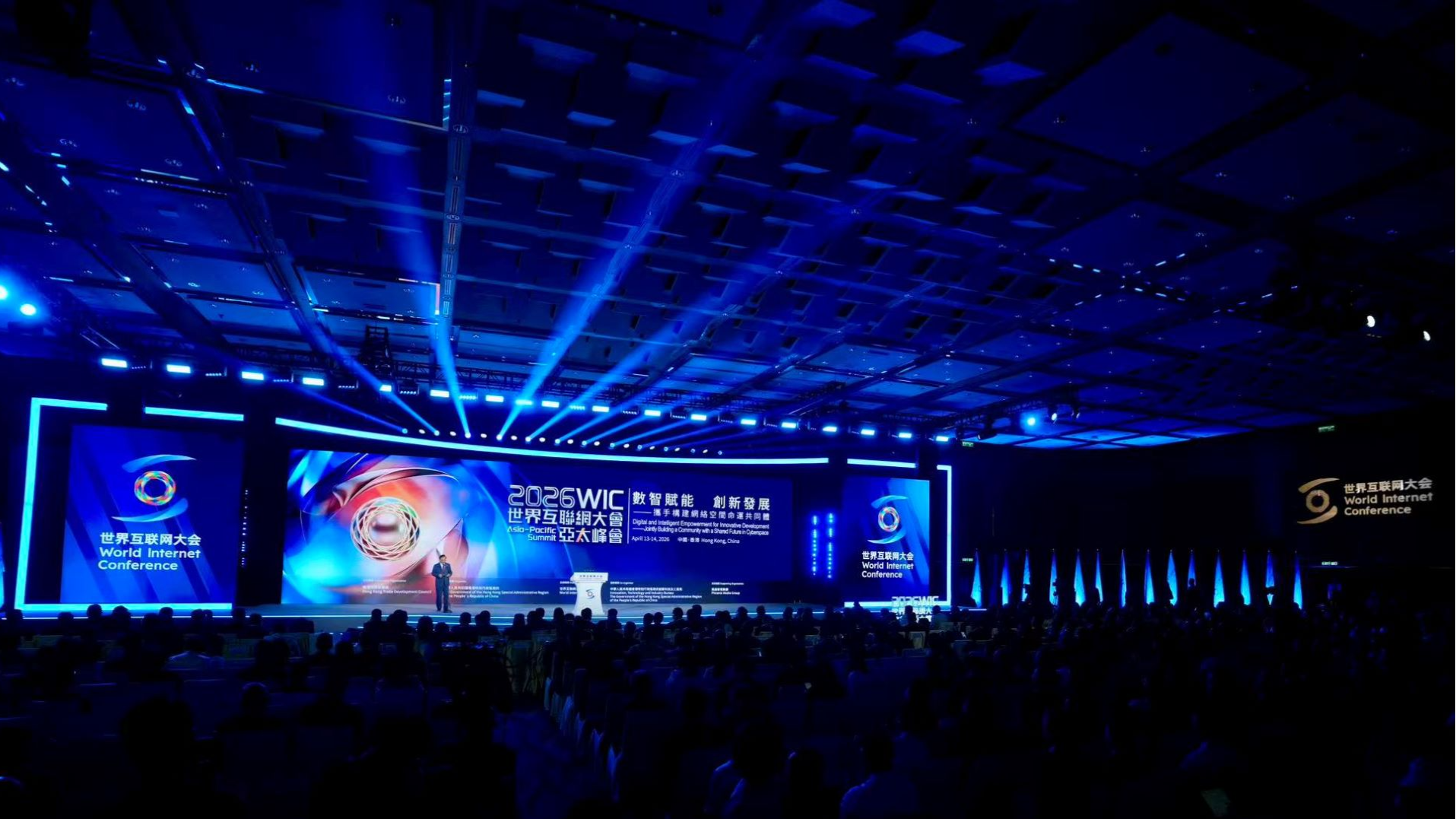
The evolution of artificial intelligence agents has entered a transformative new phase where multi-agent systems and expert agents that specialize in handling knowledge of specific business sectors have come under the spotlight, according to industry insiders at the 2026 World Internet Conference Asia-Pacific Summit on Tuesday.
AI agents are generative AI systems capable of perceiving their environment and making judgments and decisions. They are typically deployed in various complex applications, such as autonomous driving vehicles, intelligent robots, and intelligent investment, according to a guideline released by Hong Kong’s Digital Policy Office.
Although AI agents have restructured complex industrial and business processes, a single AI agent struggles to meet business application demands, as it cannot manage workflows that involve multiple industries and functionalities, said Elizabeth Pei, vice-president of SAP SE, a German multinational software company.
Currently, AI agents have evolved from simple chatbot assistants into advanced systems that include several agents that can allocate tasks and collaborate based on user needs, said Guo Liang, senior vice president of 360 Digital Security Group, an AI-powered cybersecurity service provider. He also predicted that these multi-agent systems will become the mainstream of agentic AI applications in the future.
Pei cited an SAP SE use case involving a customer service agentic workflow at AMD, which replaced 14 steps of human operations in supply chain troubleshooting; consequently, productivity improved by 90 percent.
“AI has become the defining material of productivity in our time,” said Peng Tao, vice president and chief editor of MiniMax, a leading Chinese AI startup listed on the Hong Kong stock exchange in January. “AI agents are not merely products; they should be understood as new organizational methods and the core carriers of industrial transformation.”
Given the huge commercial opportunities emerging in the AI era, the industry focus has also shifted from the question of “what can the AI model do” to “how to unlock unlimited possibilities at the lowest cost through the empowerment of AI agents,” Peng added.
Meanwhile, the advancement of AI tools also requires more comprehensive governance. As tools that not only receive commands but also analyze and act automatically — going beyond the cognitive scope of humans — practitioners must update the definition of intellectual property to keep up with technological evolution, said Liu Hua, director of the World Intellectual Property Organization Office in China.
In terms of using AI agents within the legal system, Li Honglei, a researcher at the Chinese Academy of Social Sciences, said that risk prevention should be a key principle.
“The law must have early-warning sentinels, appropriately setting safety thresholds,” Li said. “At the same time, it cannot be a one-size-fits-all approach; only significant and irreversible risks should trigger a red light.”
Contact the writer at rayjia@chinadailyhk.com
