

China’s bread industry is undergoing a transformation, affecting everything from sales models to product categories. Driven by the closure of established bakery chains and the need to appeal to Generation Z, the industry has evolved beyond mere sustenance into a vehicle for emotional value. Atlas Shao reports.
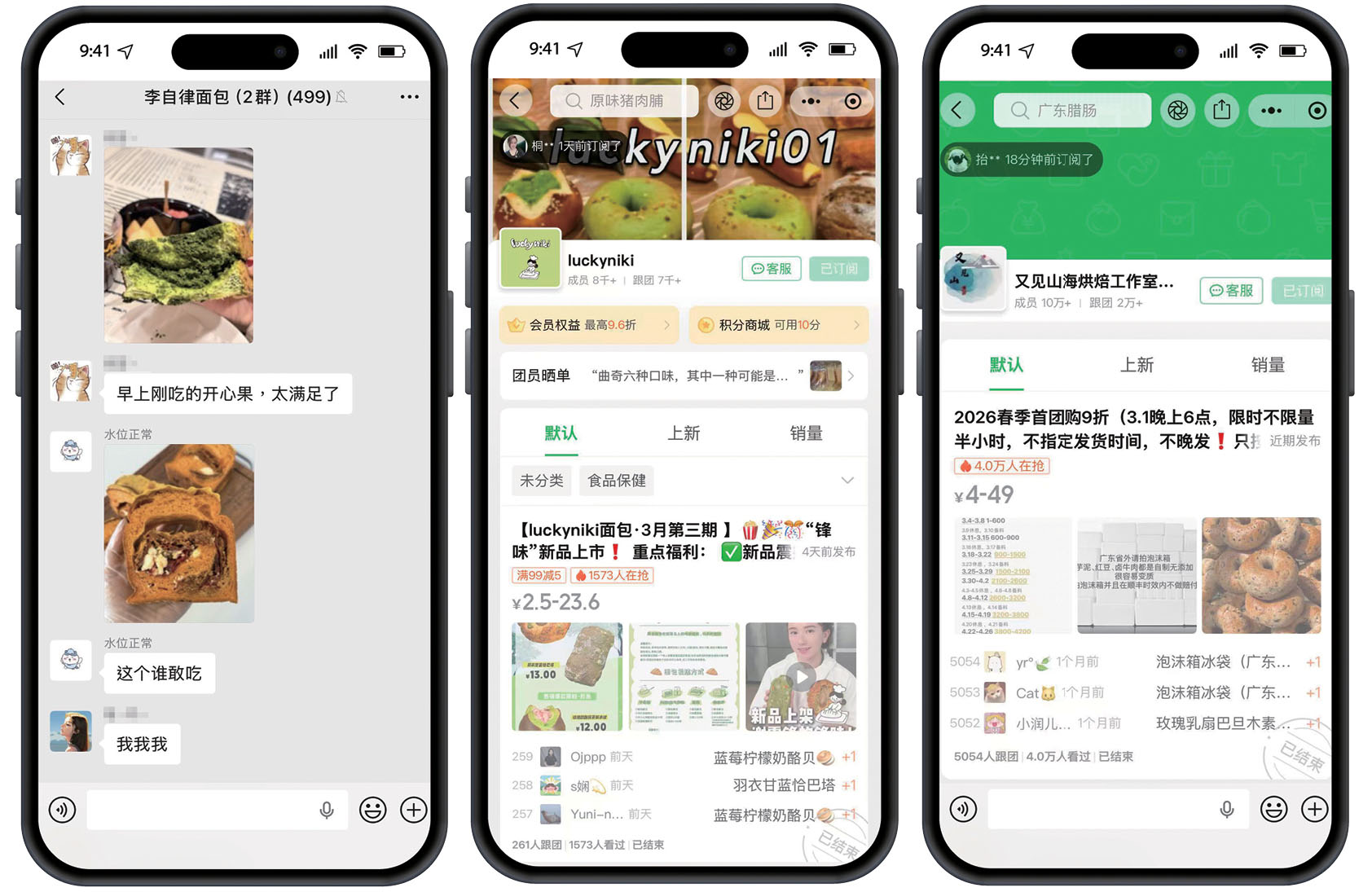
Just three minutes before a group purchase began, a bread fanatic received a notification from an online bakery she was subscribed to. Opening her pre-filled shopping cart, she checked her items and waited for the countdown — three, two, one — placing her order the moment it finished, but still missing the first batch of deliveries.
Online purchasing has gone beyond the borders of the traditional bakery business. During a three-minute flash sale in May last year, an online bakeshop was bombarded with more than 4,000 orders — enough to keep it on its toes for two months.
Based in Zhuhai, Guangdong province, the bakery sells its products via an online platform along with an offline workshop handling production and shipping.
Shanhai, the chain’s owner, told China Daily she typically organizes group purchases once or twice every four months, offering about 18 products each time — far less than most offline bakeries. Her sales are time-constrained, usually lasting three to six minutes with unlimited quantities.
“One of the pros of online sales is the ability to transcend local boundaries and reach customers nationwide,” she says, explaining that as bread is prone to spoilage during delivery, close attention must be paid to logistics and packaging, such as using ice packs or choosing courier services that offer compensation terms.
Thanks to a strong logistics network, packages can normally reach most cities on the Chinese mainland the day after they are shipped — a key plus of online sales.
Traditional offline bakeries, on the other hand, are pulling up their socks and throwing down the gauntlet.
Cristina Carvalhosa’s family has been running a bakery chain in Zhongshan, Guangdong, since 2011. Originally from Macao, Carvalhosa returned to Zhongshan after studying overseas and joined the family business in 2018.
An experienced industry practitioner, she sees social media platforms as having given her company a boost. Her move into the online space paid off quickly. Within two months of launching her bakery’s social media account in April last year, she had won four long-term contracts in the Pearl River Delta region. Videos of freshly made bread and pastries attracted viewers seeking the bakery’s address and how to place orders.
So, how do bakeries attract an audience? Carvalhosa believes that delivering emotional value and freshness are the core elements rather than a hard sell. She now spends about two days weekly making videos, shooting more than five each day. Riding on the momentum, she launched online group sales in August last year with the Luckyniki brand and managed to break even a month later.
It is more than just moving everything online. The key is engaging consumers more closely, swiftly and quickly. Shanhai, through her social media account, not only shares videos on her bakery’s daily routines, such as the bread-production process, but also posts new product introduction notices for group buyers. These have helped her secure almost 25,000 followers on the social media platform Rednote, with views of posts tagged with her bakery’s name on the platform surpassing 13.7 million.
“We’re living in the social media era, and online platforms can help me collect consumers’ appetites easily,” says Shanhai.
Website is key
Viewing Shanhai’s bakery menu, new products presenting seasonal flavors can be found at each sale, and its classic products feature ingredients containing regional characteristics like Chaozhou’s Shacha beef and prawn roll.
She also invites consumers to sample new products and give feedback, which she uses to adjust her flavorings. Consumers who have sampled new products sometimes respond on the platform, elevating public expectations before group buying begins.
Creativity is another vital ingredient to success in the bakery business.
Situated near San Po Kong subway station in Kowloon, Hong Kong, Muzi Bakery has consistently drawn big crowds. Different from traditional Hong Kong-style bakeries that sell classic products, such as pineapple and cocktail buns, the bakeshop combines traditional baked food with new elements.
Cheng King-on, who runs Muzi Bakery, says its products usually have a cute or non-traditional appearance, such as tortoise-shaped bread and triangular pineapple buns, which consistently attract customers.
Due to high delivery fees, online ordering with delivery services is impractical for community bakeries in Hong Kong. Yet, online platforms are a powerful promotional tool.
“Some mainland visitors visit our bakery after they’ve seen our posts on social media, and residents living far away from San Po Kong district buy more bread when they come here to save on traveling time,” says Cheng, who promotes his business on Instagram and Rednote.
“Maintaining a customer relationship with consumers is important as well,” he says, adding that the bakery’s social media accounts always respond to comments and take consumer feedback into account. His staff consistently maintains a positive service attitude, offering “emotional value” and encouraging repeat visits by customers.
According to Carvalhosa, some online bakeries focus too much on promotion and neglect quality. Some even use sub-standard materials, she says, which calls for strict industry regulations. Practitioners should adhere to business standards to ensure that their products meet quality demand, she adds.
Shanhai says preserving the quality of products is key to long-term success. When consumers complain about quality, she offers an immediate refund or another negotiated compensation plan if the complaint is justified.

New-style bakeries surge
According to National Catering Big Data — a research and certification institution for the catering sector — China’s bakery market hit 528.2 billion yuan ($77.33 billion) in 2024. By last year, Guangdong had the highest number of bakery enterprises in the nation at 33,393.
Wang Xiaoyi, a professor in the School of Management at Zhejiang University, attributes the bakery sector’s robust expansion to a synergistic interplay of consumption upgrades, heightened health consciousness, and innovative distribution channels.
E-commerce and new retail models, such as community group buying and live-stream sales, have broken geographical boundaries, while social media platforms like Rednote and Douyin have propelled the baking industry’s popularity through viral marketing and the influential power of key opinion leaders.
Spending on expensive, artisanal bread has emerged as a form of self-expression and social display, particularly among Generation Z — a generation known as digital natives.
Wang says sharing their consumption habits online brings social recognition. Purchasing a particular brand also serves as a “passport” that not only gratifies the palate, but also aligns with consumer aspirations for an exquisite lifestyle.
Along with the rise of new-style bakeries, a number of traditional bakery brands have gone to the wall. Founded in 1993, Christine — the mainland’s first bakery business — was delisted from the Hong Kong Stock Exchange in 2024, with all its thousand-plus outlets shuttered. BreadTalk — a popular brand from Singapore — closed down all its stores in Chengdu, Sichuan province, in July last year, leaving consumers with credit still on their store cards. In March this year, BreadTalk also quit the Beijing market.
The demise of prominent bakery chains is not merely due to a lack of productivity, but an inability to adapt to generational shifts in consumption and the transformation of marketing. Wang says delays in product innovation, an over-reliance on offline shops, neglecting e-commerce and delivery channels, and a lack of emotional value are to blame.
In contrast, emerging bakery brands have actively met consumer demand for low-sugar, health-conscious options, have adopted online ordering and community pickup models to enhance convenience, and have cultivated an artisanal image with selling points like freshly baked goods.
Community engagement and user-generated content have also become key factors that influence consumer decision-making. Wang says buyer feedback posted on social media reduces information asymmetry, and genuine user reviews are more convincing than commercial advertisements.
Additionally, a sense of belonging is strengthened through interactions in WeChat groups, such as sharing daily breakfast photos, flash sale announcements, and new product tasting activities. “These processes have transformed consumers from mere users into active participants and fostered a brand community,” says Wang.
Emotional consumption has made its mark not only in the baking industry, but also in sectors such as new-style Chinese tea, transforming beverages into “social name cards” through traditional aesthetic packaging and cultural storytelling.
Wang says the commonality between all these products is that they serve as a medium to address feelings of loneliness and provide a means of stress relief. Purchasing specific brands too has become a gateway for young people to showcase their lifestyle preferences and integrate into their social circles.
Festivals fuel craze
As public enthusiasm for bread continues to rise, festivals and expos showcasing bread and pastries have naturally emerged. At these festivals, sometimes more than 100 bakeries from different cities come together, allowing foodies to buy products from multiple outlets in one visit. Consumers sometimes even bring suitcases to load their baked goods into.
To attract more customers, bakery owners typically offer tasting samples of their flagship and “event-limited” products as well as gifts. Some customers post vlogs about the events that enhance their visibility and encourage viewers to attend future food festivals.
During a four-day bread festival held in Shanghai’s Minhang district, more than 800,000 pieces of bread were sold. Around 540,000 people flocked to the mall where the event was held, generating total sales of 14.28 million yuan. It also saw a 55-percent year-on-year increase in the mall’s overall sales, with retail sales exceeding 60 million yuan.
The popularity of these events is spreading beyond first-tier mainland cities.
A bread festival in Jiangmen, Guangdong during last year’s May Day holidays drew nearly 100,000 visitors, with total consumption value reaching 5 million yuan. The festival, in Xinhui district, gathered renowned bread brands from the Guangdong-Hong Kong-Macao Greater Bay Area and incorporated elements such as intangible cultural heritage handcrafts, as well as an exhibition and sales of Xinhui chenpi (dried tangerine peel). The district also made the fair one of the key highlights of an array of summer consumer promotion activities in 2025.
“Emotional value is a catalyst in the current bakery market. Yet, it’s not a sustainable pillar for the industry,” says Wang of the Zhejiang University, stressing that the explosive impact of emotional value is evident in short-term premiums and customer stickiness. For continued growth, the industry requires fundamental pillars, including the product’s own strength, supply chain resilience, and a merging of online and offline sales strategies, he says.
Without a solid business model, the emotional value will devolve into a bubble, he adds.
Contact the writer at atlasshao@chinadailyhk.com
