

Vintage Chinese moisturizer brand has its finger firmly on the modern pulse, finding favor with a new generation of fans
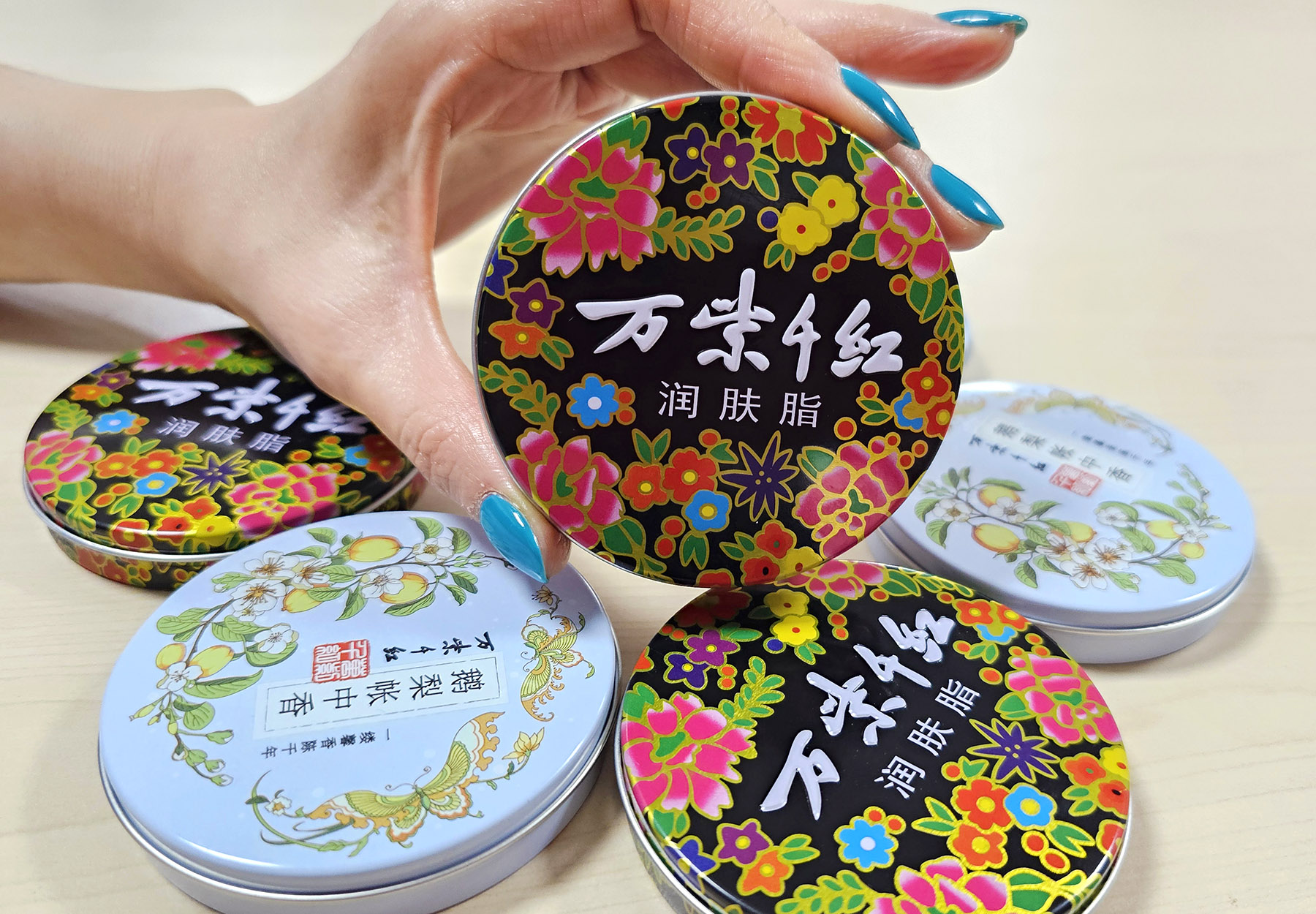
When 24-year-old Li Xinyue was scrolling through RedNote on a lazy weekend afternoon, a vintage-looking moisturizing cream stopped her thumb as she scrolled. The tin was flat, palm-sized and round, decorated with bold red, black and gold flower motifs that whispered old-world elegance.
Curious, she clicked through the reviews, and later that day, discovered the same cream tucked in her grandmother's drawer.
"I couldn't believe it," Li said. "It felt like something from her generation suddenly became mine."
"She told me it's affordable, it works and its scent carries memories," Li added. "It's like a tiny time machine in a tin."
That sense of time-warp nostalgia is exactly what has made Wan Zi Qian Hong a social media sensation. The heritage brand — its name translates poetically to "a riot of colors" — was founded in 1911 by Liu Kaiping. After Liu's untimely passing, his younger brother moved the business from Shenyang, Liaoning province, to Tianjin to ensure its survival.
ALSO READ: Beauty industry looks beyond skin-deep changes
Fast-forward to the 1970s and 1980s, and the brand was selling 200 million of its signature metal tins each year. By the 1990s, however, it quietly faded from daily life — until it was blown back into the spotlight by the perfect storm of the guochao trend, or Chinachic, social media and meme culture.
"Our big comeback was in 2023," said Kuang Huaqin, one of the brand's operators. "Our first livestream sold 250,000 units in three hours. People were even telling us to turn off late-shipping compensation, because they worried we couldn't keep up."
The price doesn't hurt either: three 40-gram tins for just 9.9 yuan ($1.44).
Social media doesn't just sell products — it turns them into culture. On Douyin and RedNote, young users began sharing memes about the cream — from realizing after "half a lifetime" that the tin opens by twisting, not prying, to nicknaming the brand tainai (great grandma).
Even the brand's factory itself became an online sensation. Short videos showing workers hand-filling the tins with the creamy balm racked up millions of views. People in the comments called the process "hypnotically smooth" and "almost healing to watch".
"You know this cream works by looking at the hands of the workers," one comment read, implying that even the workers' hands looked smooth and healthy from handling the cream day after day.
Zhu Zhu, a beauty reviewer, agreed. "It's fun, nostalgic and meme-worthy. People aren't just buying a cream; they're buying a story and a connection to history. I've even seen friends tag their grandparents in posts about it."
"Many people left me messages, saying that the cream leaves your skin feeling comfortable throughout the day — it's simple, reliable and effective," she added.
"Honestly, to see something so nostalgic become genuinely cool again — watching the factory videos go viral and people comment on how smooth and healing it looks — shows that heritage can become a whole aesthetic experience, not just a product. It's like your grandma just became the influencer you've been following all along," she said.
The engagement goes beyond online jokes. Wan Zi Qian Hong listens to its fans, adjusting formulas based on social-media feedback. If the formula is too oily, the company changes it. Want a portable version? They deliver sachets. Requests for facial skin care? They launch creams infused with squalane oil.
ALSO READ: 'Shopping in China' creating opportunities for multinational firms
"Our consumers are mostly aged 14 to 25," Kuang, the brand operator, said. "They want hydration, light textures and convenience, and they want to be heard. So we adapt fast. If they ask for it, we try to make it happen."
While embracing digital trends, the brand honors its roots. The classic balm is still hand-filled to preserve texture, as product developer Li Jian said: "Machines would damage the structure. Hand-filling is slower, but it keeps the quality consistent."
Recent hits, such as a moisturizer inspired by ancient Chinese fragrance recipes — light, slightly fruity, floral fragrances with classical, literary connotations — show how the brand blends heritage with contemporary tastes.
"Young people love products with cultural depth," Kuang said. "It's not just skincare — it's storytelling."
With its sales doubling each year since 2023 and a new industrial park in Tianjin on the horizon, Wan Zi Qian Hong proves that sometimes, the future of beauty is rooted in the past.
Contact the writers at chennan@chinadaily.com.cn
