

Iran and US accuse each other of violating ceasefire amid widespread condemnation of Israeli attacks on Lebanon
The momentum of the US ceasefire with Iran was abruptly met with uncertainty, less than 24 hours after it supposedly came into effect, as both sides accused each other of violating the conditions of the truce.
United States President Donald Trump said on his Truth Social post late on April 8 that US forces would remain around Iran until “the real agreement reached is fully complied with”.
Trump said these would include all US ships, aircraft, military personnel with additional ammunition, and “anything else that is appropriate and necessary for the lethal prosecution and destruction of an already degraded enemy”.
Iran’s Foreign Minister Seyed Abbas Araghchi said in a post on X that the Iran-US ceasefire terms “are clear and explicit”.
“The US must choose — ceasefire or continued war via Israel. It cannot have both. The world sees the massacres in Lebanon. The ball is in the US court, and the world is watching whether it will act on its commitments,” said Araghchi.
On April 9, Iran announced two alternative routes for vessels transiting the Strait of Hormuz, Xinhua News Agency reported.
ALSO READ: UN strongly condemns Israel's strikes across Lebanon
"All vessels intending to transit the Strait of Hormuz are advised to take alternative routes to ensure maritime safety and avoid potential sea mine hazards," Iran's Islamic Revolutionary Guard Corps said in a statement, as quoted by Xinhua.
The move comes as Iran agreed to reopen the strait temporarily — a key oil shipping lane that typically handles one-fifth of global crude — as part of the two-week truce.
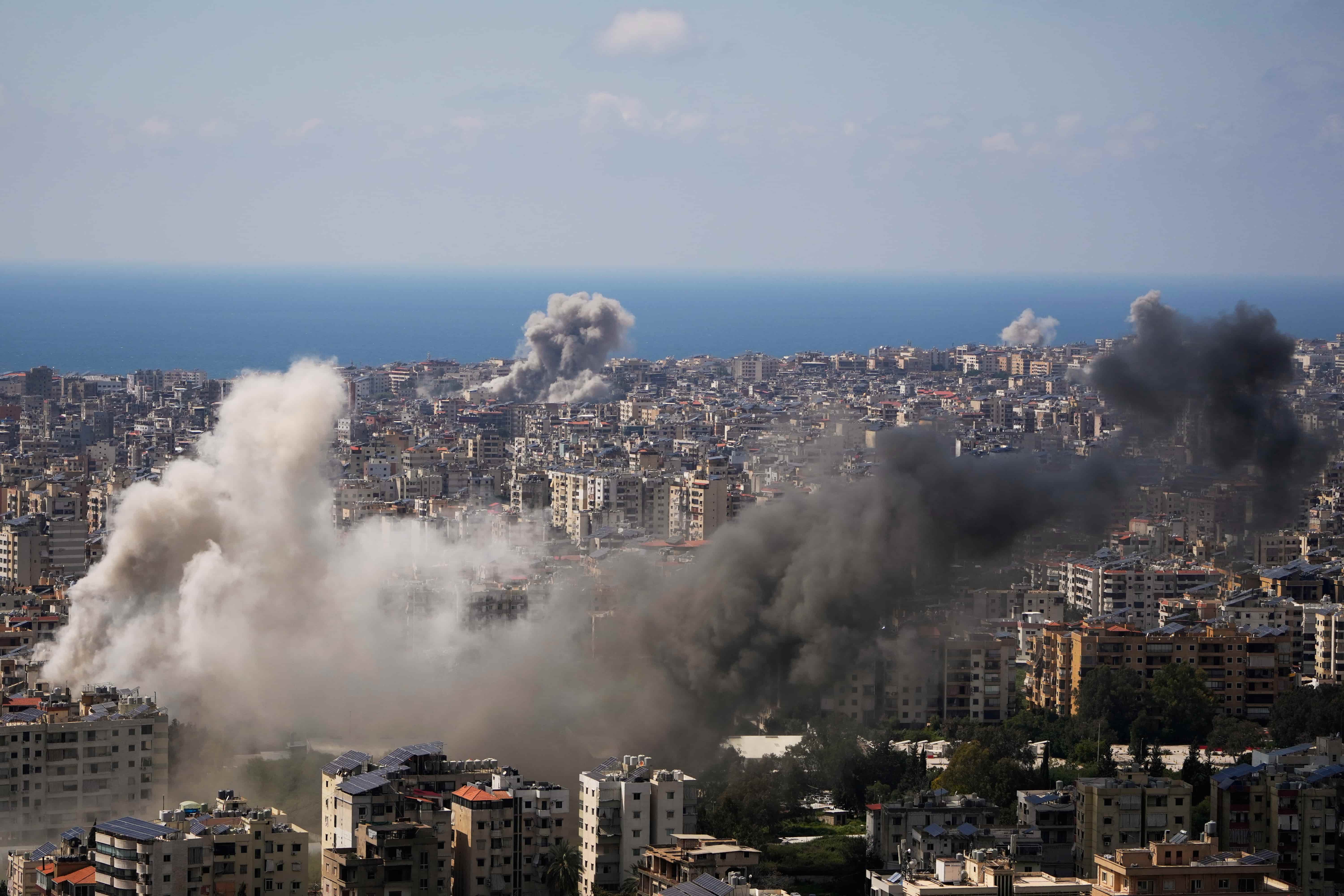
The dizzying pace of events widened to Beirut amid a growing disagreement between Washington and its allies on whether the truce should cover Lebanon, which declared April 9 a day of national mourning after Israeli strikes killed at least 200 people there on April 8.
US Vice-President JD Vance said that Washington did not commit to Israel halting its attacks on Lebanon. Vance is set to lead US negotiators during the first round of talks with Iran in Islamabad, Pakistan, on April 11.
The Israeli Prime Minister’s Office also published a statement saying Israel supports Trump’s decision to suspend strikes against Iran for two weeks, “subject to Iran immediately opening the straits and stopping all attacks on the US, Israel, and countries in the region”.
The statement said that Israel also supports US efforts to ensure that Iran no longer poses a nuclear, missile, and terror threat to the US, Israel, Iran's Arab neighbors, and the world.
READ MORE: Beijing urges restraint, de-escalation after Israeli air strikes on Lebanon
“The United States has told Israel that it is committed to achieving these goals, shared by the US, Israel, and Israel's regional allies, in the upcoming negotiations,” said the Prime Minister’s Office.
“The two-week ceasefire does not include Lebanon,” it added.
However, Pakistani Prime Minister Shehbaz Sharif had said on X that Iran and the US “along with their allies” had agreed to an immediate ceasefire everywhere, “including Lebanon and elsewhere”, effective immediately when he announced the truce on April 8.
France, Italy, Spain, Turkiye, Qatar, and the United Kingdom condemned Israel’s latest pounding of Lebanon and all have so far pushed for Beirut’s inclusion to safeguard the US-Iran ceasefire.
Pakistan also condemned Israeli attacks in Lebanon on April 9, saying they “undermined international efforts to establish peace and stability in the region”.
The United Nations has also condemned Israeli strikes across Lebanon on April 8.
READ MORE: Trump: US military to stay around Iran until deal fully complied with
Stephane Dujarric, spokesperson for UN Secretary-General Antonio Guterres, said in a statement that the ongoing military activity in Lebanon “poses a grave risk to the ceasefire and the efforts toward a lasting and comprehensive peace in the region”.
“The Secretary-General reiterates his call to all parties to immediately cease hostilities,” Dujarric said.
International law, including international humanitarian law, must be respected at all times, he said. Civilians and civilian objects must be protected at all times, and attacks directed against them are unacceptable, the statement continued.
“There is no military solution to the conflict,” Dujarric said.
The Secretary-General continues to call on all sides to avail themselves of diplomatic channels and recommit to the full implementation of Security Council resolution 1701, he added.
The Israel Defense Forces (IDF) said on April 9 that it had “eliminated” Muhammad Samir Muhammad Washah, a “Hamas terrorist operating under the guise of an Al Jazeera journalist”.
The IDF also claimed it had killed Ali Yusuf Harshi, the personal secretary to Hezbollah Secretary-General Naim Qassem in Beirut. They accused Harshi of playing a key role in managing and securing Qassem’s office.
The IDF also struck two key crossings used by Hezbollah to move weapons across Lebanon’s Litani River, along with 10 weapons storage sites, launchers, and command centers in southern Lebanon, it said in a post on X.
Meanwhile, at least 11 protests are reported to be taking place across Israel this coming weekend, opposing both the continuation of the war in Lebanon and what organizers describe as “attempts by the Israeli government to undermine the ceasefire with Iran”.
In a statement, Omri Evron, co-director of the “Peace Partnership” coalition, said the ceasefire is “clear proof of what we have said from the very beginning — there is no military solution”.
Contact the writers at jan@chinadailyapac.com
