

Former pupil of 'father of hybrid rice' leads charge in planting seeds of success
On a desk in Li Li's office, two meticulously preserved rice ears stand as symbols of a mission that spans generations.
One specimen is labeled "Xizi 3" — China's first nationally approved low-cadmium rice variety. The other is a third-generation hybrid, representing the unfinished mission of the late Yuan Longping, the legendary "father of hybrid rice".
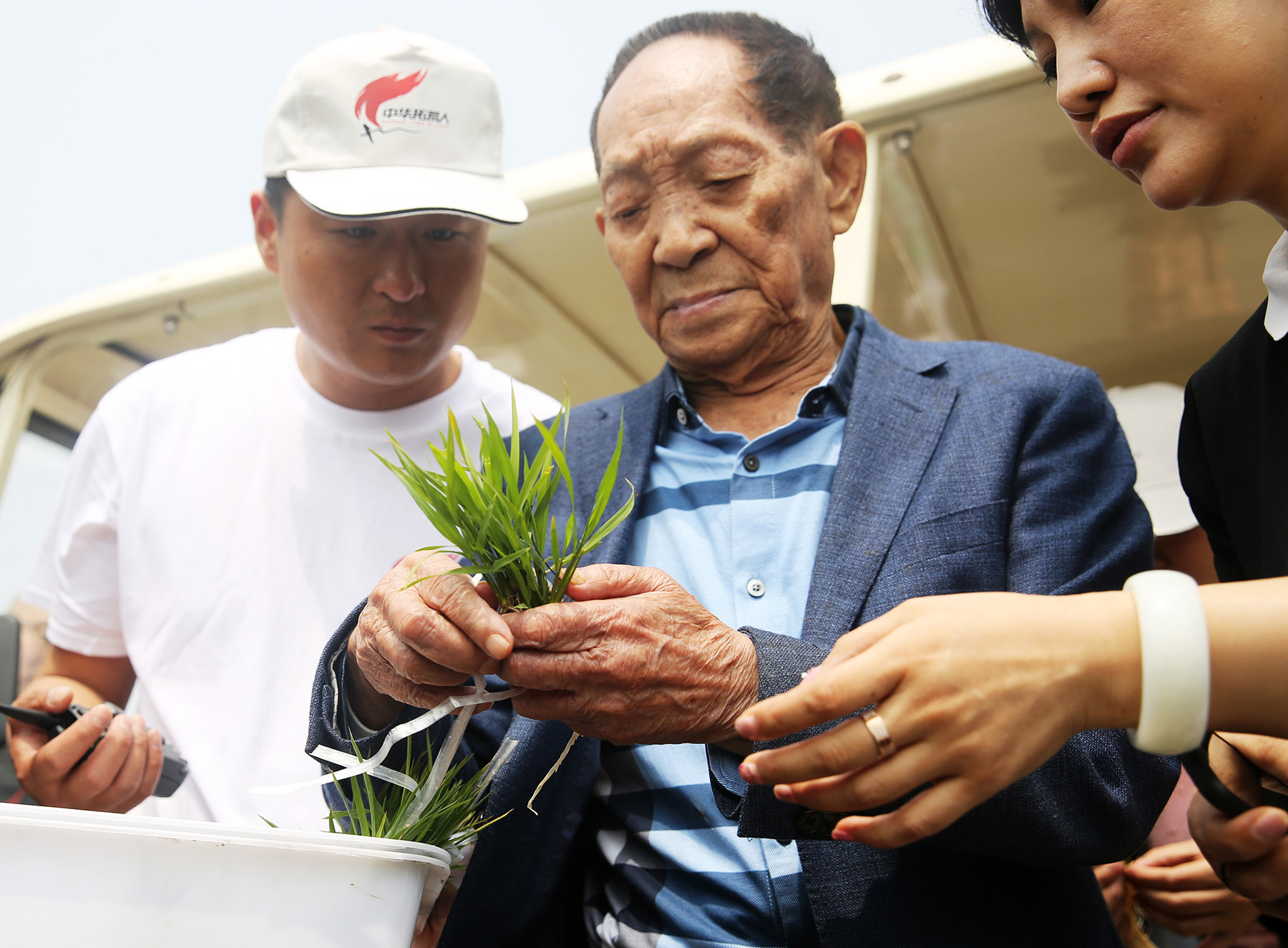
For Li, 44, the specimens represent decades of commitment. As a former student of Yuan and now vice-president of the Hunan Academy of Agricultural Sciences, she has devoted the past 20 years to advancing rice varieties for consumers across China and beyond.
"I met Mr Yuan by chance after completing my master's degree," Li said. "Following an interview, he graciously invited me to become his student and research assistant."
That encounter set the course for her entire career.
READ MORE: China's agricultural technology makes leap forward in going global
"Like Mr Yuan always said, people are like seeds, and one must strive to be a good seed," said Li. "Being a good seed means rooting oneself in the soil, persevering through hardship and bearing fruit that serves others. As agricultural researchers, our mission is to safeguard food security and serve the people."
One of the most significant challenges in Li's career arose in 2013, when her team embarked on a mission to solve a problem that had baffled scientists worldwide: preventing rice from absorbing cadmium, a toxic heavy metal that contaminates the soil.
"There were no stable, high-quality low-cadmium rice germplasm resources available anywhere in the world," Li said. "Some experts even believed that developing such a variety was a fake proposition because rice roots naturally tend to absorb cadmium."
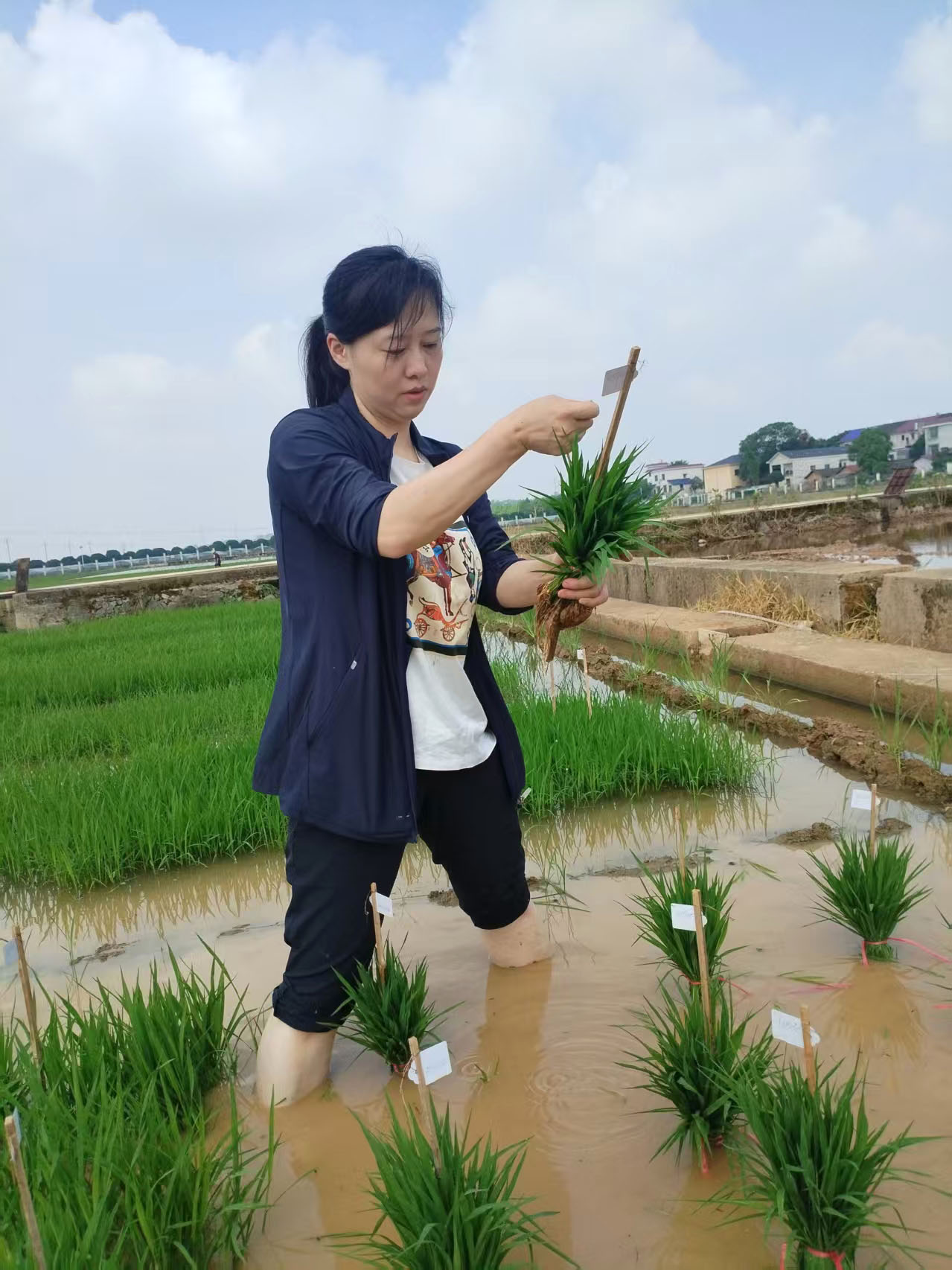
Starting from scratch, Li and her colleagues collected thousands of parent materials from around the globe and planted them in cadmium-contaminated fields. During the peak of summer, precisely when the rice plants flowered, the team endured the scorching sun, manually pollinating the plants.
"We meticulously oversaw every step, from pollination to seed collection and testing, without ever slacking off," Li said.
In 2018, the team finally discovered what they had been searching for: a mother plant with a natural genetic mutation that prevented cadmium absorption. Through repeated experiments, this low-cadmium germplasm was developed into Xizi 3.
In 2023, Xizi 3 became the first low-cadmium rice variety to receive national approval for commercial cultivation.
According to the Hunan Provincial Department of Agriculture, it was planted on more than 30,000 hectares by last year, consistently exhibiting low-cadmium traits while providing high yields and quality.
Another major challenge arose in 2021 with the death of Yuan, which sent shock waves through the research community he had nurtured. For Li, the loss was both personal and professional.
"For a period after Mr Yuan's passing, the team felt lost," she said. At that time, they were grappling with funding gaps and difficulties in promoting and industrializing the third-generation hybrid rice, which Yuan considered the most promising for harnessing the full potential of hybrid technology.
"The breeding and seed production of first — and second-generation hybrid rice heavily depended on the weather," said Yu Dong, an associate researcher at the Hunan Hybrid Rice Research Center. "By contrast, the third-generation hybrid offers higher yields, shorter breeding cycles and significantly lower production costs."
Yuan's words continued to inspire Li and her colleagues in their moments of despair.
"We always remembered how he faced every challenging moment, and how he would say, 'So what if you fail 99 times? One success will be worth everything'," Li said.
With that spirit in mind, the team persevered in carrying on Yuan's unfinished mission, including establishing a seed production technological standard for the third-generation hybrid rice, which is crucial for its industrialization.
After two failed attempts, the document was approved by the Hunan Provincial Standardization Committee in November last year.
For Li, a good seed knows no borders. Yuan's ambition to bring hybrid rice to the world has also become her own. "Food security is a global issue; no country can stand alone," she said.
In recent years, Li has been increasingly engaged in promoting Chinese hybrid rice technology in developing countries across Africa through the Belt and Road agricultural cooperation initiative.
Localization is the first hurdle. The rice varieties bred under China's climate and soil conditions often struggle to adapt to African environments, and localizing them requires years of targeted breeding, along with adjusted cultivation techniques. "So, instead of just offering fish, we prefer to teach people how to fish," Li said.
The Hunan Hybrid Rice Research Center in Changsha was designated as a reference center by the Food and Agriculture Organization of the United Nations in 2014, opening its doors to the world for research and training related to hybrid rice technologies.
Since then, the center has trained more than 10,000 professionals from developing countries, said Li, a key member of the center. Many of those trainees have returned home and become the backbone of their countries' rice research efforts.
ALSO READ: Farmer leads community toward hybrid rice farming
In July last year, the center partnered with the University of Antananarivo in Madagascar to establish a joint laboratory for hybrid rice under the Belt and Road Initiative.
"This enables local scientists to conduct their own breeding and seed production research, thus achieving the localization of varieties, technology and talent," Li said.
For Li and her team, the story of "one seed changing the world" is still unfolding. In the long run, they aim to help more countries in Africa and Southeast Asia build their own research and industrialization systems for hybrid rice.
"Bearing Mr Yuan's lifelong dream in mind, we want to help more countries achieve food self-sufficiency with Chinese technology — but with local solutions," Li said.
"We also want the small seed of hybrid rice to serve as a bridge for science, for friendship and for shared prosperity."
Contact the writers at limuyun@chinadaily.com.cn
